Rejang Kayan, Lisum in Malaysia
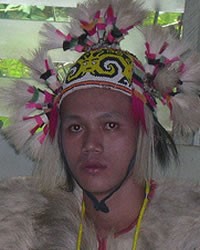
Photo Source:
MySabah.com
Used with permission
|
Send Joshua Project a map of this people group.
|
| People Name: | Rejang Kayan, Lisum |
| Country: | Malaysia |
| 10/40 Window: | Yes |
| Population: | 9,200 |
| World Population: | 9,200 |
| Primary Language: | Kayan, Rejang |
| Primary Religion: | Ethnic Religions |
| Christian Adherents: | 18.00 % |
| Evangelicals: | 6.00 % |
| Scripture: | Translation Started |
| Ministry Resources: | No |
| Jesus Film: | No |
| Audio Recordings: | No |
| People Cluster: | Malay |
| Affinity Bloc: | Malay Peoples |
| Progress Level: |

|
Introduction / History
The Lisum Rejang Kayan are an indigenous Dayak people of Sarawak in Malaysian Borneo, especially in the Rejang and Balui river areas of the interior. They belong to the wider Kayan world of central Borneo, but they are recognized here as a distinct local branch tied to the Rejang basin. Their language is Rejang Kayan, also listed in linguistic sources as Kayan, Rejang, with Lisum identified as one of its associated varieties or community names. Publicly available historical detail focused narrowly on the Lisum themselves is limited, but the broader Kayan story in Sarawak points to long-established upriver communities shaped by river migration, customary leadership, and settlement in the interior rather than in coastal towns.
What Are Their Lives Like?
The Lisum Rejang Kayan are best understood as an upriver Sarawak community whose daily life has historically been tied to the great interior river systems. In the Rejang–Balui region, settlement patterns have long centered on riverbanks and interior villages, since rivers were the main highways of movement, trade, and communication. That setting usually means close family ties, strong kinship obligations, and community life organized around village leadership and shared labor rather than urban individualism. Because detailed public ethnographic reporting on the Lisum themselves is sparse, it is better to describe their lives cautiously than to claim narrow customs that are not directly documented.
As a Kayan-related people, their ordinary life is most plausibly shaped by the broader pattern seen among interior Orang Ulu communities of Sarawak: farming, use of forest and river resources, and local exchange. Food in such settings commonly includes rice, vegetables, river fish, and other locally available foods. Traditional Kayan communities in Borneo are widely associated with longhouse living and communal social life, though it would be too strong to assume every Lisum household still lives in a traditional longhouse today. Family celebrations, music, storytelling, church gatherings where Christianity is present, and customary ceremonies likely remain important social settings. Their language remains a key marker of identity, even though many in Sarawak also use Sarawak Malay or other wider languages beyond their own community.
What Are Their Beliefs?
The Lisum Rejang Kayan are mostly followers of ethnic religion, though there is also a meaningful Christian presence among them. That means the dominant spiritual outlook is still shaped more by traditional spiritual trust than by biblical faith in Jesus Christ alone. Where ethnic religion remains primary, people often look to the spirit world, inherited rituals, or customary spiritual mediators for protection, blessing, or guidance rather than resting fully in Christ. This is not merely cultural memory; it reflects real spiritual allegiance outside of biblical Christianity. Scripture work has begun in their language.
What Are Their Needs?
The Lisum Rejang Kayan need a clear and faithful gospel witness that calls them to turn from every competing spiritual loyalty and trust Christ alone. Since ethnic religion still appears to shape much of their worldview, they need more than occasional Christian contact. They need genuine conversion, strong discipleship, and local believers who will stand firmly against syncretism.
They also likely face practical challenges common to smaller interior communities in Sarawak. Better access to medical care, stronger education, reliable transport, and stable livelihoods can make a real difference when communities are spread along upriver routes and interior settlements. In places where distance and geography still matter, ordinary needs can become heavier simply because services are harder to reach. Practical help matters, but it should support the deeper need for an enduring, biblically grounded Christian witness.
Prayer Points
Pray that the Lisum Rejang Kayan would turn from every spirit-centered religious practice and trust in Jesus Christ alone.
Pray that the Christian witness among them would be biblically clear, courageous, and free from compromise.
Pray for better access to medical care, education, transportation, and stable livelihoods in their communities.
Pray that the Lord would raise up faithful disciples among the Lisum Rejang Kayan who will stand firm in truth and make Christ known to others.