Sepik Iwam in Papua New Guinea
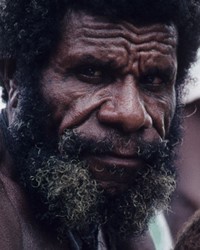
Photo Source:
Anonymous
|
Send Joshua Project a map of this people group.
|
| People Name: | Sepik Iwam |
| Country: | Papua New Guinea |
| 10/40 Window: | No |
| Population: | 5,100 |
| World Population: | 5,100 |
| Primary Language: | Iwam, Sepik |
| Primary Religion: | Christianity |
| Christian Adherents: | 99.00 % |
| Evangelicals: | 20.00 % |
| Scripture: | New Testament |
| Ministry Resources: | Yes |
| Jesus Film: | No |
| Audio Recordings: | Yes |
| People Cluster: | New Guinea |
| Affinity Bloc: | Pacific Islanders |
| Progress Level: |

|
Introduction / History
The Sepik Iwam are an indigenous people of East Sepik Province, Papua New Guinea, living in villages along the upper Sepik River in the Ambunti District. Their communities are scattered along the river and its adjacent lagoons from Iniok village downstream to the Leonard Schultze River, in one of the most remote stretches of one of the world's great waterways. The Sepik River winds for over 1,100 kilometers through the lowlands of northern Papua New Guinea, forming the central artery of life for the many distinct peoples who have called its banks home for thousands of years. For the Sepik Iwam, the river is not merely geography — it is the organizing center of daily existence, a source of food, the primary highway of travel and trade, and the setting of community life across generations.
The Sepik Iwam speak the Sepik Iwam language, which belongs to the Sepik language family. The language is a living tongue with a written form, and translation work has produced both Bible portions and a New Testament in Sepik Iwam. German colonial administration reached the upper Sepik in the late nineteenth century, and an Australian patrol station was established at Ambunti in the early twentieth century, bringing the region into contact with the outside world. Protestant missionaries followed, and the gospel eventually took root among the Sepik Iwam, producing the remarkable Christian community that exists there today.
What Are Their Lives Like?
Life among the Sepik Iwam revolves around the river and the forest. Fish and sago are the twin foundations of the daily diet. Women process sago — a starchy staple extracted from the pith of sago palms — while men fish the river and its surrounding lagoons, paddling dugout canoes across waters that serve as the primary routes of travel and trade. Hunting provides additional protein and supplementary foods are grown in village gardens. The broader upper Sepik region is known for its woodcarving tradition, and the Iwam people have historically been skilled carvers, producing shields and other objects that reflect their engagement with the natural world around them.
Villages are built along the riverbanks, with houses constructed on stilts to withstand the seasonal flooding that shapes the rhythm of life in this low-lying floodplain environment. Community life is organized around extended family and clan networks, with elders playing an important role in maintaining social order and passing on knowledge across generations. The Ambunti Crocodile and Arts Festival, held annually in the district, draws communities together for sing-sing performances, canoe processions, cultural storytelling, and the display and sale of locally made crafts and carvings — a celebration that has become an important point of connection between river communities and the wider world. Church gatherings are a regular feature of community life, reflecting the deep Christian presence that has developed among the Sepik Iwam over recent generations.
What Are Their Beliefs?
Christianity is the overwhelming primary religion of the Sepik Iwam, and they are classified as significantly reached with a strong evangelical presence. Christian faith has taken deep root in this river community, and the church is a central institution in village life. The New Testament in the Sepik Iwam language was completed in 1989 and reprinted in 2014, providing a substantial foundation for worship, teaching, and discipleship. Earlier Bible portions were published in 1971, reflecting a long history of scripture translation work among this people. The New Testament is available in both audio and digital formats through multiple platforms, giving the Sepik Iwam multiple avenues for engaging with God's Word. No complete Bible in Sepik Iwam has yet been reported.
A portion of the community retains traditional ethnic religious beliefs. In the upper Sepik world, older spiritual frameworks historically involved understandings of spirits associated with the river, the forest, and the ancestors.
What Are Their Needs?
The Sepik Iwam's most significant ongoing spiritual need is the completion of a full Bible in their heart language. While the New Testament is a precious and substantial gift, a complete Bible would give the Sepik Iwam church access to the full witness of Scripture — the Psalms, the wisdom literature, the prophets, and the entire unfolding story of God's redemptive work. Faithful local pastors and church leaders need ongoing biblical training and access to sound discipleship resources so they can teach with depth and call their congregations to genuine, maturing faith.
Physically, the extreme remoteness of upper Sepik communities creates significant challenges. Reliable healthcare is difficult to access, and families dealing with medical emergencies must often navigate long river journeys to reach a clinic or hospital. Quality education for children is similarly limited in remote river villages, with many communities lacking consistently staffed and well-resourced schools. The river that gives life to the Sepik Iwam also isolates them from many of the services and opportunities available to communities in more accessible parts of Papua New Guinea.
Prayer Points
Pray for the completion of a full Bible in the Sepik Iwam language, so that God's entire Word would be available to this river community in the language they know best.
Pray for faithful, well-trained Sepik Iwam church leaders who will preach the gospel clearly, disciple their congregations deeply, and call their communities to wholehearted faith in Jesus Christ.
Pray for improved access to healthcare and quality education in the remote upper Sepik villages, and that the local church would be a source of practical compassion and hope for families in need.
Pray that the Sepik Iwam, already strongly touched by the gospel, would grow in a missionary vision — sending believers from their own river villages to carry the name of Jesus to less-reached peoples throughout Asia.