Bagata in India
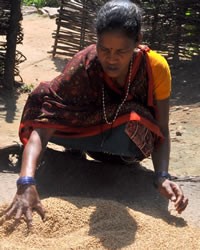
Photo Source:
Anonymous
|
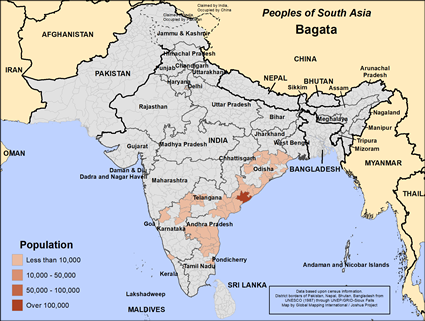
Map Source:
People Group data: Omid. Map geography: UNESCO / GMI. Map Design: Joshua Project.
|
| People Name: | Bagata |
| Country: | India |
| 10/40 Window: | Yes |
| Population: | 157,000 |
| World Population: | 157,000 |
| Primary Language: | Telugu |
| Primary Religion: | Hinduism |
| Christian Adherents: | 0.69 % |
| Evangelicals: | 0.00 % |
| Scripture: | Complete Bible |
| Ministry Resources: | Yes |
| Jesus Film: | Yes |
| Audio Recordings: | Yes |
| People Cluster: | South Asia Tribal - other |
| Affinity Bloc: | South Asian Peoples |
| Progress Level: |

|
Introduction / History
Under the Constitution of India, the Bagatas are recognized as a Scheduled Tribe under the reservation system. They are one of the aboriginal tribes. They are also called Bagatha, Bagat, Bagodi, Bogad or Bhakta. Bagatas speak with one another in a form of the Oriya language, Adivasi Oriya. One of their main languages is Telugu.
They are mainly concentrated in the states of Andhra Pradesh and Odisha. They live mostly in Alluri Sitarama Raju district of Andhra Pradesh, and in small numbers in Anakapalli, Visakhapatnam, Parvathipuram Manyam, East Godavari and Polavaram districts. Historically, they were honored as "Bhakta" for their loyal military service to the local Mokhasadharas and the zamindars of Golugonda and Madugu.
What Are Their Lives Like?
They work as farmers to earn a living. They have a social hierarchy like other tribes in Odisha.
Bagata people celebrate festivals, dances and music. Dhimsa is one of the dances and Bagata tribes of all ages enjoy energetic dancing, and all ages take part. In March and April, they dance at weddings and at social functions. Dance encourages friendships with people in the nearby villages. During festive seasons dancers from a Bagata village go to other villages to dance and to participate in community feasts. The dances of the Bagata are called Sankidi Kelbar. Perhaps the gospel can best be communicated to them through dance.
What Are Their Beliefs?
Bagata people are mostly Hindus. They worship Hindu gods and goddesses in addition to their family and tribal gods.
What Are Their Needs?
Scripture resources, written, audio, and visual exist in the Telugu language of Bagata people, yet they are unreached.
Their worship of many gods, and their dance, perhaps fills an emotional need, but their genuine spiritual need cannot be touched in these ways. Bagata people need to see their critical need for their Savior, who loves them and desires a personal relationship with them.
Prayer Points
Pray that Bagata people will become interested in Jesus Christ via film, recordings and the written word which are available in their Telugu language.
Pray that God will raise up Indian churches to boldly and lovingly evangelize this people group for whom Christ died and rose again.
Pray for a disciple making movement to flourish among them.
Pray that, as David danced before Jehovah God, Bagata people will dance before Him in joyful worship.