Chain in India
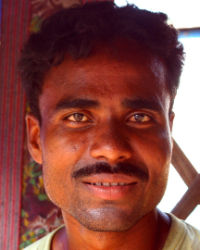
Photo Source:
Copyrighted © 2026
Isudas All rights reserved. Used with permission |
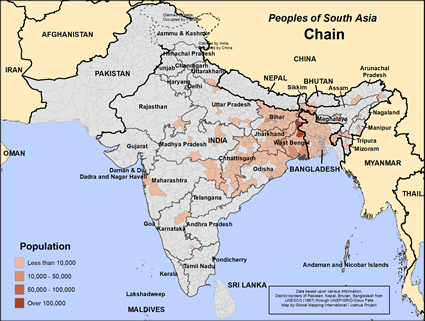
Map Source:
People Group data: Omid. Map geography: UNESCO / GMI. Map Design: Joshua Project.
|
| People Name: | Chain |
| Country: | India |
| 10/40 Window: | Yes |
| Population: | 549,000 |
| World Population: | 574,000 |
| Primary Language: | Bengali |
| Primary Religion: | Hinduism |
| Christian Adherents: | 0.04 % |
| Evangelicals: | 0.00 % |
| Scripture: | Complete Bible |
| Ministry Resources: | Yes |
| Jesus Film: | Yes |
| Audio Recordings: | Yes |
| People Cluster: | South Asia Hindu - other |
| Affinity Bloc: | South Asian Peoples |
| Progress Level: |

|
Introduction / History
The Chain are an ethnic community found in northeastern India, particularly in parts of Manipur near the border regions connected to Myanmar. They are related to other Chin-Kuki tribal peoples of the surrounding hill regions and speak the Chain language, which belongs to the Tibeto-Burman language family. Their history is closely tied to the migration patterns of Chin-related peoples who moved through the mountainous areas between present-day India and Myanmar over many generations.
Traditionally, the Chain lived in small village communities led by local chiefs or respected elders. Their remote location in difficult terrain helped preserve many aspects of their language and customs. Like many tribal groups in the region, they have experienced social and political pressures connected to border tensions, ethnic conflicts, and economic hardship. Even so, family loyalty, clan identity, and respect for community traditions remain important parts of daily life.
What Are Their Lives Like?
Most Chain families live in rural hill communities where agriculture plays a major role in everyday life. Farming is often done on terraced hillsides or through shifting cultivation methods, with rice serving as a primary food source alongside vegetables, roots, and local herbs. Livestock such as pigs and chickens are commonly raised near the home.
Family and village relationships are central to Chain society. Extended families frequently live close together, and community cooperation is highly valued during planting seasons, harvests, weddings, and times of difficulty. Traditional songs, storytelling, and festivals help preserve cultural identity and pass history from one generation to another.
Life in the hill regions can be physically demanding. Roads, medical care, and educational opportunities are often limited in remote areas. Younger generations sometimes leave their villages in search of work or schooling in larger towns, creating tension between preserving traditional culture and adapting to modern economic realities.
What Are Their Beliefs?
Many among the Chain identify with Christianity due to missionary influence that spread through Chin and related tribal communities during the past century. Churches often play an important role in village life and community gatherings.
However, traditional spiritual beliefs and practices may still influence daily thinking and customs. In some communities, older animistic ideas concerning spirits, blessings, curses, and supernatural forces remain present alongside outward Christian practice. Fear of spiritual powers, reliance on rituals, and respect for ancestral traditions can contribute to syncretism where biblical teaching has not been deeply understood or firmly established.
Where the gospel has taken root genuinely, believers need continued discipleship, sound biblical teaching, and spiritual maturity so that faith rests fully on Christ rather than on a mixture of older religious practices.
What Are Their Needs?
The Chain need continued access to clear biblical teaching in forms that are understandable within their language and cultural setting. Churches and believers among them need encouragement, trained leadership, and faithful discipleship rooted firmly in Scripture.
Many communities also face practical challenges connected to poverty, limited infrastructure, healthcare access, and educational opportunities. Remote geography can isolate villages from outside assistance and economic development.
Younger generations often face uncertainty as they balance traditional identity with modern pressures and migration to urban areas. Strong Christian families and mature local churches can provide stability, hope, and godly leadership during these transitions.
Prayer Points
Pray that the Chain people would come to a deep and genuine understanding of the gospel of Jesus Christ and place their faith fully in Him alone.
Pray that believers and churches among the Chain would grow in biblical maturity, rejecting syncretism and standing firmly on the truth of Scripture.
Pray that the Chain people would be adopted through the People Group Adoption program so that ongoing prayer, ministry partnership, and future gospel engagement would continue among them.
Pray for improved access to healthcare, education, and economic opportunity in remote Chain communities, and that Christian workers would serve them with wisdom and compassion.