Nanakshahi in India

Photo Source:
Jasleen Kaur - Flickr
Creative Commons
|
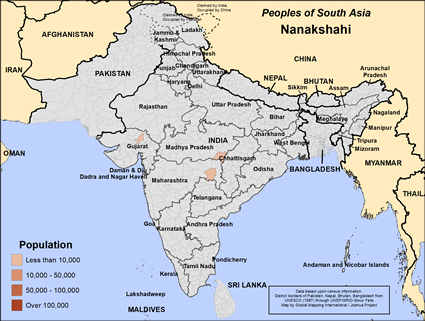
Map Source:
People Group data: Omid. Map geography: UNESCO / GMI. Map Design: Joshua Project
|
| People Name: | Nanakshahi |
| Country: | India |
| 10/40 Window: | Yes |
| Population: | 2,200 |
| World Population: | 2,200 |
| Primary Language: | Hindi |
| Primary Religion: | Sikhism |
| Christian Adherents: | 0.00 % |
| Evangelicals: | 0.00 % |
| Scripture: | Complete Bible |
| Ministry Resources: | Yes |
| Jesus Film: | Yes |
| Audio Recordings: | Yes |
| People Cluster: | South Asia Sikh - other |
| Affinity Bloc: | South Asian Peoples |
| Progress Level: |

|
Introduction / History
The Nanakshahi are associated with the Sikh religious and cultural tradition in India. Their identity is connected to the heritage of Guru Nanak, the founder of Sikhism, whose teachings emerged in the Punjab region during the fifteenth century. Sikh communities developed in response to both religious and social conditions in northern India and became known for emphasizing devotion to one God, community service, disciplined living, and loyalty to the teachings of the Sikh Gurus.
Over time, Sikh communities spread beyond Punjab into other regions of India through trade, military service, agriculture, education, and migration. The Nanakshahi identity reflects strong ties to Sikh history, religious tradition, and community life shaped by centuries of cultural continuity and shared faith practices.
What Are Their Lives Like?
The daily lives of the Nanakshahi are often centered around family relationships, work, worship, and community involvement. Sikh communities commonly place high value on hospitality, hard work, service to others, and respect for elders. Extended family networks frequently remain important sources of support and guidance.
Depending on where they live, Nanakshahi families may work in agriculture, transportation, business, education, manufacturing, skilled trades, or professional occupations. Many Sikh communities have adapted successfully to urban life and modern economic opportunities while still maintaining strong cultural and religious traditions.
Meals commonly reflect Punjabi and northern Indian cuisine, including breads, rice, lentils, dairy products, vegetables, and spiced dishes prepared for both daily family life and community gatherings. Shared meals served at gurdwaras are an important expression of equality and service within Sikh tradition.
Religious festivals, weddings, and historical commemorations play a major role in preserving identity and strengthening social bonds. At the same time, modernization and global influences continue to shape younger generations as they navigate changing cultural expectations.
What Are Their Beliefs?
The Nanakshahi are associated with Sikhism. Sikh belief centers on devotion to one God, the teachings of the Sikh Gurus, and the authority of the Guru Granth Sahib. Religious life commonly includes prayer, worship at gurdwaras, reading sacred writings, acts of service, and participation in community meals.
Sikh teaching rejects many aspects of idol worship and emphasizes moral living, remembrance of God, and community responsibility. However, cultural traditions and inherited practices may still influence daily religious expression in different ways across Sikh communities.
Although Sikhism teaches reverence for God and ethical living, the Nanakshahi still need the saving message of the gospel and reconciliation with God through Jesus Christ alone rather than through religious devotion or human effort.
What Are Their Needs?
The Nanakshahi need greater access to biblical teaching, Scripture, and faithful Christian witness presented with humility, wisdom, and cultural understanding. Many Sikh communities have limited exposure to evangelical Christianity and may primarily encounter Christianity through cultural assumptions rather than through personal relationships with mature believers.
There is a need for Christians who can thoughtfully engage Sikh questions about God, truth, salvation, and Scripture while demonstrating genuine love and respect. Those who show interest in following Christ may face pressure from family or community because religious identity is often deeply tied to heritage and social belonging.
Practical needs may include educational opportunity, healthy family relationships, mentorship for younger generations, and support for communities navigating social and economic change. Compassionate service combined with faithful gospel proclamation can help open doors for long-term ministry.
Prayer Points
Pray that the Nanakshahi people would hear the gospel clearly and come to know Jesus Christ as Savior and Lord.
Pray that God would raise up mature and compassionate believers who can build relationships and share biblical truth faithfully among the Nanakshahi community.
Pray that the Nanakshahi would be adopted through the People Group Adoption program so that sustained prayer and long-term gospel outreach would continue among them.
Pray for spiritual openness, strengthened families, and opportunities for younger generations of Nanakshahi to encounter the truth of God's Word.