Karen, Pwo Western in Myanmar (Burma)
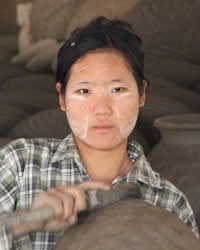
Photo Source:
Asia Harvest-Operation Myanmar
|
Send Joshua Project a map of this people group.
|
| People Name: | Karen, Pwo Western |
| Country: | Myanmar (Burma) |
| 10/40 Window: | Yes |
| Population: | 212,000 |
| World Population: | 212,000 |
| Primary Language: | Karen, Pwo Western |
| Primary Religion: | Christianity |
| Christian Adherents: | 42.00 % |
| Evangelicals: | 18.00 % |
| Scripture: | Complete Bible |
| Ministry Resources: | Yes |
| Jesus Film: | Yes |
| Audio Recordings: | Yes |
| People Cluster: | Karen |
| Affinity Bloc: | Tibetan-Himalayan Peoples |
| Progress Level: |

|
Introduction / History
The Western Pwo Karen inhabit areas in the Ayeyarwady (formerly Irrawaddy) River Delta in southern Myanmar. Most live in four districts of the Ayeyarwady Region, with others in the Bago Region and in Twante Township near the largest city and former capital of Myanmar, Yangon.
Today many Karen around Pathein have assimilated into Burmese culture and the Buddhist religion and are no longer able to speak their native language, although they maintain their Karen identity. Many people think of the Karen as a tribe dwelling in the high mountains and dense jungles near the Thai border, but the Western Pwo Karen are concentrated further west amid the suffocating humidity of the southern Myanmar floodplains.
The Western Pwo Karen language has four tones and consists of 25 consonants and 11 vowels. Although the use of their language remains vigorous in rural villages, its use is diminishing in towns, where Burmese is quickly gaining in popularity.
Karen legends spoke of a "river of running sand" that their ancestors crossed before moving into today's Myanmar. This possibly refers to the Jinsha River in China's Yunnan Province. Its name means "The River of Golden Sand." If true, it would support the theory that the Karen and other Tibeto-Burmans splintered off from the alliance of Xiongnu nomadic tribes that inhabited areas of western and northern China from the third century BC to the end of the first century AD. One historian wrote: "The Karen were among the earliest inhabitants to descend from China down the Ayeyarwady, Sittang and Salween rivers, but over the centuries they retreated into the mountains of the southeast and the forests of the Ayeyarwady Delta under pressure from the Burmese and Mon."
What Are Their Lives Like?
Apart from those living in cities and towns who have government jobs or are engaged in trade, most Western Pwo people are rural farmers and fishermen. Many prawn farms operate in the area. The Ayeyarwady Region is called "The granary of Myanmar." Principal crops include rice, maize, sunflower, beans, pulses, and jute.
What Are Their Beliefs?
The first Karen Christian and apostle to his people, Ko Tha Byu, was a Western Pwo Karen born at Pathein, the capital of the Ayeyarwady Region. Although thousands of Western Pwo people trusted in Christ in the following decades, Buddhism was already deeply entrenched. Today the numbers of professing Buddhists and Christians is evenly matched among this group, with another 20 percent of people still clinging to the animistic beliefs of their forefathers, although many Buddhists also continue to offer sacrifices to the spirits.
What Are Their Needs?
Ko "had been a violent robber and murderer in his younger years, but after becoming Adoniram Judson's servant, he became fully convinced of the claims of Jesus Christ. Judson loved him and gave him the name Tha Byu, meaning "little brother." Often, as Judson spent countless hours debating with Buddhist monks and educated Burmese people, Ko would quietly sit around the campfires sharing the gospel with Karen people. While it took Judson seven years to win his first Burmese convert, Ko led handfuls of Karen families to Christ, and soon small pockets of believers had been established across a widespread area." An early summary of the work at Pathein said: "The Karen Christians were for years persecuted by the Burmese government and many of them died from exposure in the hills, whence they had fled for safety…. The Pwo Karen Mission in Pathein was started in 1849, but the Roman Catholics have got a strong hold over these people, and their converts outnumber the Baptists." Approximately 88,000 Western Pwo identify as Christians today. They meet in many different churches, of which the Baptists and Catholics are the most numerous. The Pwo Karen Bible has been in print for nearly two centuries, but today many believers prefer to use Burmese Bibles.
Prayer Points
Ask God to raise up Western Pwo Karen
leaders who can share the gospel with wisdom and compassion, bridging traditional beliefs and biblical truth.
Pray that the Western Pwo Karen
people would experience the love of Christ in ways that affirm their cultural identity and lead them to a closer walk with God.
Pray for them to have such a love for God that they can't help but tell others about him.
Pray for Western Pwo Karen disciples to make more disciples.