Koviar in Sri Lanka

Send Joshua Project a photo
of this people group. |
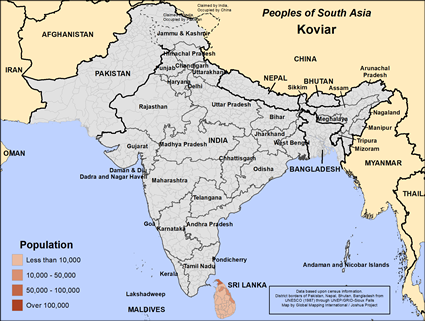
Map Source:
People Group data: Omid. Map geography: UNESCO / GMI. Map Design: Joshua Project
|
| People Name: | Koviar |
| Country: | Sri Lanka |
| 10/40 Window: | Yes |
| Population: | 229,000 |
| World Population: | 229,000 |
| Primary Language: | Tamil |
| Primary Religion: | Hinduism |
| Christian Adherents: | 17.02 % |
| Evangelicals: | 0.00 % |
| Scripture: | Complete Bible |
| Ministry Resources: | Yes |
| Jesus Film: | Yes |
| Audio Recordings: | Yes |
| People Cluster: | South Asia Hindu - other |
| Affinity Bloc: | South Asian Peoples |
| Progress Level: |

|
Introduction / History
The Koviar (also known as Koviyar or Covia) are a Tamil-speaking caste group in Sri Lanka. Traditionally, they were agriculturalists, temple guardians, and temple workers, but their roles historically extended to feudal lords, warriors, merchants, and landowners. The name "Koviar" is linked to the Tamil word kovil (temple), reflecting their long association with temple service and ritual life.
They are regarded as ritually significant within Tamil society and are closely related to the Vellalar caste, often described as their "cousin" caste. Their history is deeply tied to the Tamil cultural and religious landscape of northern and eastern Sri Lanka, where Hindu temples and agrarian life have shaped their identity.
What Are Their Lives Like?
The Koviar live primarily in Tamil-majority regions of Sri Lanka. Agriculture remains central, with rice, vegetables, and cash crops forming the backbone of their economy. Many also work as temple caretakers or in trades connected to local markets. Family life is extended and communal, with strong respect for elders and kinship ties. Marriage is often arranged within caste boundaries, and weddings are celebrated with elaborate rituals, music, and feasting.
Festivals such as Thai Pongal (harvest festival) and temple-centered celebrations are important cultural markers. These events involve offerings, processions, and communal meals. Food is a vital part of their daily life, with rice and curries made from lentils, fish, and vegetables forming staple meals. Coconut, tamarind, and spices add flavor, and hospitality is expressed through generous sharing of food during festivals and family gatherings.
What Are Their Beliefs?
The Koviar are predominantly Hindu, following Tamil Shaivite traditions. Temples are central to their spiritual and social life, and deities such as Shiva and Murugan are widely revered. Kattavarayan, a caste deity, is specifically observed among the Koviar. Rituals, offerings, and temple festivals structure their religious calendar.
A minority of Koviar identify as Christians, but the overall presence of the gospel remains limitedJoshua Project. Hinduism continues to shape their worldview, emphasizing devotion, ritual purity, and community identity.
What Are Their Needs?
The Koviar face both spiritual and physical challenges. Spiritually, most have not encountered the transforming message of Jesus Christ, and the hope of salvation remains distant. Physically, many live in rural areas where poverty, limited access to education, and restricted economic opportunities hinder development. The Koviar need holistic transformation that addresses their material struggles while opening their hearts to the gospel.
Prayer Points
Pray that the Koviar will encounter Christ through scripture, audio recordings, and the JESUS Film, which are available in Tamil.
Pray asking God to raise up Tamil-speaking believers who will share the gospel with the Koviar and disciple new followers of Christ.
Pray for physical needs such as improved education, healthcare, and sustainable livelihoods.
Pray for families to remain strong and united, and for young people to find hope and purpose in Christ rather than in migration or despair.
Pray that Hindu traditions and temple life will open doors for dialogue, and that the Koviar will see Jesus as the true answer to life's issues.