Oli in Sri Lanka

Send Joshua Project a photo
of this people group. |
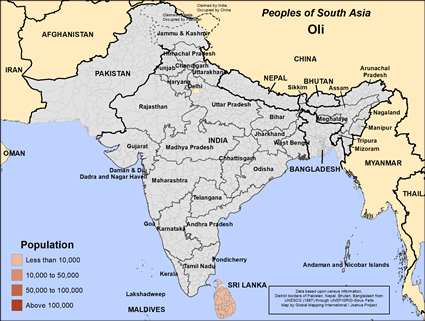
Map Source:
People Group data: Omid. Map geography: UNESCO / GMI. Map Design: Joshua Project
|
| People Name: | Oli |
| Country: | Sri Lanka |
| 10/40 Window: | Yes |
| Population: | 33,000 |
| World Population: | 33,000 |
| Primary Language: | Sinhala |
| Primary Religion: | Buddhism |
| Christian Adherents: | 5.20 % |
| Evangelicals: | 0.00 % |
| Scripture: | Complete Bible |
| Ministry Resources: | Yes |
| Jesus Film: | Yes |
| Audio Recordings: | Yes |
| People Cluster: | South Asia Buddhist |
| Affinity Bloc: | South Asian Peoples |
| Progress Level: |

|
Introduction / History
The Oli are a distinct people group in Sri Lanka, traditionally recognized within the Sinhala cultural framework. Their identity has been shaped by centuries of integration into village life, where they contributed to local economies and social structures. Historically, the Oli were associated with specific occupations and crafts, though modernization has shifted many into new forms of work. Their heritage is tied to the rhythms of rural Sri Lankan society, with strong communal ties and a deep connection to the land.
What Are Their Lives Like?
The Oli live in Sinhala-majority regions and share much of the cultural life of the broader Sinhalese community. Work often involves agriculture, small-scale trade, and wage labor, though some families continue traditional crafts. Family dynamics are typically extended, with grandparents, parents, and children living together and sharing responsibilities.
Celebrations revolve around Buddhist festivals such as Vesak, harvest rituals, and local temple events. Food is central to their culture, with rice and curry forming the staple diet, often accompanied by coconut-based dishes, lentils, and seasonal vegetables. Hospitality is highly valued, and meals are often shared communally during festivals and family gatherings.
What Are Their Beliefs?
The Oli are predominantly Buddhist, with only a small minority identifying as Christian. Buddhism shapes their worldview, moral values, and community practices, with temple rituals, meditation, and festivals forming the core of religious life. The teachings of the Buddha influence their understanding of suffering, morality, and community harmony. Christianity has made limited inroads among them, and there has been little historical connection to Christian mission.
What Are Their Needs?
The Oli face challenges in balancing traditional ways of life with modern economic realities. Many families struggle with limited access to education and employment opportunities, particularly in rural areas. Economic insecurity often leads to migration, which can weaken family and community bonds.
Spiritually, the Oli need opportunities to encounter the message of Christ in ways that acknowledge their cultural identity and values. Socially, they require encouragement to preserve their heritage while also embracing new opportunities for sustainable livelihoods.
Prayer Points
Pray that the Oli will encounter the love of Christ through relationships with nearby believers.
Pray asking God to raise up local Christians who will see themselves as part of the mission force, reaching out with compassion and respect.
Pray for economic stability and opportunities for younger generations, so that families can thrive without abandoning their heritage.
Pray for openness to the gospel, for hearts to be softened, and for communities to experience spiritual transformation.