Khawngtu in Myanmar (Burma)
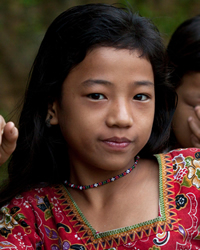
Photo Source:
Asia Harvest-Operation Myanmar
|
Send Joshua Project a map of this people group.
|
| People Name: | Khawngtu |
| Country: | Myanmar (Burma) |
| 10/40 Window: | Yes |
| Population: | 5,000 |
| World Population: | 5,000 |
| Primary Language: | Language unknown |
| Primary Religion: | Christianity |
| Christian Adherents: | 96.00 % |
| Evangelicals: | 48.00 % |
| Scripture: | Unspecified |
| Ministry Resources: | No |
| Jesus Film: | No |
| Audio Recordings: | No |
| People Cluster: | South Asia Tribal - Naga |
| Affinity Bloc: | South Asian Peoples |
| Progress Level: |

|
Introduction / History
The Khongtu tribe inhabits ten villages in western Myanmar's Chin State. A visitor described the terrain in 1907: "The hills are very steep and are separated by steep valleys. You see a village on an opposite hill, which seems to be a few hundred yards off, and have to travel up and down steep hills sometimes eight or ten miles to get to it."
The Khongtu are a new Chin language group with their own ethnic identity, who until now have never appeared on any secular or Christian lists of the world's people groups. For generations the Khongtu have viewed themselves as a distinct people, but governments and academics have lumped them together with other Chin-related tribes for administrative purposes, not wanting to individually acknowledge the myriad of small tribes that inhabit the Chin Hills.
In the past, Khongtu was merely listed as one of over a dozen different Eastern Khumi dialects, but subsequent research has found that many of those "dialects" are distinct languages, including Khongtu. Many Chin tribes possess a legend that their lack of literacy was due to an act of deceit by the Burmese, who tricked the naïve Chin and caused them to lose their script.
Although some scholars have suggested the first Chin arrived in western Myanmar around AD 750, most agree that later waves of migrants established the Chin presence in the 1300s. For centuries the Chin tribes have been engaged in warfare and struggle, both with invading forces and with each other. It was said: "A slave in the Chin Hills in the late 19th century was worth four head of cattle, a good gun, or twelve pigs. Slaves were current coin in the hills and passed from hand to hand as easily as a banknote in more civilized regions."
What Are Their Lives Like?
Matupi is a mountainous area covered with subtropical forests. The highest mountain in the area is Awtaraw at 9,009 feet (2,746 meters) tall. Wildlife in Matupi includes pangolin, tigers, leopards, bears, and many species of monkeys, while hornbill birds are found in plentiful numbers. Most Khongtu families are engaged in agriculture, and common crops include corn, coffee, oranges, plums, and potatoes.
What Are Their Beliefs?
For countless generations the Khongtu venerated spirits, and great care was exercised not to offend demons that could bring disaster on the community. Key mountains, rivers, and even trees were worshipped as deities. In the 20th century, Christianity swept through Chin State, bringing tens of thousands of people into the kingdom of God, including among the Khongtu. Today, only a few hundred Khongtu living in remote villages hold on to the beliefs of their forefathers, although alarmingly, animistic rituals have carried over into some Khongtu churches.
What Are Their Needs?
Although almost all Khongtu families today profess faith in Jesus Christ, no Scripture or other resources have ever been produced in their language. Believers have had to rely on Bibles in other languages that are not their own, which may have stunted the spiritual growth of the Khongtu believers.
Prayer Points
Pray that traditional fears of spirits and ancestral powers will be replaced by confidence in Jesus Christ as Lord and protector.
Pray for the Holy Spirit to send a powerful revival to Khongtu homes and churches.
Pray for Khongtu Christians to be filled with the fruit and the power of the Holy Spirit.
Pray for Khongtu Christians to excel in love, joy, and peace as they take Christ to others.
Pray for them to have patience and kindness as they minister the gospel.