Lama in Myanmar (Burma)
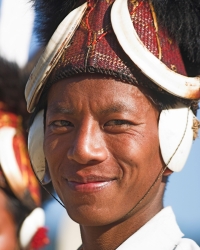
Photo Source:
Asia Harvest-Operation Myanmar
|
Send Joshua Project a map of this people group.
|
| People Name: | Lama |
| Country: | Myanmar (Burma) |
| 10/40 Window: | Yes |
| Population: | 400 |
| World Population: | 400 |
| Primary Language: | Language unknown |
| Primary Religion: | Christianity |
| Christian Adherents: | 85.00 % |
| Evangelicals: | 42.00 % |
| Scripture: | Unspecified |
| Ministry Resources: | No |
| Jesus Film: | No |
| Audio Recordings: | No |
| People Cluster: | South Asia Tribal - Naga |
| Affinity Bloc: | South Asian Peoples |
| Progress Level: |

|
Introduction / History
One of the smallest tribes in western Myanmar is the Lama people who live in several villages surrounding the town of Pangsau, which lies within Lahe Township, immediately adjacent to the border with India.
The Lama people of Myanmar have never previously appeared on any lists of the country's ethnic groups, and subsequently they have not been known to the Christian world, although they are a distinct people loved by God. The Lama are considered part of the Tangshang cluster of tribes, which in turn form an arm of the Naga cultural and linguistic group that includes over 100 different people groups. While this tribe is known by different names in other dialects in both Myanmar and India, the people of the tribe themselves insist their name is Lama.
The Lama vernacular was a special variety lost in a sea of languages in this diverse part of Myanmar until a team of linguists traveled to Pangsau in 2013. They surveyed 125 Lama people and, after comparing word lists, concluded that Lama is different from yet related to three other Tangshang varieties: Bote, Haqkhu, and Haqkhun. It appears to be most closely related to Bote, yet the two dialects still have significant vocabulary differences. Researchers have also compared word lists from Lama communities on both sides of the border and found that they share only an 87 percent lexical similarity. This suggests the Lama in India migrated there at least a few generations ago and the languages have since diverged.
The Lama are one of 19 small tribes labeled "Tangsa" that are located across the border in the northeast Indian state of Arunachal Pradesh. They will be profiled in our future Operation India series of books. Tellingly, all the Tangsa groups in India say they migrated there from Myanmar, while oral traditions suggest they originated in southwest China or Tibet, possibly commencing their journey south in the early 13th century.
What Are Their Lives Like?
A shortage of fresh water is a major challenge for the Lama and other tribes in Lahe Township, as their villages are located on mountain slopes that hinder the construction of wells. Most people collect rainwater as their only source of water. Lahe is an impoverished area, with 96 percent of homes constructed with bamboo, and firewood is their only source of heating. In 2014, 59. percent of people in Lahe were officially stateless, not considered citizens of Myanmar or any other country.
What Are Their Beliefs?
After centuries of darkness, as their ancestors lived and died enslaved by evil spirits, the religious landscape among the Lama and other tribes in Lahe Township began to shift when the first preachers arrived in the 1950s. Over the following several decades Christian influence gradually grew, with Chin, Kachin, and Naga missionaries leading the way. Today almost all Lama people are Christians who belong to Baptist churches.
What Are Their Needs?
Lama Christians may have struggled to grow in faith and knowledge as a result of not having the Bible in a language they can easily understand. Ten of 15 Lama believers said that at some stage of their lives they had heard someone reading from the Tangsa New Testament printed in India, although "It is not clear from this data how much was read, how well it was read, or how long ago they heard it."
Prayer Points
Pray for the Holy Spirit to use Lama Christians to do miraculous things, drawing others to Christ.
Pray that the Lama people will become part of God's plan to bring every tribe and tongue into his kingdom.
Pray for a radical spiritual transformation in their families, churches, and communities.
Intercede for freedom from fear of spirits and for hearts open to the hope found in Christ.