Saparua in Indonesia
PRINT VERSION:

SHARE:


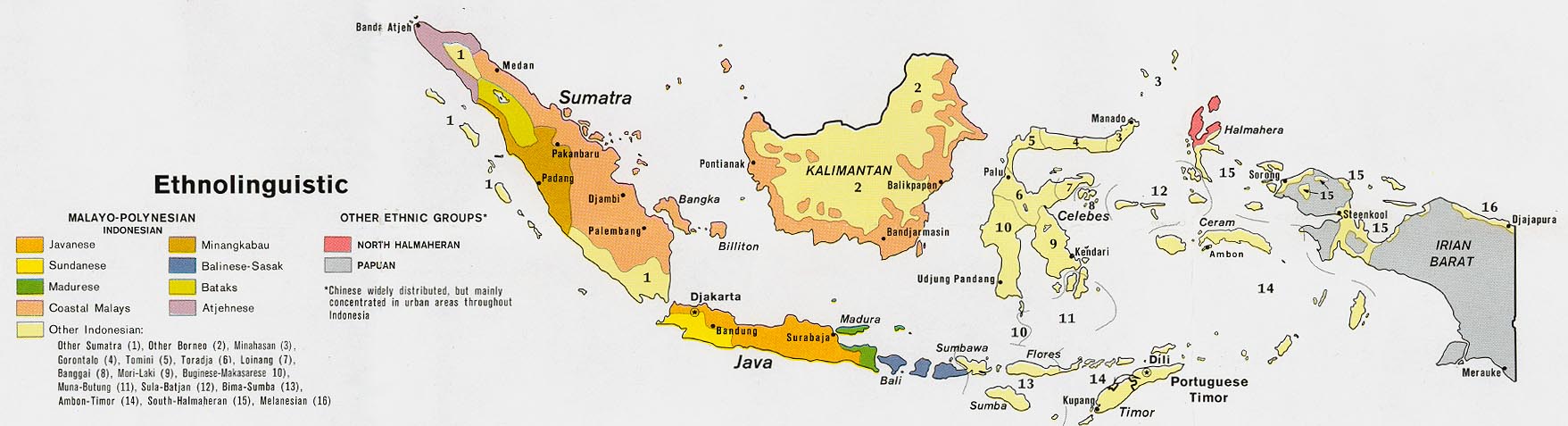
The Island of Saparua is in the province of Maluku, Indonesia. The Saparua are located on a tiny island in the Moluccas, or Spice Islands. This chain of islands is located in the eastern portion of Indonesia and includes most of the islands between Sulawesi and New Guinea and between Timor and the Philippines. The population is mostly of Malayan origin.
The cloves of the northern Moluccas and the nutmeg of the central islands were traded in Asia long before Europeans heard of the Spice Islands. With the arrival of the Portuguese in 1511, many decades of conflict began. The struggles for control of the region caused great loss of life during this period. The victorious Dutch earned large profits, but by the end of the eighteenth century, the spice trade had greatly diminished. As a result, the Moluccas were no longer so desirable.
Indonesian culture is an inter-mixture of many diverse civilizations. The Hinduism and Buddhism of India exerted a profound influence on Indonesian life and left a strong imprint on the architecture and sculpture of the country. Arabic influence in Indonesia has been promoted since the thirteenth century, mainly through the teachings of Islam. The islands have also been affected by Southeast Asian and Polynesian cultures, as well as by the influx of Chinese and Dutch peoples.
During the recent conflict in this region of Indonesia it is believed that outsiders from other Indonesian provinces or other countries instigated the Christian / Muslim war; conservatively over 6000 people were murdered for their faith. There are some horrendous stories of the death and destruction inflicted on these gentle and caring people. The life expectancy of a Saparua is very low. A Saparua person over 40 years who dies is considered to have had an adequate life term.
Saparua children do not have adequate education facilities. Their school equipment is a blackboard (sometimes) and maybe a desk and chairs. Not a single computer is present in most schools. The teachers have very little training. The lack of education keeps the Saparua repressed. Malnutrition is another problem for the children. They have weeping infected sores on their bodies that are something like what we call boils. The great need is for these children is oranges and other fruit on a regular basis along with milk and meat. Their diet is mostly a starch from the sago palm and a little fish.
The majority of Saparua seem to be Christian although official statistics say it is evenly divided between Muslims and Christians. Although exceptionally poor, their churches are brimming over with enthusiastic worshipers. Their idea of a party is a prayer meeting or special worship. Their music more often than not is Christian music that they have written and of exceptional quality. Every important occasion is marked by prayer, every time family or friends depart on a journey it is marked by prayer etc. Their Bibles will be purchased before food for their family and what little money they have is put into the collection plate. They are a shining example to others in Western countries who worship without fear or prejudice but take their right to practice their faith for granted and often treat this 'right' with contempt, for in this country of Muslim Indonesia it is very difficult for Christians.
Tourism is a potential industry that would provide these people with income but since the conflict, which ended officially two to three years ago, the central Indonesian Government has not allowed foreigners access without family and therefore special permission. They most likely have very good reason for this as they do in the provinces of Irian Jaya (another Christian region) and Aceh. These areas have been troubled with a great deal of conflict in the past.
Please pray for peace in these areas and for people to be allowed to practice their faith in harmony with other religions.
Pray there will be a way to help these children with food, medical and education.
Pray for local ministers and and provision for their churches, pray for resources to repair church buildings.
Pray that the central Government of Indonesia allows foreigners easy access to the regions in the near future, as tourism will enable them to lead better lives.
Pray that war is not inflicted on these people again. As with East Timor, there are no winners only losers and none less so than the children who continue to suffer.
Pray that God will continue to give the Saparua believers boldness to share Christ with their own people.
Ask the Lord to bring forth a triumphant Saparua church for the glory of His name!
Scripture Prayers for the Saparua in Indonesia.
| Profile Source: Anonymous |
| People Name General | Saparua |
| People Name in Country | Saparua |
| Alternate Names | Iha; Iha-Seram |
| Population this Country | 16,000 |
| Population all Countries | 16,000 |
| Total Countries | 1 |
| Indigenous | Yes |
| Progress Scale | 5 ● |
| Unreached | No |
| Frontier People Group | No |
| GSEC | 6 (per PeopleGroups.org) |
| Pioneer Workers Needed | |
| People ID | 14755 |
| ROP3 Code | 108695 |
| ROP25 Code | 307252 |
| ROP25 Name | Saparua |
| Country | Indonesia | ||
| Region | Asia, Southeast | ||
| Continent | Asia | ||
| 10/40 Window | Yes | ||
| National Bible Society | Website | ||
| Persecution Rank | 42 (Open Doors top 50 rank, 1 = highest persecution ranking) | ||
| Location in Country | Maluku Province, Kulur, Iha, Siri-Sori, Iha, Kulur, Latu, Hualoy, Tomalehu, and Kairatu villages. Saparua, nearby Seram islands. Source: Ethnologue 2016 | ||
| Country | Indonesia |
| Region | Asia, Southeast |
| Continent | Asia |
| 10/40 Window | Yes |
| National Bible Society | Website |
| Persecution Rank | 42 (Open Doors top 50 rank, 1 = highest persecution ranking) |
| Location in Country | Maluku Province, Kulur, Iha, Siri-Sori, Iha, Kulur, Latu, Hualoy, Tomalehu, and Kairatu villages. Saparua, nearby Seram islands.. Source: Ethnologue 2016 |
| Primary Religion: | Christianity |
| Major Religion ▲ | Percent |
|---|---|
| Buddhism |
0.00 %
|
| Christianity (Evangelical 15.00 %) |
70.00 %
|
| Ethnic Religions |
0.00 %
|
| Hinduism |
0.00 %
|
| Islam |
30.00 %
|
| Non-Religious |
0.00 %
|
| Other / Small |
0.00 %
|
| Unknown |
0.00 %
|
| Primary Language | Saparua (16,000 speakers) |
| Language Code | spr Ethnologue Listing |
| Language Written | Unknown |
| Total Languages | 1 |
| Primary Language | Saparua (16,000 speakers) |
| Language Code | spr Ethnologue Listing |
| Total Languages | 1 |
| People Groups | Speaking Saparua |
Primary Language: Saparua
Bible Translation Status: Unspecified
| Resource Type ▲ | Resource Name | Source |
|---|---|---|
| None reported |
| Photo Source | Franc Le Blanc |
| Map Source | Bethany World Prayer Center |
| Profile Source | Anonymous |
| Data Sources | Data is compiled from various sources. Learn more. |