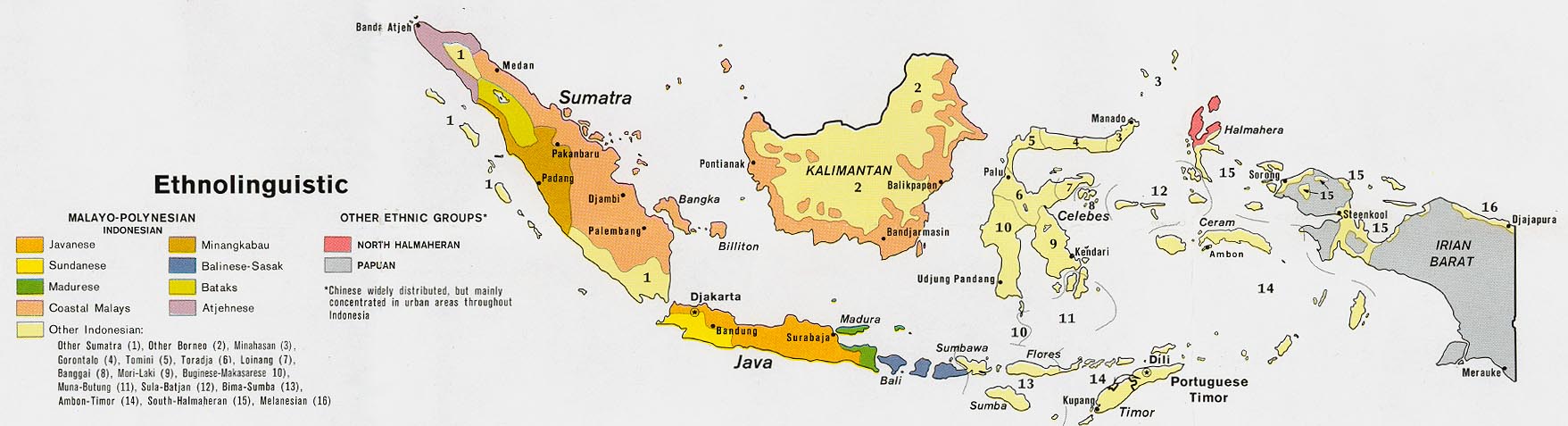
The Pom people live in the northern coastal region of Papua, Indonesia, where they speak the Pom language, a member of the Tor–Kwerba language family. Their history is closely tied to the rugged rainforest terrain that surrounds their villages, which has long shaped their patterns of migration, trade, and kinship. For generations they have relied on local oral traditions to preserve their stories, tracing their origins through clan lineages that connect them to the broader peoples of Papua. Although outside contact increased during the 20th century through government programs and limited missionary presence, most Pom communities still maintain strong ties to their ancestral identity.
The Pom people live in small villages built along forested ridges or near river valleys, where subsistence farming forms the backbone of daily life. Families plant sago, taro, sweet potatoes, and bananas, and they supplement these crops with hunting, fishing, and gathering forest products. Community life revolves around extended family networks, with elders providing guidance and settling disputes. Many Pom families build their homes from local timber and palm materials, and longhouse-style structures are still found in some areas.
Celebrations often accompany the completion of major communal tasks, the arrival of honored visitors, or important rites of passage. During these gatherings, people share roasted pork, sago, and traditional dishes, while singing and drumming play a central role. While a small number of Pom villagers now participate in wage labor in nearby towns, most continue to depend on the forest and their own gardens for survival.
Traditional Pom beliefs center on ancestral spirits, sacred natural places, and the unseen forces that influence daily life. Many people continue to practice rituals meant to maintain harmony between the living world and the spirit realm. Most communities have had exposure to Christianity through nearby coastal churches or mission schools, yet traditional practices sometimes remain deeply interwoven with newer religious ideas. Spiritual curiosity is evident, and many Pom families are open to hearing about the message of Jesus, though consistent discipleship and clear biblical teaching are not yet widely available.
Access to reliable medical care remains limited, and many families face challenges related to preventable illness, maternal health, and sanitation. Educational opportunities are inconsistent, especially for children in remote villages, which restricts literacy and long-term economic stability. Greater exposure to the gospel would help Pom families understand the hope and transformation that come through Christ, and sustained discipleship would equip new believers to grow strong in their faith. Churches in surrounding areas would benefit from encouragement and training so they can participate more actively in reaching Pom communities.
Pray for the Pom people to experience better healthcare and protection from common diseases that threaten children and the elderly.
Intercede for improved schools, dedicated teachers, and opportunities for Pom children to thrive academically.
Ask the Lord to send spiritually mature workers who can communicate Scripture clearly in the Pom language and model Christlike love in daily life.
Pray that Pom households will encounter the gospel through relationships, Scripture portions, and faithful local believers.
Lift up Pom Christians, asking that they will grow strong as disciples and become part of the global mission force that carries Christ's hope throughout Indonesia.
Scripture Prayers for the Pom in Indonesia.
Ethnographic descriptions of Papua peoples
Indonesian regional linguistic surveys
General anthropological studies of Tor–Kwerba–related groups
| Profile Source: Joshua Project |