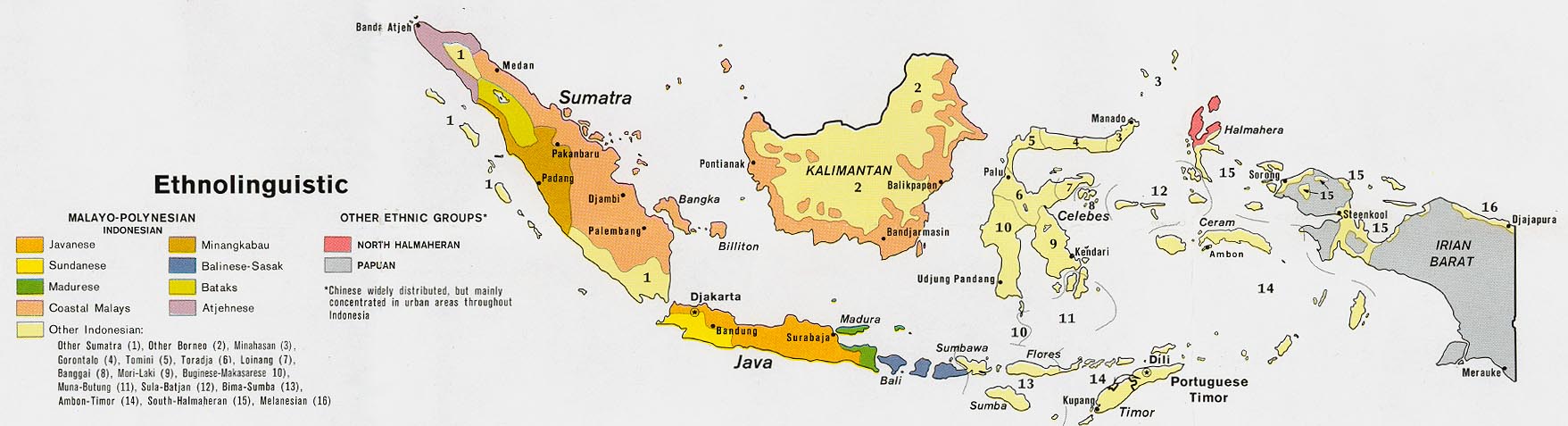
The Ponasakan people are part of the Minahasan cultural sphere of North Sulawesi, Indonesia, historically centered in the region around Belang and its surrounding villages. Their identity is shaped by the Ponasakan language, a Minahasan tongue now spoken by only a small number of families. Historically, the Ponasakan lived in independent village clusters governed by customary leaders who mediated disputes, organized community labor, and preserved oral histories.
Contact with Europeans began in the 16th and 17th centuries through traders and later through Dutch colonial administration, which brought new economic patterns, church institutions, and formal schooling. As roads and communication improved in the 20th century, many Ponasakan families became more integrated with broader Minahasan society, though they still value their distinct lineage and cultural memory.
Most Ponasakan people live in rural communities where farming remains central to daily life. Families cultivate rice, coconuts, cloves, and other crops suited to the fertile volcanic soil of North Sulawesi. Men often work in agriculture, fishing, or small-scale trade, while women contribute significantly through household gardens, market sales, and roles in extended family networks.
Family life is built on close kinship ties, with grandparents frequently participating in the upbringing of children and the preservation of cultural traditions. Communal celebrations accompany major milestones such as weddings, harvest festivals, and church holidays. These gatherings feature traditional Minahasan dishes such as rice, grilled fish, sago-based foods, and celebratory meat dishes shared across extended households.
Music and dance appear in many festive moments, and choirs remain a beloved part of community life. Although many Ponasakan families now participate in modern forms of employment or education in nearby towns, the rhythm of village life continues to be shaped by cooperation, hospitality, and strong community identity.
Most Ponasakan people identify with traditional religious practices. They have a Christian influence. The presence of churches does not always guarantee spiritual maturity, and ongoing teaching, mentoring, and mission vision are still needed. Churches are active in community life, and biblical teaching is familiar to many households. At the same time, traditional beliefs connected to ancestral customs and protective practices have historically influenced many aspects of daily life, and these ideas may still linger. Although Christian identity is strong, not all households have been deeply discipled, and many individuals may not yet have experienced a personal understanding of salvation through Jesus Christ.
Economic stability remains a challenge for families who rely primarily on agriculture, especially when market prices fluctuate or natural conditions affect crops. Improved access to educational and vocational opportunities would help younger generations contribute to their communities while preserving their cultural identity. Consistent biblical teaching and intentional discipleship would strengthen local believers, enabling them to grow in faith and to share Christ's love with surrounding groups. Churches that already exist would benefit from encouragement to engage actively in mission both within and beyond their region.
Pray for Ponasakan families to experience God's provision in their crops, health, and daily work.
Ask the Lord to raise up mature Christian leaders who can disciple believers and guide churches with humility and wisdom.
Intercede for young people to have access to education and opportunities that equip them for future service.
Pray that the gospel will penetrate every household with transforming clarity, leading to strong, vibrant communities of faith.
Lift up the Ponasakan churches, asking God to stir them toward participation in the global mission force, carrying Christ's hope to those who still await the good news.
Scripture Prayers for the Ponasakan in Indonesia.
Indonesian cultural and linguistic surveys
Regional histories of the Minahasan peoples
| Profile Source: Joshua Project |