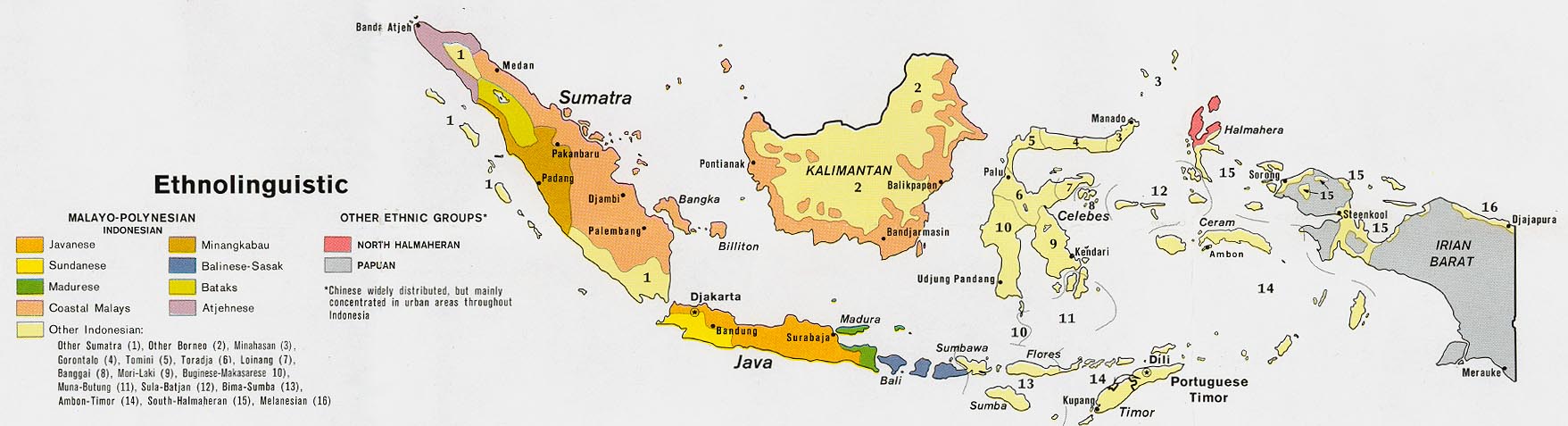
The Sajau Basap, also known as Punan Batu Benau Sajau, are a small indigenous people group in North Kalimantan, Indonesia. Their name identifies with two subgroups: Punan Sajau and Punan Basap. The Sajau Basap language is endangered.
They are perhaps among the last fully mobile or semi-nomadic hunter-gatherer groups in Borneo. Genetic research indicates that they have been isolated for generations, showing a distinct ancestral signature. Their traditional territory is in rugged forest around Mount Benau, along the Sajau River, in Bulungan Regency. Until recently, many lived in cave shelters (karst caves), though some build small huts when camped on the riverbanks.
Sajau Basap people subsist largely through hunting, gathering, and foraging. They hunt forest animals such as wild pigs and squirrels, fish from rivers, and gather tubers, wild vegetables, honey, and other forest products. Their daily diet depends almost entirely on the forest: hunted game, fish, wild tubers, fruits, and honey. When they settle near the caves, they may also collect forest birds' nests. Their food procurement is closely tied to forest rhythms and seasonal availability.
Sajau Basaps move camps roughly every week or two, depending on food availability. They also trade forest goods (for example, swiftlet nests) with outsiders to obtain basic items. Because they are traditionally nomadic or semi?nomadic, their social structure is flexible. Group composition changes fluidly. Families travel in bands rather than living in permanent, large villages. Their elders maintain ancestral memory of forest routes, resource cycles, and communal practices. Message sticks (wooden sticks carrying symbols) are still used by some to communicate between groups, signaling presence, needs, or warnings.
Ritual life among the Sajau Basap is deeply rooted in the forest. One of their most meaningful rituals is Menira, a nighttime chanting ceremony. During Menira, they sing verses in a very old ritual "song-language" called Latala (or Menirak), which is not used in daily speech but preserved in their caves. This is often done to ask for abundant hunting, express hopes, or teach children—some of the verses serve as lullabies, carrying moral instruction.
They also have a Bible-believing Christian presence, but with few oral resources, many fall back on faith in traditional practices rather than the Lord of lords.
The Sajau Basap hold a traditional animistic worldview deeply linked to the forest: they see the forest not just as a resource, but as a living cosmos filled with spirit and meaning.
Their Menira ritual reflects a belief in a spiritual realm accessed through song, rather than through trances; the singing of Latala is done consciously, not in altered states.
Their ancient ritual language, Latala, is highly symbolic and deeply rooted in their history. Researchers note that it is not closely related to typical Austronesian languages, suggesting a very ancient heritage. During Menira, they appeal for both practical needs (such as a good hunt) and for moral or spiritual guidance.
Their belief system also includes a form of non-verbal communication: message sticks (crafted with symbols) are used to communicate across forest camps, conveying ideas such as hunger, illness, or direction.
Spiritually, the Sajau Basap have had very limited contact with the gospel. Their strong forest identity and animistic worldview mean that the good news of Jesus Christ may be both unfamiliar and potentially deeply transformative, but also difficult to communicate without sensitivity to their belief structures.
Culturally, they face the threat of cultural erosion: as their forest territory shrinks under pressures of deforestation and land conversion, their traditional way of life is under threat. Protecting their land is not simply an environmental issue, but a spiritual and cultural lifeline for the Sajau Basap.
Practically, the community lacks secure recognition of land rights over their ancestral forest. While they were recently recognized as an indigenous community by the local government, their customary forest rights remain contested, especially in the face of plantation development.
On the human development side, their remote, nomadic existence means they have very limited access to formal education, healthcare, and infrastructure. Their isolation makes development work very challenging, but also critical if they are to thrive without losing their identity.
Pray that God would open hearts among the Sajau Basap to the gospel, that someone within their community would hear and receive the love of Christ, and that the good news could be shared in a way that respects their worldview and language.
Pray for the raising up of believers from among the Sajau Basap who can lead in culturally appropriate ways, helping to translate Scripture, mentor others, and integrate faith with their forest-way of life.
Pray for provision of health care, education, and sustainable development solutions tailored to their mobile lifestyle—things like mobile clinics, culturally-sensitive schooling, and livelihood support.
Scripture Prayers for the Sajau Basap in Indonesia.
Global Recordings Network. Sajau Basap: Punan Batu / Punan Sajau language.
YKAN / Nature Conservation Foundation. "The Acknowledgement of Punan Batu Benau Sajau Indigenous People."
Cambridge University Press. "Deep ancestry of … nomadic hunter-g
| Profile Source: Joshua Project |