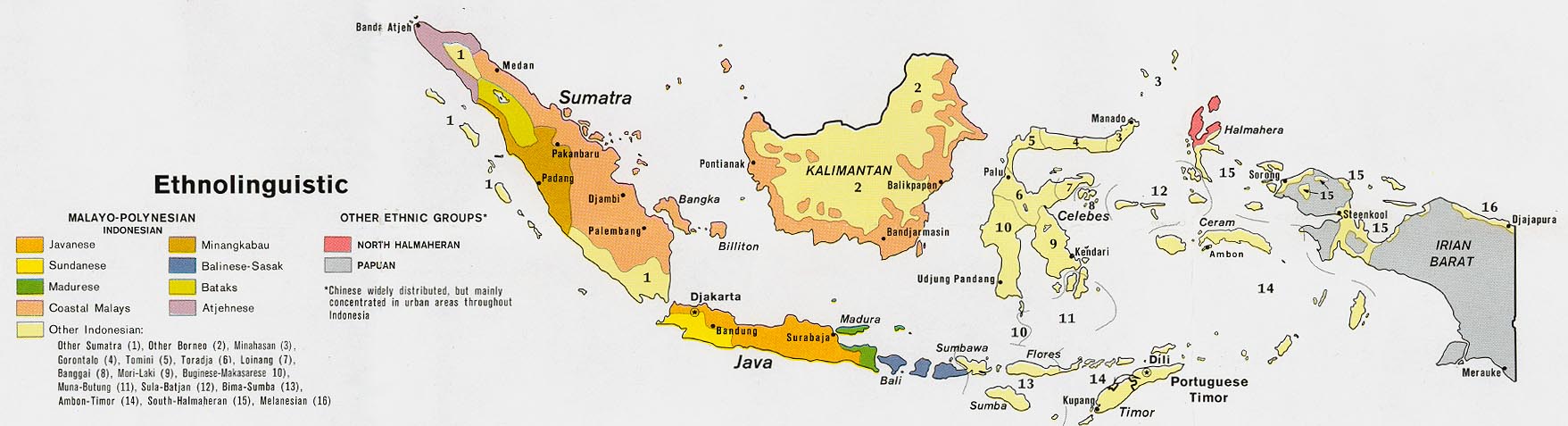
The Saluan people live in Central Sulawesi, Indonesia, primarily along the eastern coast and in the interior regions near Luwuk and Banggai. They speak the Saluan language, which belongs to the Austronesian language family, specifically the Kaili-Pamona subgroup. Historically, the Saluan were coastal traders and farmers, interacting with neighboring groups through commerce and cultural exchange. Their society was traditionally organized into small villages led by local chiefs, and they practiced animistic rituals before the arrival of Islam and Christianity. Over time, missionary efforts and government programs introduced new religious and cultural influences, but the Saluan have retained much of their language and identity.
The Saluan live in rural villages surrounded by mountains and coastal plains. Their economy is based on subsistence farming, growing rice, maize, and coconuts, and raising livestock such as chickens and goats. Fishing is also an important source of food and income for coastal communities. Houses are typically built from wood and bamboo, with tin or thatched roofs.
Family life is communal, and social gatherings often center around weddings, harvest celebrations, and religious festivals. Meals feature rice as the staple, accompanied by fish, vegetables, and spicy condiments. While modernization has introduced schools, mobile phones, and motorbikes, many Saluan communities remain economically vulnerable and rely on traditional farming and fishing methods.
Many Saluan identify with Christianity, particularly Protestant denominations, due to missionary efforts in the 20th century. Churches exist in most villages, and worship services include singing, prayer, and Bible reading. However, spiritual maturity varies, and some traditional animistic beliefs—such as respect for spirits associated with nature—may persist in subtle ways. This syncretism reflects a worldview that values harmony with nature alongside Christian practices.
Nearly half are Muslim. Like their Christian counterpart, traditional religion taints their faith.
The Saluan face challenges related to education, healthcare, and economic development. Many villages lack access to quality schools and medical facilities, leaving families vulnerable to preventable diseases. Economic opportunities are limited, and reliance on subsistence farming makes them susceptible to environmental changes. Spiritually, there is a need for clear teaching of the gospel and strong discipleship to help believers grow in faith and live out biblical principles. Preserving their language and cultural identity while integrating biblical truth is also important.
Pray that the gospel will continue to transform Saluan families and communities, bringing hope and peace through Jesus Christ.
Ask God to raise up mature local leaders who can teach Scripture faithfully and disciple others. Intercede for those who already identify as Christians, that they will become part of the global mission force and share Christ with neighboring groups.
Pray for improved access to healthcare, clean water, and education, and for wisdom to protect their environment and sustain their livelihoods.
Finally, pray that the Saluan language and cultural identity will be preserved in ways that honor Christ.
Scripture Prayers for the Saluan, Kahumamaqon in Indonesia.
PeopleGroups.org – Saluan
Ethnologue – Saluan Language
Wikipedia – Saluan People
| Profile Source: Joshua Project |