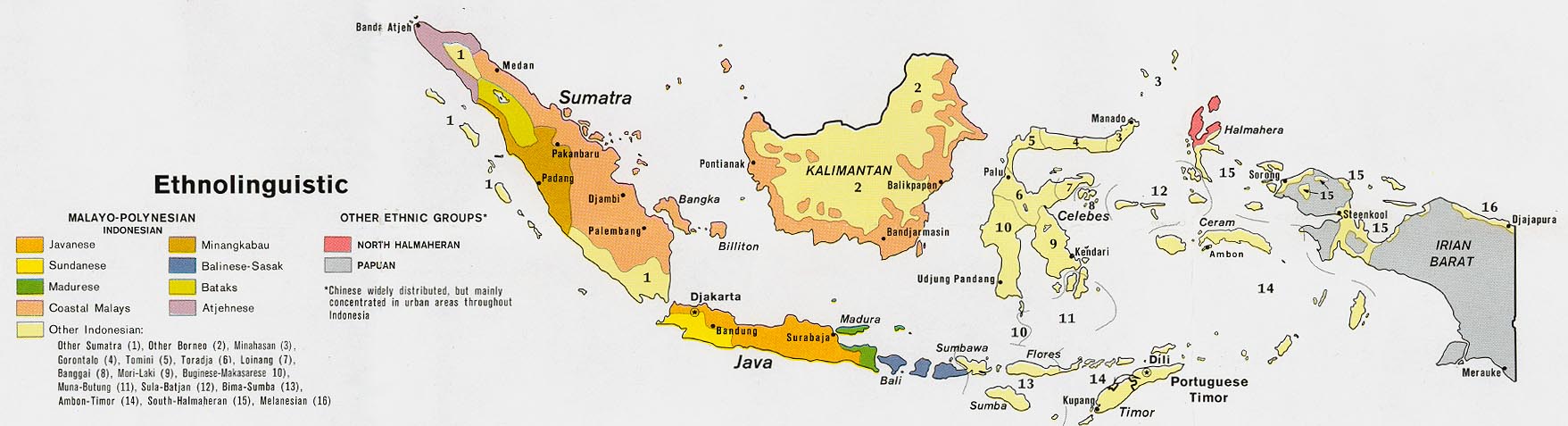
The Sawuy are an indigenous Papuan people of South Papua, Indonesia, living in the swampy lowlands and river systems of the southern interior, especially in the broader Asmat–Mappi region. They are also known as Sawi, and their language is Sawuy (often listed as Sawi), a Papuan language in the Greater Awyu family. Linguistic sources consistently place their speech in the southern lowland language zone of Papua, where identity is closely tied to clan lands, waterways, and inherited village relationships rather than to urban centers. Publicly available historical material about the Sawuy is limited, but they are best understood as one of the small, long-rooted Papuan peoples whose history is preserved more through oral tradition and local memory than through broad national accounts.
The Sawuy live in a difficult lowland environment of rivers, forest, and sago swamps, so daily life is shaped by water travel, local subsistence, and close family ties. Small villages rather than towns are the normal pattern. In this kind of terrain, movement often depends on dugout canoes and footpaths, and isolation from outside services can be a major part of ordinary life. Sources describing the Sawuy specifically point to swamp and river settings in southwestern Papua, which strongly supports a village-based life adapted to wet forest country.
Their livelihood is commonly described as a mix of sago gathering and processing, small-scale gardening, fishing, hunting, and use of forest resources. That fits both the regional pattern and the group-specific material available for them. Meals in such communities are likely built around sago, fish, root crops, bananas, and whatever can be grown or gathered locally. Family life is likely strongly communal, with kinship, clan loyalty, and shared labor playing a large role in how households function. Social gatherings would naturally center on village events, feasts, storytelling, singing, and religious gatherings where Christianity has influence. Because detailed public ethnographic material on their festivals and recreation is not abundant, it is better to stay cautious than to overstate local custom. Their language remains an important part of daily identity, though many also use Indonesian in wider contact.
The Sawuy are mostly identified as Christian, and they should not be treated as a people with little or no gospel witness. There is a substantial Christian presence among them. At the same time, traditional spiritual beliefs have not necessarily disappeared completely. In communities like this, people may outwardly identify with Christianity while still carrying older fears of spirits, unseen powers, or inherited ritual assumptions. Where that remains true, the need is not first exposure to Christ's name but deeper biblical conviction and wholehearted trust in Him alone.
Because there is already a strong Christian base, the main spiritual issue is often maturity rather than first contact. Some may know Christian teaching and participate in church life while still needing stronger discipleship, doctrinal clarity, and freedom from older spirit-centered fears. Scripture resources are reported as available in their language.
The Sawuy need spiritually mature churches, biblically faithful local leaders, and believers who live with clear confidence in Christ rather than any lingering fear of spirits or reliance on inherited spiritual patterns. Since they already have a meaningful Christian base, their greatest need is deeper discipleship, stronger teaching, and healthy churches that shape families and future generations in truth.
They also likely face serious practical challenges because of their remote swamp and river setting. Better access to medical care, clean water, basic education, and reliable transportation would make a real difference. In isolated lowland communities, even ordinary illness, injury, or schooling can become much harder simply because services are far away and travel is difficult. Practical help matters, but in a people with a strong Christian presence, it should support the deeper need for enduring biblical maturity and strong local witness.
Pray that Sawuy believers would grow in deep biblical faith and reject every lingering fear of spirits or blended belief.
Pray that the Lord would raise up faithful pastors, teachers, and spiritually strong families among them.
Pray for better access to medical care, clean water, education, and safe transportation in their remote communities.
Pray that Sawuy Christians would become a gospel force to other people groups in Indonesia who still lack a clear witness to Christ.
Scripture Prayers for the Sawuy in Indonesia.
https://en.wikipedia.org/wiki/Sawi_language_(Papuan)
https://en.wikipedia.org/wiki/Sawi_people
https://www.scriptureearth.org/00i-Scripture_Index.php?iso=saw
https://openurl.ebsco.com/fulltext/gcd%3A77832612
https://newguineaworld.linguistik.uzh.ch/families/trans-new-guinea/central-west-new-guinea/digul-river-ok/digul-river/sawi
| Profile Source: Joshua Project |