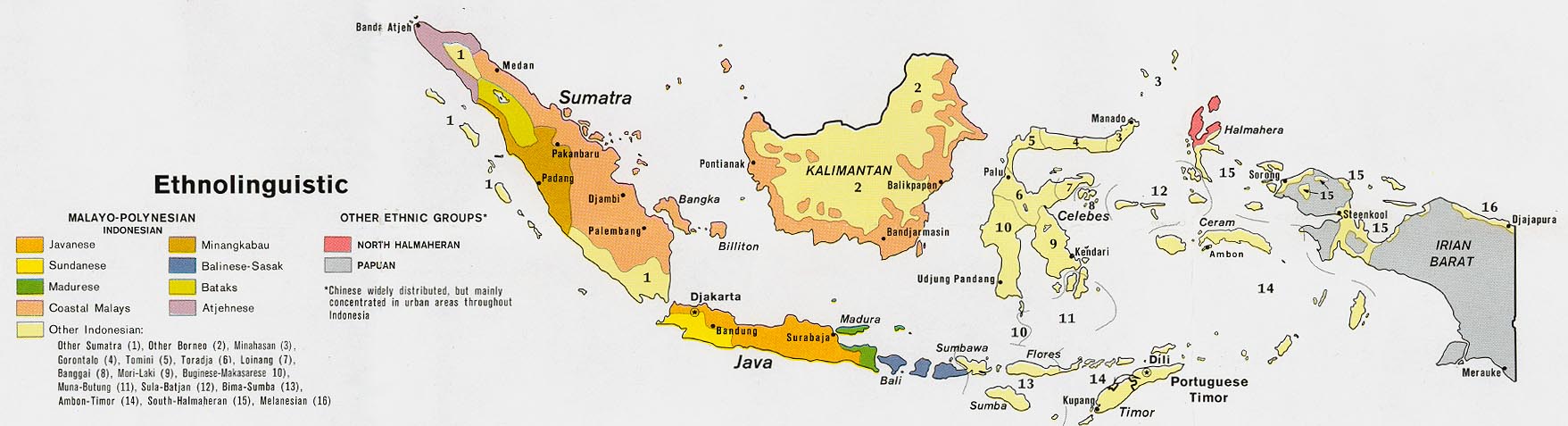
The Lewo Eleng people live on Lembata Island in East Nusa Tenggara, Indonesia. Their name is also reflected in their language, Lewoeleng, which is classified under the Central–Eastern Malayo?Polynesian branch of the Austronesian languages, within the Flores–Lembata language group. According to linguistic studies, Lewoeleng shares a moderate lexical similarity with neighboring Lamaholot varieties, indicating long-standing interaction and possibly historical contact.
Historically, the Lewo Eleng people are part of the broader Lamaholot cultural-linguistic cluster, whose traditional belief system centers on Lera Wulan Tana Ekan — a cosmology in which "Lera Wulan" (Sun-Moon) and "Tana Ekan" (Earth) function jointly as divine, ancestral, and cosmic principles.
Over time, Christian missions entered this region, leading to a shift in religious identity while many cultural practices and worldviews remained embedded in Lewo Eleng life.
Lewo Eleng communities typically live in rural villages on Lembata Island, making their homes in settlements closely tied to the land and sea. Farming is central to their livelihoods: they cultivate crops such as corn and rice, as well as root crops, fruit trees, and vegetables, using traditional tools like tofa (hoes) and working communal plots.
Fishing from coastal waters also contributes to their sustenance and occasional trade.
Family structures are often extended and clan-based, rooted in the local Lamaholot social organization. Generational continuity is maintained through strong kinship ties, and elders play a respected role in guiding cultural traditions. During harvest time, the community comes together for celebrations of thanksgiving, known locally as Toben Lewo, which involve ritual dances, gongs, drums, and offerings to their ancestors and cosmic deities.
Food in their daily diet typically includes staple grains, vegetables, and fish. During ceremonies, young corn (maize) may be served symbolically as part of ritual meals that express gratitude to both the land and spiritual ancestors.
The Lewo Eleng people hold a tapestry of beliefs that combine ancestral religion with Christian influence. Traditional cosmology centers on Lera Wulan Tana Ekan — "Sun-Moon and Earth" — conceived as a supreme being whose presence pervades the sky and the soil, symbolizing both transcendence and immanence. Within this worldview, lesser spirits also inhabit nature: ancestral spirits, guardian spirits of trees or rocks, and spirits linked to the sea and mountains play a role in their understanding of life, misfortune, and harmony.
Christianity is now the primary faith among the Lewo Eleng. According to available data, many identify as Christians, and there are portions of Scripture available in the Lewoeleng language.
Nevertheless, traditional religious ideas continue to shape their worldview, and many villagers blend Christian practices with local traditions and rituals.
The Lewo Eleng people face both physical and spiritual challenges. Their language, while still spoken, is under pressure and has limited resources; there is no full audio Bible in Lewoeleng, and only portions of Scripture are translated, which makes deep engagement with God's word more difficult.
Because many live in remote villages, access to quality health care, clean water, and infrastructure remains limited, putting them at risk in the face of poverty and environmental hardship. Their agricultural practices are rooted in tradition, yet yield remains low, so economic opportunities are constrained.
Pray that God would send workers who are passionate about the Lewo Eleng to help complete a full Bible translation and to create an audio Bible in their heart language.
Pray for the Holy Spirit to bring spiritual transformation among Lewo Eleng believers, that they might grow in faith and become disciple-makers in their own villages.
Pray for holistic development: that health, education, and economic opportunities would improve in Lewo Eleng communities, and that Christians would serve their neighbors with Christ's compassion.
Pray for wisdom and sensitivity for gospel workers and local Christian leaders as they engage with the traditional beliefs of Lera Wulan Tana Ekan, so that the gospel may be clearly proclaimed without rejecting the dignity of Lewo Eleng culture.
Scripture Prayers for the Lewo Eleng in Indonesia.
Hariyono, H., Rera-wulan Tana-ekan: Adaptation and Resistance of Traditional Beliefs (research article). Atlantis Press
Kebingin, B.?Y. & Martasudjita, E., The Transition of the Lamaholot Religion to the Catholic Religion (thesis).
Cultural prof
| Profile Source: Joshua Project |