


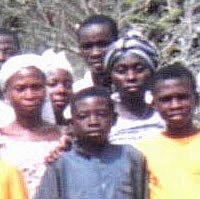

The Ahanta in Ghana are an Akan people of Ghana's southwestern coast, especially in the Western Region between the Pra and Ankobra river belt, with communities historically linked to places such as Busua, Butre, Dixcove, Shama, and Princes Town. Reliable outside sources consistently identify them as part of the wider Akan world, but also as a distinct coastal people with their own language and historical identity. Their homeland became one of the earliest parts of the Gold Coast to experience sustained contact with European traders and forts, which means their history is closely tied to the coastal trade era and to the political pressures that followed.
The Ahanta were historically organized as a confederacy of chiefdoms rather than a single centralized state. This gave them a strong regional identity while allowing local towns and chiefly lines to retain significance. Their history includes especially important contact with the Dutch along the coast, and outside historical summaries note the long relationship created through the Butre treaty, which shaped Ahanta political life for generations. Even after colonial disruption, the Ahanta remained a recognizable people with strong ties to land, chieftaincy, festival life, and coastal heritage.
The Ahanta in Ghana live in a coastal and near-coastal setting where fishing, farming, trade, and growing urban influence all overlap. Their homeland stretches across part of Ghana's Western Region, and today many Ahanta communities are found not only in older coastal towns but also in and around the wider Sekondi-Takoradi area and nearby inland settlements. This creates a pattern of life that is not purely rural and not purely urban. Some families remain closely tied to fishing communities and traditional towns, while others are shaped by schooling, wage labor, transportation networks, and the pull of larger commercial centers.
Their language is Ahanta, also called Ayinda in some current Ghanaian usage. Reliable language sources identify it as a Central Tano (Akan-related) language spoken in southwestern Ghana. Recent Ghana parliamentary discussion confirms that Ahanta is still spoken in the Western Region and specifically links it to places such as Ahanta West, Takoradi, Sekondi, Essikado, Shama, Kwesimintsim, and even toward Cape Three Points. That same source also makes clear that the language is under pressure and that active efforts are underway to preserve and teach it in schools. This is useful because it confirms both the continuing identity of the people and the real vulnerability of their language in modern life.
Ahanta culture is also strongly marked by Kundum, the well-known harvest festival shared in part with neighboring coastal peoples. Outside sources describe it as a major cultural celebration involving drumming, dancing, feasting, and older ceremonial meaning. Even where modern life is changing community patterns, festivals, chiefly structures, and extended family ties remain important ways that Ahanta identity is remembered and reinforced.
The Ahanta in Ghana are traditionally identified as Christian. In a people like this, Christianity is often well established in public life, family identity, and community structure. Yet where Christian identity is largely inherited or cultural, many may still need true repentance, assurance in Christ, and a living faith rooted in Scripture rather than outward affiliation alone.
Because they are part of the wider Akan world, it is also wise to recognize that older assumptions about spiritual forces, protection, blessing, fear, or inherited customs can sometimes remain beneath outward Christian profession. Where that happens, the need is not for more religious familiarity, but for clear biblical teaching and strong discipleship so that faith in Jesus Christ is personal, obedient, and free from mixture. Scripture is available in their language.
The Ahanta in Ghana need strong biblical discipleship in a setting where Christianity is already familiar. Their greatest need is often not first exposure to Christian language, but spiritual depth. They need pastors, elders, evangelists, and faithful believers who will teach the Word of God clearly, helping people move from inherited church identity into genuine, enduring faith in Jesus Christ.
They also need healthy local churches that strengthen families and raise up mature leaders from within the community. Because the Ahanta live in a coastal region shaped by both historic towns and modern urban pressures, discipleship must be steady, relational, and grounded in both home and church life. Fathers, mothers, and grandparents need wisdom to pass on a real love for Christ rather than relying on cultural Christianity or community expectation.
There is also a meaningful cultural and practical dimension here. Their language is under visible pressure, and when language weakens, community continuity and local discipleship can also weaken if teaching and fellowship become less rooted in familiar speech patterns. In addition, life in a coastal and mixed urban-rural setting can bring pressures related to economic uncertainty, transportation, education, and access to stable local support systems. Prayer is needed for strong churches, faithful leaders, resilient families, and enduring gospel witness across both traditional Ahanta towns and newer urban settings.
Pray that the Ahanta in Ghana would move beyond inherited Christian identity and come to true repentance, living faith, and joyful obedience to Jesus Christ.
Pray for pastors, elders, and faithful disciplers to teach God's Word clearly and to shepherd Ahanta communities with courage, humility, and biblical conviction.
Pray for believers among the Ahanta in Ghana to stand firmly on Scripture and reject shallow or merely cultural Christianity.
Pray for fathers, mothers, and grandparents to lead their households in truth, helping children and young adults grow in genuine faith and spiritual maturity.
Pray for practical help where needed in education, transportation, and stable daily provision, and pray that strong local fellowship would help families remain rooted in Christ across both coastal towns and growing urban areas.
Scripture Prayers for the Ahanta in Ghana.
https://en.wikipedia.org/wiki/Ahanta_people
https://www.ethnologue.com/language/aha/
https://en.wikipedia.org/wiki/Ahanta_language
https://www.parliament.gh/floor?dis=116
| Profile Source: Joshua Project |


