


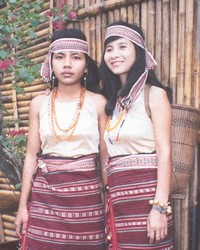

The Chrau are an Indigenous ethnic group living in southern Vietnam, mainly in the provinces of ??ng Nai, Bình Thu?n, and Bà R?a–V?ng Tàu. They belong to the Mon-Khmer linguistic family and speak the Chrau language, which is related to several other languages spoken by highland peoples in the region. Their communities developed in the forested hills and low mountains of southeastern Vietnam, where they lived for generations before the expansion of modern Vietnamese society into these areas.
Historically, the Chrau practiced a semi-nomadic lifestyle that included shifting agriculture and forest gathering. Their villages were small and organized around family clans. Oral tradition and community elders preserved their history and cultural values rather than written records. Over time, contact with neighboring Vietnamese communities increased through trade, government administration, and road development.
During the twentieth century, war and political changes in Vietnam affected many Chrau communities. Some villages were displaced or relocated, and economic development brought new forms of employment and education. Today many Chrau continue to live in rural areas, though they are increasingly connected to the broader Vietnamese economy and society.
Most Chrau families live in rural villages surrounded by farmland and forest. Agriculture remains central to their way of life. Many grow rice, cassava, corn, and vegetables, often using small family plots. Some households also raise livestock such as pigs, chickens, or cattle. Forest resources such as bamboo, wild plants, and small animals have traditionally supplemented their diet and livelihood.
Food in Chrau communities often includes rice as the main staple, served with vegetables, fish, or meat when available. Meals are usually prepared at home and shared among extended family members. Traditional cooking methods include grilling, boiling, and steaming.
Family relationships are very important in Chrau society. Households are often connected through extended family networks that support one another during planting seasons, house construction, and community events. Elders are respected for their wisdom and for preserving cultural traditions.
Village life includes festivals, communal gatherings, and ceremonies connected with agriculture. Celebrations may mark planting or harvest seasons and include music, dancing, and shared meals. Gongs and traditional musical instruments are often used during these occasions. Such events strengthen relationships within the community and reinforce cultural identity.
Although modern education and employment opportunities are increasing, many Chrau people still maintain aspects of their traditional lifestyle and community structure.
The traditional beliefs of the Chrau center on ethnic religions that emphasize the presence of spirits in the natural world. Many believe that spirits inhabit forests, rivers, mountains, and other elements of nature. These spirits are thought to influence health, harvests, and daily life.
Ritual specialists or village elders often lead ceremonies intended to honor or appease these spirits. Offerings may be made during important events such as planting, harvest, illness, or the construction of a new house. Ancestors are also respected, and families may maintain practices that honor relatives who have passed away.
At the same time, some Chrau have been exposed to Christianity through missionaries and local churches. Small communities of believers exist among them. These Christians often gather for worship, prayer, and Bible study while still living within the broader cultural environment of their people.
Despite these influences, many Chrau still follow traditional spiritual practices, and Christian believers may face social pressure from relatives or neighbors who expect them to maintain customary religious traditions.
Many Chrau communities live in rural areas where access to education, healthcare, and economic opportunity can be limited. Development of roads, schools, and medical services can improve quality of life for many families.
Agricultural training and sustainable farming methods can help farmers improve crop yields and maintain soil health. Access to markets and vocational opportunities can also support economic stability for Chrau households.
Spiritually, many Chrau have not had the opportunity to clearly hear and understand the message of the Bible. Churches and Christian workers who can communicate in their language are needed. Continued translation and distribution of Scripture resources can help believers grow in their faith and share it with others.
Pray that Chrau families will have reliable food supplies and improved economic opportunities.
Pray for greater access to education, healthcare, and community development in Chrau villages.
Pray that the message of Jesus will be clearly communicated in the Chrau language.
Pray that Chrau believers will grow strong in their faith and share the gospel with their families and neighboring communities.
Scripture Prayers for the Chrau in Vietnam.
| Profile Source: Joshua Project |




