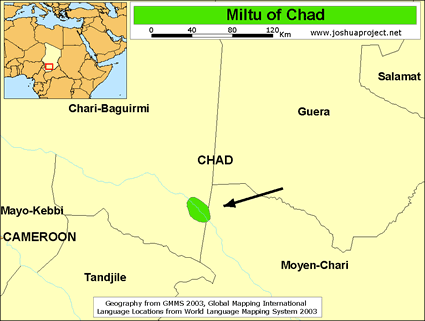
The Miltu live in the central Sahelian belt of Chad, where communities have long organized life around seasonal rains, wells, and trade routes that connect market towns. Their history reflects patterns common to many peoples of the region: small-scale migrations seeking reliable water and arable land, intermarriage with neighboring groups, and the steady influence of caravan and road commerce. Oral tradition, clan ties, and elders' counsel help preserve memories of settlement, cooperation, and resolve through times of scarcity and abundance.
Daily life follows the rhythm of the seasons. Families cultivate grains and other crops during the rains and depend on stored foods, animal husbandry, and market purchases through the dry months. Herding practices and small livestock are often integrated with farming, and knowledge of soils, pasture, and water points is passed from one generation to the next.
Villages are typically composed of extended-family compounds built from locally available materials, with courtyards serving as the center of household activity. Community bonds are strengthened through shared work, hospitality, and mutual aid. Children learn practical skills early while also attending schools where available. Regional movement for trade or employment is common, linking the Miltu to nearby ethnic groups and towns. Music, storytelling, and craftwork contribute to cultural identity and continuity.
A little over half of the Miltu are identified with Islam as the primary religious affiliation. Practice and depth of understanding vary from household to household, and expressions of faith often reflect family tradition and local teaching. In some places there is also exposure to Christian witness, and where the gospel is present, believers may gather for prayer, worship, and learning from scripture when available. Descriptions of older cultural customs should be made carefully and not overstated, as patterns differ among villages and families.
Long-term, relational ministry is valuable in close-knit rural settings. Clear, faithful Bible teaching and patient discipleship help new believers grow in their understanding of Christ. Training for local leaders encourages healthy fellowship and wise service to their communities.
Resources that support Scripture engagement—oral, print, or digital—can strengthen family life and everyday decisions shaped by God's word. Practical helps that honor local culture, encourage youth, and promote peace within households contribute to enduring spiritual growth.
Pray for the Lord to raise up Miltu believers who are rooted in Scripture and walk closely with Christ.
Pray for wise, humble local leaders who can teach clearly, shepherd well, and model Christlike character.
Pray for Miltu families to know the peace and unity that the gospel brings.
Pray for increased access to and engagement with Scripture in forms that people can understand and use.
Pray that Miltu believers will lovingly share the hope of Jesus with neighboring peoples.
Scripture Prayers for the Miltu in Chad.
https://www.ethnologue.com/country/TD
https://www.britannica.com/place/Chad
https://reliefweb.int/report/chad/sahel-regional-overview-context-and-livelihoods
https://journals.openedition.org/etudesafricaines/ (regional studies on Sahelian societies and livelihoods)
| Profile Source: Joshua Project |