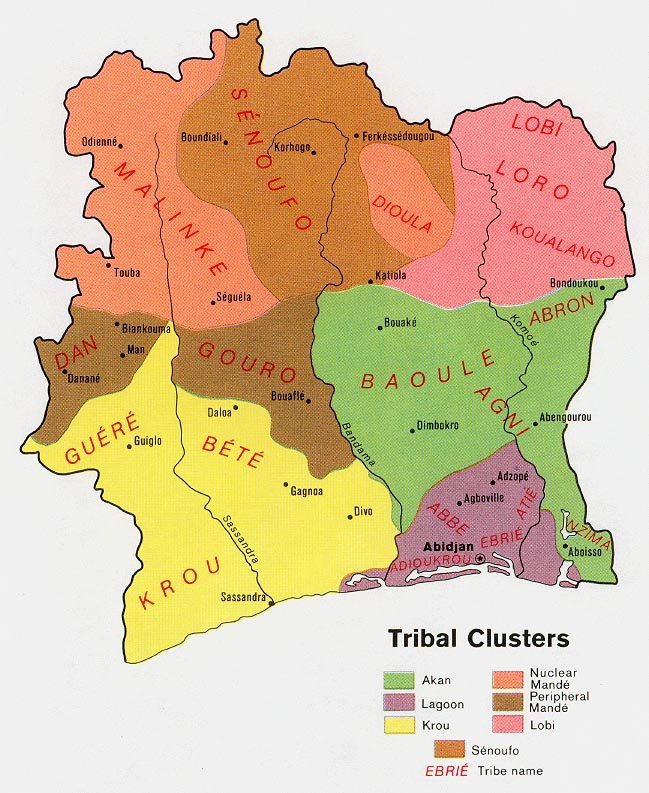

The Mwan Mona — also known simply as the Mona or Mwan — are an indigenous Mandé people of west-central Côte d'Ivoire. They live primarily in the Woroba District, centered in the Kongasso subprefecture and the southern reaches of the Mankono subprefecture, in a region of savanna woodland and small farming villages that lies well inland from the more developed coastal cities. The Mwan Mona are found only in Côte d'Ivoire and belong to the Southern Mande branch of the broader Mande people cluster, sharing cultural and linguistic roots with the Guro, Mau, and other related peoples of West Africa.
Their language, Mwan, is a Southern Mande tongue of the Niger-Congo family, distinct from the dominant Manding languages of the north, though the Mwan Mona live in daily proximity to Koyaka, Sia, Malinke, and other neighbors. Mwan is a tonal language, and significant work has been invested in documenting and translating the Scriptures into it. A New Testament in Mwan was completed in 2016, and the language is supported by digital and audio Bible resources — a remarkable achievement for a smaller language community.
Côte d'Ivoire's post-independence history has been marked by a descent from relative prosperity into the political turbulence of the 1990s and the civil conflicts of 2002–2011. The Woroba region, far from the national capital Abidjan, has been largely left behind in national development and remains underserved in infrastructure, healthcare, and education. The Mwan Mona have weathered these national disruptions while maintaining their cultural life in the villages of the interior.
Life for the Mwan Mona revolves around agriculture and the extended family. Subsistence farming anchors the household economy, with food crops such as rice, yams, maize, plantains, and cassava grown for daily meals. Cashew and cotton are grown as cash crops in the Kongasso area, providing families with seasonal income. Village markets, held on rotating days, draw people from surrounding communities to trade goods, socialize, and maintain networks of kinship and commerce.
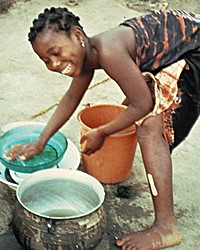
Family life is structured around patrilineal clans, with the extended household as the basic social unit. Elders are deeply respected, and decisions about marriage, land, and community affairs are made through consultation with clan leaders. Marriages are typically arranged, involving bride price negotiations between families. Women manage the household — cooking, caring for children, fetching water, and tending smaller garden plots — while men take the lead in field cultivation and public affairs.
Communal celebrations mark births, initiations, marriages, and deaths, and these are accompanied by drumming, dance, and shared meals that reinforce communal bonds. Oral tradition — stories, proverbs, and songs — carries history and values across generations. Festivals tied to the agricultural calendar and to local spirit practices continue to play an important social and spiritual role in village life.
Traditional ethnic religion is the primary spiritual framework for the majority of the Mwan Mona. Belief in a creator God alongside a populated spirit world — including ancestral spirits, nature spirits, and sacred objects — shapes daily life in ways that formal religious labels do not fully capture. Ritual specialists, sacred groves, masquerades, and ceremonies marking life transitions all carry deep spiritual meaning. A minority practice Islam, reflecting the influence of Manding-speaking Muslim traders and neighbors who have long had contact with the Mwan Mona. A significant minority identify as Christian, and Evangelical believers have a modest but real presence, giving the community a partially reached status on the scale of gospel progress.
The existence of the New Testament in Mwan, along with audio recordings and the JESUS Film, means that tools for gospel engagement are available. Yet resources alone do not produce faith — the deep grip of traditional religion on daily life and identity means that even those with access to God's word face real social pressure and spiritual resistance. What is needed is not only more Bibles but more disciples: Mwan Mona men and women who have genuinely encountered Jesus Christ and are growing in him, grounded enough in scripture to stand firm and bold enough to share the hope they carry.
A completed Bible — the full Old and New Testaments — does not yet exist in the Mwan language, and finishing this translation remains an important priority for the long-term health of the church. The existing resources, including the audio New Testament and the JESUS Film, are valuable and should be actively distributed and used in ministry among the Mwan Mona. Discipleship training for local believers and church leaders is urgently needed, equipping them to engage their communities with the gospel in culturally rooted ways and to shepherd new believers through the social and spiritual costs of breaking from traditional religious life.
Physically, access to quality healthcare, clean water, and educational opportunities remains limited in the villages of Woroba District. Infrastructure investment, vocational training, and community health work would bring tangible benefit to Mwan Mona families. Christian development workers and healthcare professionals willing to serve in under-resourced interior communities represent both a practical need and a gospel witness.
Pray for the completion of the full Mwan Bible, so that the whole counsel of God can speak to every area of Mwan Mona life and culture.
Pray that the Holy Spirit will move deeply among the Mwan Mona, drawing hearts into the peace and freedom found only in Jesus Christ.
Pray for Christian believers among the Mwan Mona to grow in boldness and depth, becoming a gospel force to African communities that lack the hope and joy that only Jesus Christ can offer.
Pray for the physical flourishing of Mwan Mona communities — for improved healthcare, education, and economic opportunity — and that those who bring such help will do so as faithful ambassadors of Christ.
Scripture Prayers for the Mona, Mwan in Côte d'Ivoire.
https://en.wikipedia.org/wiki/Mona_people
https://en.wikipedia.org/wiki/Mankono
https://live.bible.is/bible/MOAWBT
https://www.jesusfilm.org/watch/jesus.html/mwan.html
https://globalrecordings.net/en/language/moa
https://rezoivoire.net/ivoire/villes-villages/3614/la-sous-prefecture-de-kongasso.html
https://www.rezoivoire.net/ivoire/villes-villages/349/a-la-decouverte-de-mankono.html
| Profile Source: Joshua Project |