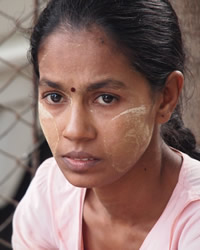

The number of Odia-speaking people from the east coast of India who now live in Myanmar is uncertain.
Their home state in eastern India is now called Odisha, after being known as Orissa until recently. The people group's name in English was also changed from Oriya to Odia. Odia is not the name of a specific ethnic group; rather, it is a regional language spoken as the first language by over 160 different people groups in India alone and as a second language by another 480 groups.4 The Odia in Myanmar are not accepted as an indigenous ethnic group and have struggled for recognition even though many families have known no other home for generations.
Odia is a member of the Indo-European language family, related to yet separate from other large Indian languages like Hindi and Bengali. Today many Odia people in Myanmar may have lost the ability to read their native language.
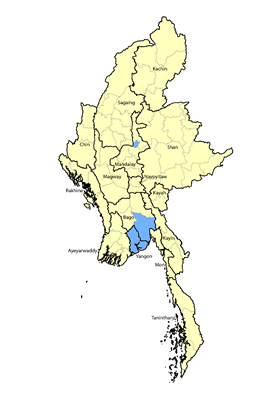
Odia people were first brought to British-controlled Burma in the 19th century, with "Many settling in the country as colonial maritime businessmen. From 1820 to 1941, ships sailed from Gopalpur in Odisha to Yangon in Myanmar…. By 1940, many Odia organizations had been established, and there were also five Odia printing presses publishing daily, weekly and monthly magazines." Some Odia families were wealthy at the time, while others struggled to survive. After Japan bombed Yangon in December 1941, trade between Odisha and Myanmar immediately ceased. Then, without a source of income and having become unwelcome strangers in a county that had never embraced them, many Odia people began the arduous three-month journey on foot across Myanmar, Bangladesh, Assam, and West Bengal to their homeland. Hundreds died from exhaustion and starvation. Those who were unable to walk that far had no choice but to remain in Myanmar, where they have survived in abject poverty to this day.
In India the Odia are generally regarded as hard-working farmers and fishermen and are not noted for being wealthy merchants or bankers like some other Indian groups. Today, many Odia in Myanmar struggle to make ends meet. Some are shop owners or civil servants, but most are common laborers. Since the 2021 civil war began, work and food has dried up, and the middle and lower economic classes in Myanmar have become destitute and face challenges just to make it through each day.
Almost all Odia people in Myanmar are Hindus, with Yangon City boasting several temples built by the Odia community. Regular rituals and festivals are celebrated, and offerings are made in a bid to protect the people from sickness and misfortune, which they believe is placed on them by evil spirits and witches. A small number of Odia in Myanmar are Muslims, with even fewer Christians among them.
In 1931, 674 (1. %) of Odia people in Myanmar identified as Christians. That scant number has not improved but may have decreased as Odia Christian families returned to India. The Odia Bible was first published in 1815 but is not available in Myanmar. Tight customs restrictions on items from India make it almost impossible to import. The Odia people remain a needy, unreached group with little Gospel witness.
Pray for the Holy Spirit to move powerfully among the Odia people, giving them a desire for truth and righteousness.
Pray for loving and dedicated gospel workers to go to them.
Pray that soon Odia disciples will make more disciples.
Pray for them to have gratitude for what the Lord does for them.
Scripture Prayers for the South Asian, Odia-speaking in Myanmar (Burma).
Asia Harvest, Copyrighted 2026 © Used with permission
| Profile Source: Joshua Project |
| Other PDF Profile |