


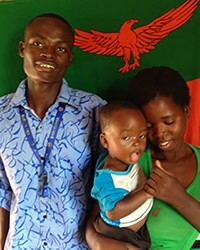

The Tabwa people, also called Taabwa and known by some as Rungu, inhabit the southwestern shores of Lake Tanganyika and the high grassy plateaus of the Marungu massif in extreme southeastern Democratic Republic of Congo. The Tabwa language belongs to the Bantu language family and is closely related to the languages of neighboring groups including the Bemba of Zambia and the Luba of Congo. The name Tabwa itself derives from a verb meaning "to be tied up," a reference to a historical period when the Tabwa were targeted by slavers. The Tabwa observe matrilineal descent, with their society organized into multiple clans and subclans, each maintaining independent histories and sometimes distinct dialects.
Prior to colonization, the Tabwa engaged in trade of locally obtained goods including salt, iron, and smoked river fish, which were exchanged with neighboring peoples and distant merchants. During the colonial period, the Tabwa shifted their economic focus to fishing and the production of cash crops including potatoes, wheat, and onions for colonial markets while growing cassava, corn, and beans for domestic consumption. Though the Tabwa produced significant food supplies for the copper mining cities of the Copperbelt during colonial times, the regional infrastructure of roads, depots, and lake shipping deteriorated severely after the 1970s, leaving their area marginalized and economically isolated.
The Tabwa people depend primarily on fishing and agriculture for their survival and livelihood, with fishing on Lakes Tanganyika and Mweru remaining a dominant economic activity supplemented by traditional lines and nets. Farming constitutes their main source of income, with families cultivating cassava, beans, and maize for local consumption and trade with neighboring Haushi and Bemba-speaking groups. Hunting, though once a primary means of subsistence, has declined significantly as game resources have diminished, leaving fewer Tabwa relying on hunting as a primary livelihood.
Tabwa villages are structured around family units and kinship groups, with leadership vested in chiefs who inherit their positions through matrilineal succession and justify their authority by tracing descent back to the original founders of Tabwa society. Within Tabwa communities, chiefs symbolically represent the continuity of the universe and the place of human beings within it, often wielding staffs or batons that identify them as leaders. The Tabwa practice distinctive body scarification featuring twinned isosceles triangles across the body, symbolizing the duality of life and marking the coming of the new moon, which holds central importance in Tabwa philosophy and is celebrated monthly.
Tabwa artisans produce beautiful utilitarian objects including combs, drums, and bellows, along with carved figurines representing ancestors and ceremonial twin figures that hold spiritual significance within the community. Village autonomy has diminished in recent times due to colonial administrative approaches, though communities maintain strong internal bonds through kinship networks and shared cultural practices.
The Tabwa people identify as Christian. However, the integration of traditional beliefs with limited Christian and Islamic influence creates a religious landscape marked by syncretic elements as they seek to maintain ancestral traditions while engaging with newer religious teachings.
The Tabwa region has become economically marginalized following the deterioration of colonial-era infrastructure, with limited access to functioning roads, shipping services, and modern markets that would enable economic development and improved standards of living. Healthcare services remain severely inadequate in many Tabwa settlements, with limited access to medical facilities, trained healthcare workers, and medicines essential for treating common diseases, maternal health complications, and nutritional deficiencies. Educational opportunities remain constrained, with limited primary and secondary schools and trained teachers available to Tabwa communities, resulting in lower education levels that perpetuate cycles of poverty and limited economic mobility. Access to clean water and sanitation remains a critical need in many Tabwa villages, contributing to waterborne illnesses and public health challenges that could be addressed through infrastructure development and health education. Economic diversification beyond subsistence fishing and farming is required to reduce vulnerability to environmental fluctuations, overfishing, and resource depletion that threaten traditional livelihoods. Environmental degradation of Lake Tanganyika, including overfishing by commercial operations and declining fish populations, directly threatens the primary livelihood of Tabwa fishing communities and requires sustainable management approaches. Improved transportation and market access would enable Tabwa farmers to sell surplus production and access goods and services necessary for improving their economic circumstances and quality of life.
Pray that Jesus Christ would be revealed as the Savior and Lord to the Tabwa people, and that the Holy Spirit would work powerfully to transform hearts and draw men, women, and children to saving faith through the gospel message.
Intercede for faithful Christian workers, both from within Tabwa communities and from outside, who can share the gospel of Christ with cultural sensitivity and establish churches that will grow and become centers of biblical faith and discipleship within Tabwa villages.
Ask God to provide skilled Christian healthcare workers, educators, and development professionals who can serve the Tabwa with both compassionate physical assistance and the message of Christ's redemptive love.
Request the Lord's intervention to establish reliable access to healthcare, clean water, education, and sustainable livelihoods for Tabwa families, trusting that His kingdom encompasses both physical provision and spiritual transformation through the gospel of Jesus Christ.
Scripture Prayers for the Tabwa in Congo, Democratic Republic of.
https://www.britannica.com/topic/Tabwa
https://orvillejenkins.com/profiles/taabwa.html
https://www.101lasttribes.com/tribes/tabwa.html
https://www.ethnologue.com/language/tap/
https://www.gateway-africa.com/tribe/tabwa_tribe.html
| Profile Source: Joshua Project |



