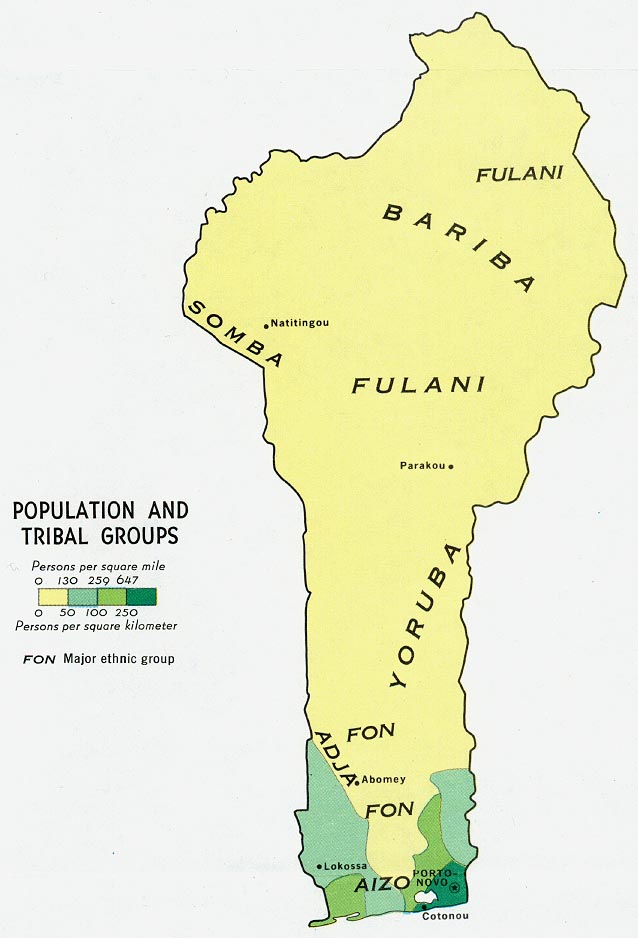
The Tofin Gbe people speak the Tofin dialect of the Gbe language family, which belongs to the Kwa branch of Niger-Congo languages. Tofin is one of the Eastern Gbe varieties spoken primarily in Porto-Novo and surrounding areas in southern Benin, and it shares considerable mutual intelligibility with closely related dialects such as Fon, Gun, and Ayizo. French serves as Benin's official language, and most Tofin speakers use it for government business, education, and formal communication.
The Gbe-speaking peoples trace their origins to migrations from the Tado region in present-day Togo beginning in the tenth to fifteenth centuries. Various Gbe groups dispersed from Tado and established kingdoms throughout what is now southern Benin, including the ancient kingdom of Allada from which many Tofin communities claim descent. Portuguese explorers arrived in the late fifteenth century, and by the seventeenth century the coastal areas had become deeply entangled in the transatlantic slave trade. The powerful Kingdom of Dahomey emerged in the seventeenth century and dominated much of the region until French colonial forces overthrew it in 1892. Catholic and Protestant missionaries arrived during the colonial period, though early evangelization efforts met with limited success. Benin gained independence from France in 1960, but from 1974 to 1990 endured a Marxist government that suppressed religious expression. The restoration of democracy in 1990 brought renewed religious freedom.
The Tofin Gbe people primarily reside in Porto-Novo, Benin's constitutional capital, and in surrounding villages and towns in southern Benin. Porto-Novo is a lagoon-facing city characterized by colonial-era French architecture and a blend of traditional and modern urban life. Many Tofin live in semi-urban and urban contexts where they engage in trade, commerce, craftsmanship, and government employment, though subsistence agriculture remains important for those in rural areas. Markets bustle with activity as Tofin women sell produce, cloth, and household goods, while men work as traders, artisans, civil servants, or farmers.
Family life revolves around extended family networks, with multiple generations often living in close proximity and maintaining strong kinship bonds. Although Porto-Novo serves as the official capital, many Tofin migrate to the nearby coastal city of Cotonou or other cities seeking employment and educational opportunities.
The Tofin are known for their multilingualism, as most speak not only Tofin but also French, Fon, and often additional local languages. Daily life involves navigating between traditional cultural practices and the influences of modernization and urbanization. While some families have access to electricity, running water, healthcare facilities, and schools, others in poorer areas still face challenges in accessing basic services. Education is valued, and literacy rates are relatively high compared to rural areas. Economic activities range from small-scale farming and fishing to trading in urban markets, with some families achieving middle-class status while others struggle with poverty.
The religious landscape among the Tofin reflects the broader patterns found throughout southern Benin, where Christianity has a strong presence but exists alongside and often intermingles with traditional Vodun practices. A significant portion of the Tofin population identifies as Christian, with Roman Catholicism being the largest denomination followed by various Protestant groups including Methodists and growing numbers of Pentecostal and evangelical Christians. The Catholic Church established a presence during the colonial period and has maintained educational institutions, hospitals, and churches that play important roles in community life.
However, traditional Vodun beliefs and practices remain deeply influential in the lives of many Tofin families. Vodun is an animistic religion originating in this region of West Africa and is rooted in the belief that spirits inhabit all things in nature. Practitioners venerate a pantheon of vodun spirits or deities who govern different aspects of life such as health, fertility, wealth, protection, and justice. Ancestor veneration plays a central role.
Many Tofin Christians see no contradiction in attending church on Sunday while also consulting fetish priests, making offerings at shrines, or participating in traditional ceremonies. This dualistic approach reflects a worldview where Christianity addresses certain spiritual needs while traditional religion handles others, particularly those related to immediate physical protection, prosperity, healing, and resolution of family conflicts. Fear of witchcraft, malevolent spirits, and ancestral curses remains prevalent even among professing Christians.
Educational opportunities exist but quality varies greatly, and many families cannot afford school fees or the cost of books and uniforms. Economic challenges persist as unemployment and underemployment affect many households, particularly young people. Clean water access, sanitation infrastructure, and reliable electricity remain inadequate in poorer neighborhoods and outlying villages.
Pray that the Holy Spirit would open the hearts of Tofin families to truly understand and embrace the gospel, breaking the power of syncretism and leading them to place their full trust in Jesus Christ alone for salvation and daily provision.
Pray for the translation and distribution of Scripture resources, discipleship materials, and Christian media in the Tofin language, and for literacy programs that enable more people to read God's Word for themselves and grow in understanding.
Ask the Lord to provide for the physical needs of the Tofin people including healthcare, education, clean water, economic opportunities, and infrastructure improvements.
Scripture Prayers for the Gbe, Tofin in Benin.
https://joshuaproject.net/people_groups/15528/BNhttps://en.wikipedia.org/wiki/Gbe_languages
https://en.wikipedia.org/wiki/Languages_of_Benin
https://www.sil.org/resources/publications/entry/4177
https://en.wikipedia.org/wiki/West_African_Vo
| Profile Source: Joshua Project |