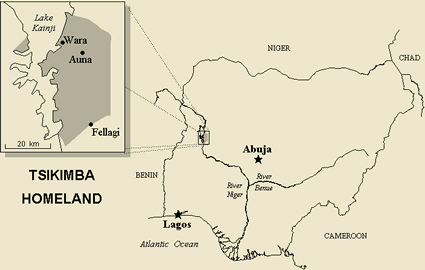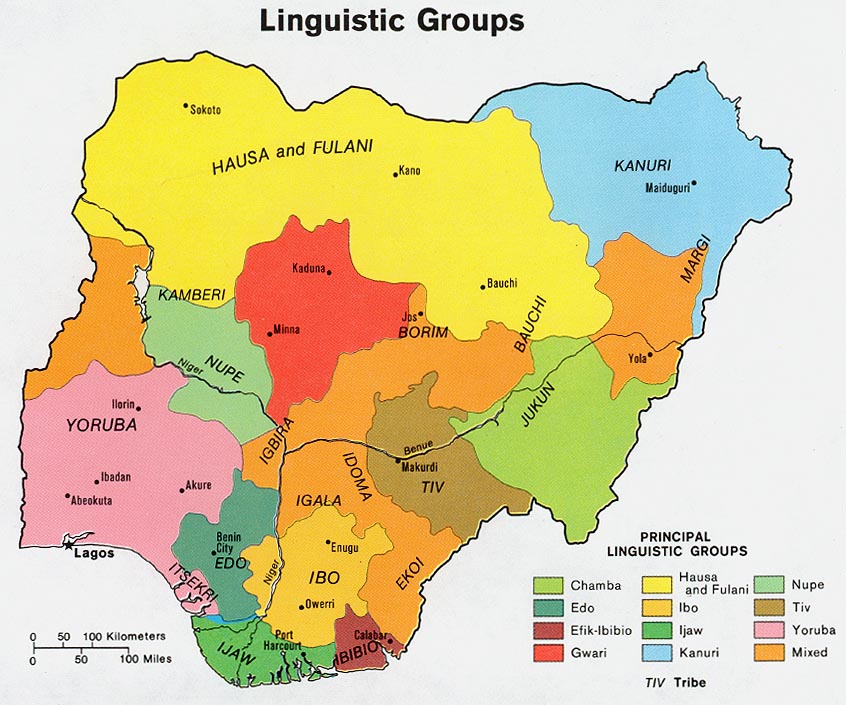
The Auna?Agaraiwa Kambari—also known as Auna?Agaralwa, Agaushi, or part of the broader Kambari linguistic and ethnic cluster—are an Indigenous people located primarily in Niger State (Magama, Mashegu, Mariga, Auna, and Wara areas) and Kebbi State (Ngaski).
They belong to the Benue people cluster of the Sub?Saharan African affinity bloc and speak Tsikimba, a Kainji language with dialects such as Auna, Yumu, and Wara. Their specific language is Tsikimba.
Historically, the Kambari peoples have occupied the region around Lake Kainji and the Niger River, maintaining a distinct identity despite living near larger Hausa communities. They have preserved a strong cultural continuity expressed in language, farming traditions, and social structures.
The Auna?Agaraiwa Kambari live largely in rural farming communities. Farming is central to their economy, with millet, guinea corn, sorghum, groundnuts, and yams forming major crops—reflecting broader Kambari agricultural patterns. They are regarded as excellent farmers who experiment with new techniques and manage both crop and livestock production.
Families tend to live in extended household units, where children contribute to farm work and community responsibilities. Because of this agricultural emphasis, formal schooling is often seen as less important by many parents.
Celebrations typically include community weddings, bustling market gatherings, and observance of regional festivals. Although Islamic observances are common across Kambari communities, cultural customs remain deeply woven into daily life. Social gatherings draw large crowds and reinforce bonds within clans and villages.
Their primary religious affiliation is Folk Islam, practiced in a way that blends Islamic identity with traditional cultural beliefs. Elements of older indigenous spirituality—reverence for ancestors, belief in unseen forces, and ritual observances—continue to shape daily worldview in many communities. Christian presence exists but is not primary.
Because their communities are rural and dispersed, access to education and literacy is limited—Tsikimba-language Scripture is available but not widespread, and many villages lack strong literacy initiatives. Healthcare resources, economic stability, and infrastructure development are minimal in many areas.
Culturally sensitive discipleship, language development, and community-based support—such as vocational training, health programs, and family education—would strengthen long-term growth and flourishing among the Auna?Agaraiwa Kambari.
Pray for community development, including improved education, health, and agricultural sustainability.
Pray for unity and peace, particularly in regions affected by social or economic pressure.
Where Christ-followers exist among the Auna?Agaraiwa Kambari, pray that they grow resilient in faith and that their lives become a testimony of the kingdom among surrounding communities.
Pray for spiritual openness among the Auna?Agaraiwa Kambari, that the Holy Spirit will soften hearts to Christ where the gospel is being shared.
Pray for growth and perseverance of current believers—that they will stand firm, gain biblical depth, and become a gospel presence among neighboring groups.
Scripture Prayers for the Auna-Agaraiwa Kambari in Nigeria.
https://www.peoplegroups.org/people_groups/PG013647/
https://en.wikipedia.org/wiki/Kimba_language
https://www.101lasttribes.com/tribes/kambari.html
https://www.kambari.org/
| Profile Source: Joshua Project |