


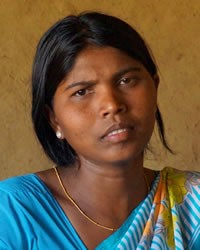

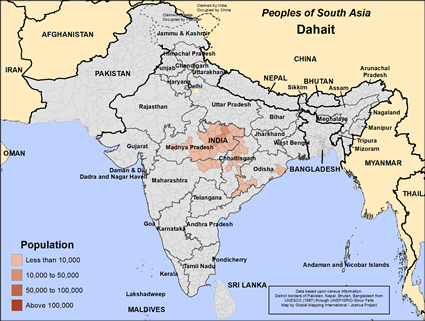
The Dahait people form several of the forest tribes central found in the central and northern states of India, including Madhya Pradesh, Odisha, Chhattisgarh, and Maharashtra. The vast majority of them live in rural areas. Historically, the Dahait have been recognized as part of the Scheduled Castes, a classification that has shaped much of their social experience in India. Their origins are somewhat obscure, but over generations, they have developed a strong sense of identity and community, often living in close-knit villages or neighborhoods. Despite facing social and economic challenges due to their caste status, the Dahait have preserved their traditions and continue to contribute to the cultural fabric of their regions.
Their primary language is Hindi. Some Dahait people may use one of the regional dialects, depending on their specific location: Bagheli; Bundeli; Odia; and Chhattisgarhi.
Daily life for the Dahait revolves around family and community. Households are often multi-generational, with elders playing a respected role in decision-making and the upbringing of children. Most Dahait families depend on agriculture, working as laborers or small-scale farmers, although some also engage in traditional crafts or local trades. Economic opportunities can be limited, and many face the hardships of poverty, especially in rural areas.
Community life is vibrant, with festivals and religious observances providing opportunities for social gathering and celebration. Weddings, harvest festivals, and local fairs are important events, marked by music, dance, and shared meals. Despite material challenges, the Dahait people display resilience and a strong sense of solidarity, supporting one another through both difficulties and joys.
The Dahait are traditionally Hindu, participating in the worship of a variety of deities and spiritual forces. A very small group of the Dahait people practice Buddhism. Their Hindu faith is expressed through rituals, offerings, and participation in festivals dedicated to gods and goddesses. These include Shiva (the god of destruction), Hanuman (the monkey god), Durga, and local village deities. Along with the Hindu gods, they appease and worship village deities. They also worship their ancestors every year. Many Dahait also hold animistic beliefs, attributing spiritual significance to natural elements and seeking protection or blessing from ancestral spirits. These practices reflect a deep desire for connection with the divine and for guidance in daily life.
The Dahait community faces a range of physical and spiritual needs. Materially, many struggle with poverty, limited access to education, and inadequate healthcare. Children may leave school early to help support their families, and women often bear a heavy burden of labor both at home and in the fields. Improved access to clean water, sanitation, and vocational training would greatly enhance their quality of life and open doors to new opportunities.
The Dahait people need to put their hope and identify in the King of kings and Lord of lords. They are unaware of their need for salvation through Jesus Christ.
Pray that the Dahait community would be chosen and embraced by those participating in the People Group Adoption initiative for the Dahait people to have greater access to the gospel of Jesus Christ.
Pray that the Lord would raise up his ambassadors to go to the Dahait people with the good news of Christ's love and salvation. Pray that the Dahait elders and leaders will open their community to the gospel.
Pray that the Lord would stir within the Dahait people a desire for spiritual truth, leading them to make room in their hearts for Jesus Christ as their Savior, whatever the cost.
Pray that the Dahait people would experience increased access to schools, medical care, and sustainable livelihoods, empowering them to rise above the challenges of poverty.
Scripture Prayers for the Dahait in India.
https://peoplegroups.org/people_groups/PG041784/
https://en.wikipedia.org/wiki/Dahait
https://www.britannica.com/topic/Hinduism
| Profile Source: Joshua Project |



