


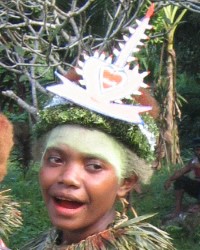

The Bola (AKA, Bakovi) is an indigenous people of Papua New Guinea who live primarily in West New Britain Province on the island of New Britain. Their communities are located along the northeastern coast of the Willaumez Peninsula and in nearby areas east of the provincial center of Kimbe. This coastal region includes fertile volcanic soils, forested hills, and access to the sea, all of which have influenced the development of local settlement and livelihoods over generations.
The people are closely identified with the Bola language, also known as Bakovi. This language belongs to the Austronesian language family within the Oceanic branch and is part of a group of related languages spoken across the islands of the Bismarck Sea region. The Bola language serves as an important marker of cultural identity and continues to be widely used within families and village communities.
Bola communities are generally organized around small villages where extended families live and work together. Daily life centers on gardening, fishing, and the use of natural resources from the surrounding land and sea. Families cultivate staple crops suited to the tropical environment, while coastal communities often rely on fishing and marine resources to supplement their diet.
In addition to subsistence activities, some households participate in small-scale cash cropping. Coconut palms are commonly used to produce copra, and cocoa farming has also become a source of income in parts of West New Britain. Local markets and travel by small boats connect villages with larger towns where goods can be traded and supplies obtained.
Family relationships and community cooperation are central to social life. Elders and local leaders often help guide village decisions, preserve traditions, and encourage harmony within the community. Cultural knowledge, stories, and practical skills are typically passed down through families and shared during communal gatherings and celebrations. The Bola language remains widely used in homes and villages, while Tok Pisin and sometimes English are used when interacting with people from other language groups.
Christianity is the primary religion among the Bola people, and churches are active in many communities. Christian worship services, prayer gatherings, and fellowship meetings provide opportunities for teaching and encouragement, and church life often plays an important role in the rhythm of village life.
The New Testament has been translated into the Bola language, allowing many people to read and hear Scripture in their own heart language. This access to Scripture helps support the teaching ministry of churches and encourages believers to grow in their understanding of God's word.
Before the spread of Christianity, communities in this region followed traditional spiritual beliefs that included concern for ancestral spirits and unseen spiritual forces. Today many believers desire to deepen their understanding of biblical teaching and to follow Jesus Christ faithfully in their daily lives.
Although Christianity is widely known among the Bola people, continued discipleship and biblical teaching remain important needs. Churches benefit from leaders who are equipped to teach Scripture clearly and guide believers toward spiritual maturity.
Resources that help families and churches engage more deeply with the Bible in the Bola language can strengthen faith within the community. Bible study materials, leadership training, and accessible Scripture resources can encourage believers as they grow in their understanding and application of God's word.
As churches grow in spiritual depth and unity, there is opportunity for believers among the Bola to share the message of Christ with neighboring peoples and communities across West New Britain.
Pray that Bola believers will grow in their understanding of scripture and in a faithful walk with Jesus Christ.
Pray for pastors, teachers, and church leaders who will shepherd their communities with wisdom and strong biblical teaching.
Pray that the Bola New Testament will be widely read and clearly understood in homes and churches.
Pray that the churches among the Bola will develop a growing vision to share the hope of Christ with other peoples in Asia.
Scripture Prayers for the Bakovi, Bola in Papua New Guinea.
| Profile Source: Joshua Project |



