


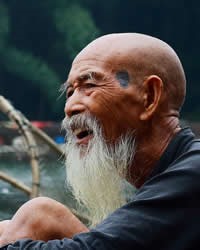

The Northern Pinghua people are a distinct Chinese people group living primarily in northern Guangxi Province in southern China. Although they are commonly classified as Han Chinese, they are set apart by their use of the Northern Pinghua language, which is not easily understood by speakers of Mandarin or Cantonese. This linguistic distinction has significant implications for communication, education, and access to the gospel.
Historically, Northern Pinghua communities trace their roots to Han Chinese migration into Guangxi during several periods, particularly from the Tang through the Ming dynasties. Over time, geographic separation and sustained contact with neighboring Zhuang and other Tai-speaking peoples shaped a language and local identity distinct from surrounding Chinese populations. Because Mandarin later became dominant in education and public life, Northern Pinghua developed primarily as a spoken language with limited written use. This history has contributed to the relative invisibility of the Northern Pinghua people and their spiritual needs.
Most Northern Pinghua people live in villages, small towns, or county-level cities, including areas around Guilin. Traditionally, their livelihoods have been based on rice cultivation, agriculture, and small-scale commerce. Family and community relationships are central to daily life, with strong emphasis placed on respect for elders, loyalty to family, and maintaining social harmony.
In recent decades, modernization and urbanization have brought significant change. Younger generations often pursue education or employment in larger cities, while many rural communities are left with aging populations and limited resources. Access to healthcare and economic stability remains uneven, especially in remote areas.
The traditional beliefs of the Northern Pinghua people are shaped by Chinese folk religion, ancestor veneration, and elements of Daoism and Buddhism. Many families participate in rituals intended to honor ancestors, seek protection from spiritual forces, and secure good fortune. These practices are often tied to festivals, life events, and community expectations rather than personal theological conviction.
In contemporary society, some Northern Pinghua people describe themselves as non-religious, yet still observe ancestral customs out of cultural obligation. While these belief systems provide a framework for moral order and social continuity, they do not offer forgiveness of sin, assurance of salvation, or reconciliation with the one true God. According to the gospel, true spiritual life and restoration can only be found through the mercy of Jesus Christ, who alone saves sinners by grace through faith.
The Northern Pinghua people have real physical needs, including access to healthcare, education, and sustainable livelihoods, particularly in rural communities. Addressing these needs reflects Christ's compassion and love for the whole person. However, Scripture teaches that humanity's greatest need is spiritual, not material. Without the gospel, people remain separated from God, regardless of economic or social conditions.
Many Northern Pinghua people have limited or unclear access to the message of salvation in Jesus Christ, especially in their heart language. This creates an urgent need for faithful Christian workers who are willing to learn the language, live among the people, and communicate the gospel clearly and lovingly. Where the gospel is absent, workers are needed. Where individuals come to faith, discipleship is essential so that believers grow in biblical understanding, obedience, and maturity.
God's purpose extends beyond initial evangelism. He desires to establish healthy local churches and to raise up disciples who will participate in his global mission. Northern Pinghua believers, once reached and discipled, are called to join the worldwide body of Christ in making disciples of all nations, transforming them so they can serve for the sake of the gospel.
Christians are encouraged to pray that God would send committed and compassionate workers to the Northern Pinghua people who will faithfully proclaim the gospel of Jesus Christ.
Prayer is needed for open hearts, spiritual hunger, and clear understanding of salvation by grace through faith alone.
Believers should also pray for the development and effective use of Scripture and Christian teaching that communicates truth clearly in the Northern Pinghua language.
Finally, prayer should be offered that emerging Northern Pinghua believers would be firmly rooted in God's word, formed into disciples, and mobilized to participate in God's redemptive work both locally and globally, all for the glory of Christ.
Scripture Prayers for the Pinghua, Northern in China.
References
| Profile Source: Joshua Project |




