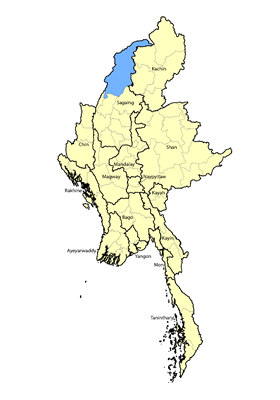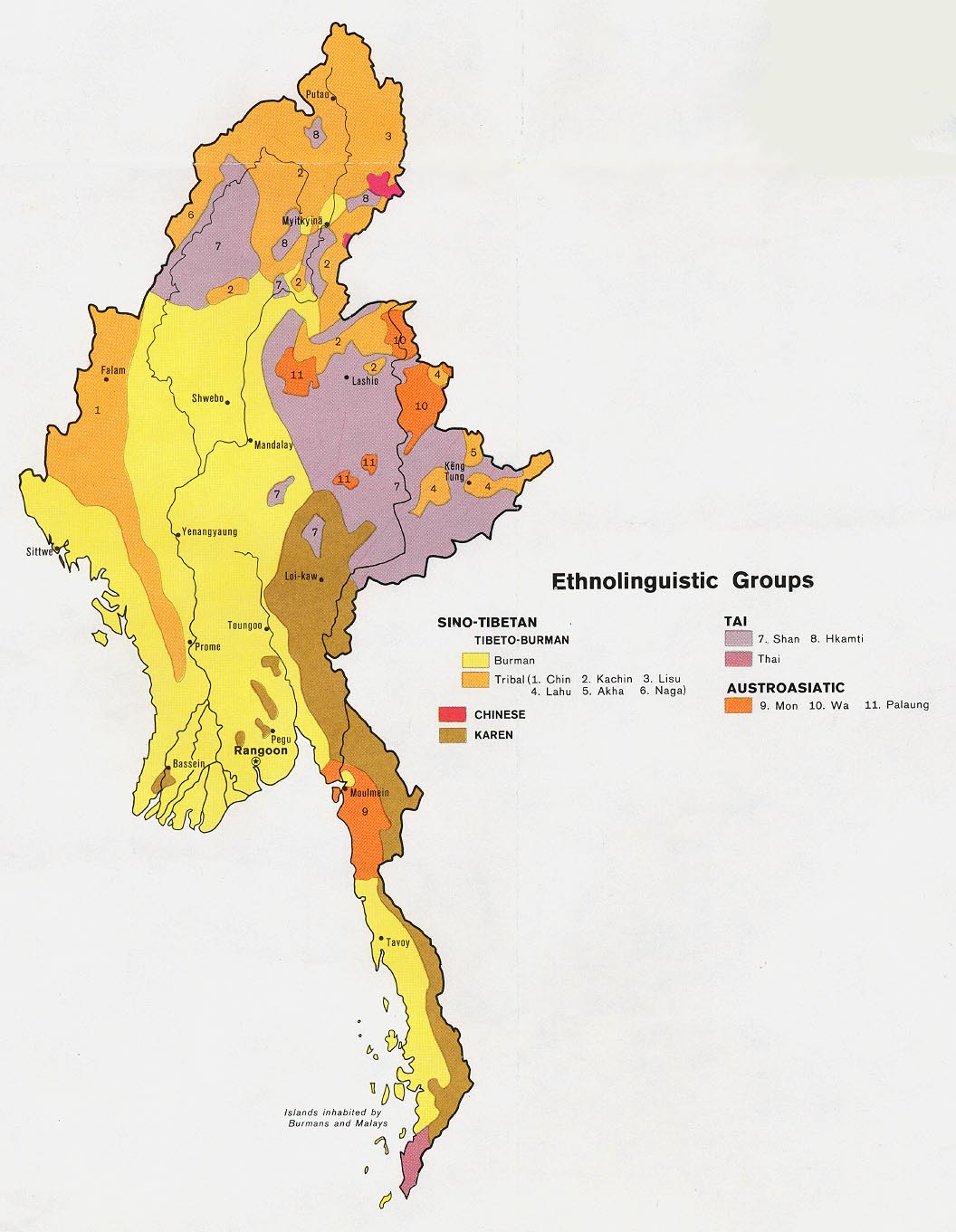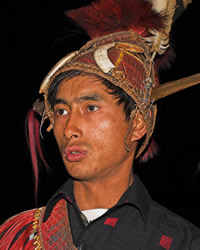

The Shokra people have been hidden away in the mountains of western Myanmar for generations, completely unknown to most people in Myanmar and around the world. The 700 Shokra people dwell in the small town of Pangsau, which is home to multiple Tangshang and Naga people groups, each speaking its own language or dialect. Shokra families live in many villages alongside people from other groups. One of their shared villages is called Thaho 3, which contains about 20 Shokra households. Their communities are located within Lahe Township in the Naga Self-Administered Zone. A small number of Shokra people are known to live inside India, but it is unclear what name they are known by in that country.
The Shokra are one of more than 50 tribes in Myanmar that have collectively been labeled "Tangshang" for political purposes since 2003. Although the groups do share cultural similarities, generations of inter-tribal warfare and disparate languages and dialects have caused these tribes to retain a separate sense of identity. Their vernaculars can vary to such an extent that people from different tribes must revert to speaking Burmese or English to understand each other. The Shokra have, until now, never appeared on any list of Myanmar's ethnic groups.
Researchers visited the Pangsau area in 2013 and surveyed a community of 240 Shokra people. They identified that the Shokra vernacular is related to about a dozen other Tangshang varieties and included them within a group that includes the Gaqchan, Gaqyi, Hasa, Henching, Khalak, Kochung, Lakki, Lungkhi, Rasa, Ringkhu, and Shangti. All these groups have been profiled individually in Operation Myanmar.
The current vicious civil war engulfing Myanmar has seen fierce fighting in the Sagaing Region. Thousands of people have been killed, as various factions seek to gain control of the border areas. Although most of the conflict in Sagaing has occurred in more populated areas to the east of the Shokra, armies seeking independence from both the Myanmar and Indian governments are prevalent, recruiting people for their cause as they seek to control the strategic region.
The various Tangshang-related tribes in Sagaing practice different customs. For example, "The Moshang dictated that a young man had to take a bride from his mother's clan; if not, he would be fined a buffalo. Should no girls of that clan be available, then the man was permitted to take a wife from another acceptable clan. The tradition among the Shokra people was also that members of one clan would take their partner from another clan and would be fined if they should take a wife from a third clan."
For centuries the Shokra people practiced Animism, following the instructions of shamans in their community to offer sacrifices to a hierarchy of demons. People believed the spirits had power to bring calamity, disease, and failed harvests if they weren't continually appeased. Although in recent decades the majority of Shokra people have converted to Christ, vestiges of their past beliefs can be seen during festivals. Among Tangshang-related tribes "there were essentially four major times for sacrifice. However, in this area each clan seemed to follow its own dictates, so there were minor differences between subgroups and even between villages…. Each household would sacrifice chickens or pigs in order to make the rice grow…. The Shokra celebrated the pue vi festival after harvesting in December."
Converting to Jesus Christ in the late 20th century brought dramatic changes to Shokra society. Many social ills persist, however, with poverty, lack of education, and alcohol and drug use wreaking havoc on many families. Christians among the Shokra have been hampered by the complete lack of Scripture or any other Christian resources in their language. Believers are thought to use Burmese Bibles in their meetings, but as Burmese is not their "heart language," they revert to using Shokra for announcements, singing, and fellowship.
Pray that Christian believers within the Shokra community would be encouraged and equipped to serve their neighbors with humility and compassion.
Pray for them to become Christ's ambassadors to a dying world.
Pray for strong, healthy families and for people to have their spiritual hunger satisfied in Christ alone.
Pray for them to walk in the fruit of the Holy Spirit, drawing many to the Lord of lords.
Scripture Prayers for the Shokra in Myanmar (Burma).
Asia Harvest, Copyrighted 2026 © Used with permission
| Profile Source: Joshua Project |
| Other PDF Profile |