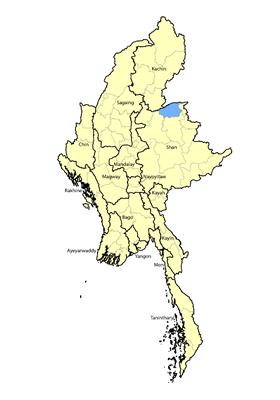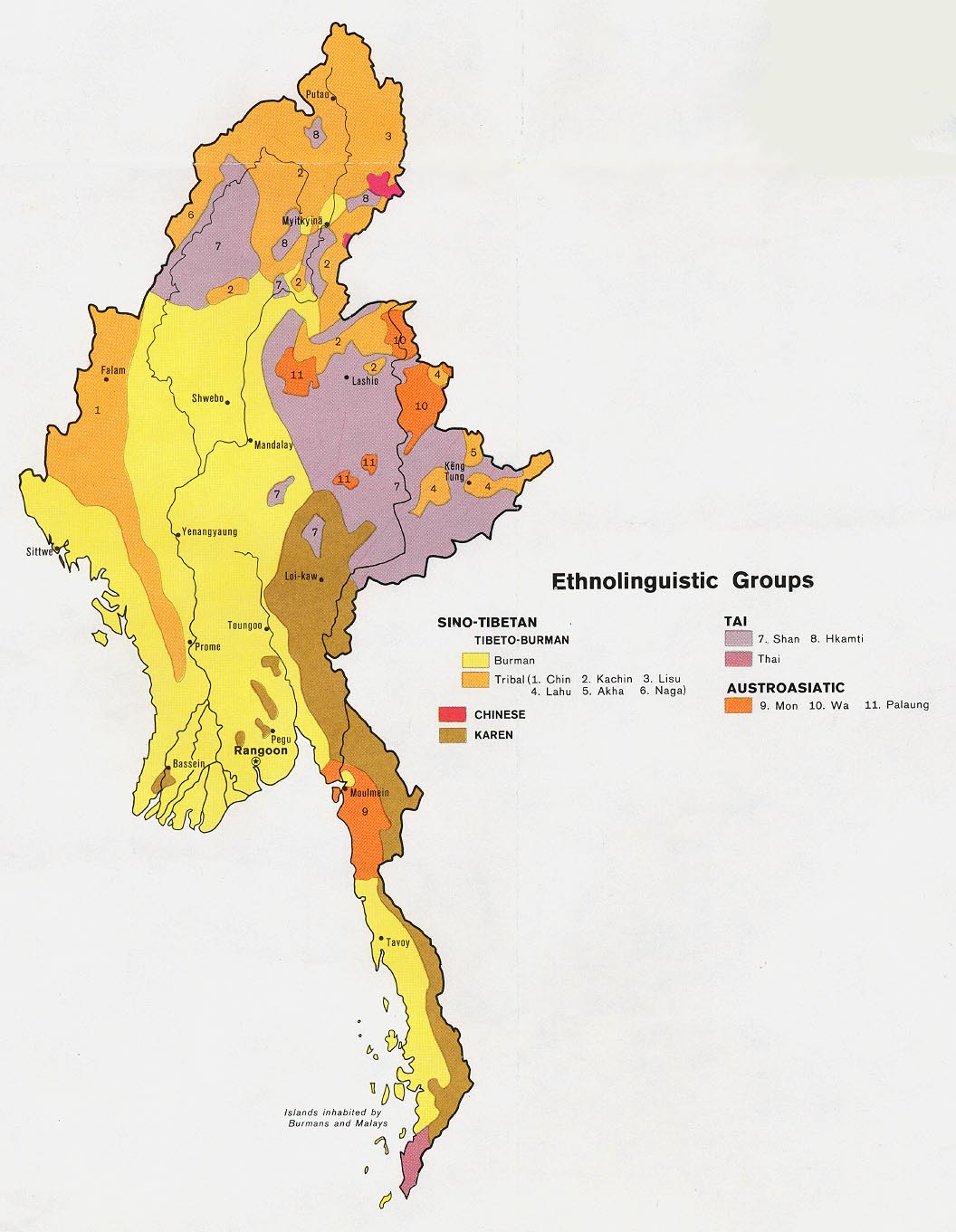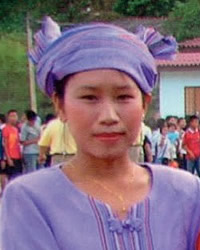

The little-known Tai Mao people live on both sides of the border between Myanmar's Shan State and China. They primarily live along the banks of the Shweli River in Namkham Township. To the north, Tai Mao people live in China's Yunnan's Province. Other Tai Mao live in Laos and a small number dwell in Thailand after fleeing there in the early 1970s. The Tai Mao share Namkham Township with people from three main ethnic groups: the Shan, Kachin, and Palaung.
Despite Tai Mao people possessing a proud identity and their own dialect, they have been ignored by Christian researchers because of the over-emphasis on language that most mission organizations place on identifying groups, whereas the Bible speaks of redeemed people from every "tribe and language and people and nation." Consequently, many unreached groups like the Tai Mao have been invisible to the Christian world. While linguists list Tai Mao as a mere dialect of Shan, a long-term missionary said: "The Tai Mao are different from the Shan and Tai Nua, and they know it. They possess a different vernacular, dress, and customs, including how they construct their houses. Although they have their own self-identity, they do acknowledge historical connections to those groups."
Tai Mao, which has three dialects, is "linguistically related to Tai Nua, but political and cultural factors lead them to identify with the Shan." The Burmese use the name "Shan Tayok" to describe the Tai Mao people. This term means "Chinese Shan." Although most linguists today refuse to acknowledge Tai Mao as a distinct vernacular, the Christian ministry Global Recordings found it necessary to produce Gospel audio resources specifically in Tai Mao, separate from their Shan and Tai Nua recordings. The Tai Mao have a "square" orthography, which is still used in China.
The Tai Mao lived at the heart of the kingdom of Mong Mao that rose to power in the 14th century. Other historians believe it was founded much earlier, in the sixth century. At its greatest extent, the Mong Mao kingdom extended from the borders of India to China. In 1215, the prince of Mong Mao "took his 9,000 Tai Mao followers and established the?Ahom kingdom?in modern-day Assam, India." After generations of constant conflict with the powerful Chinese and Burmese armies, the kingdom disintegrated and faded from history in 1444.
The Tai Mao have a culture that has been obscured in recent decades as ethnic conflict has dominated the area. Muse District is home to no less than ten different insurgent armies that are battling the Burmese junta in the current civil war. In their heyday, "The Tai Mao created a calendar and wrote books explaining the eclipses of the sun and moon. They recorded poems and legends, including one that told of a cataclysmic flood that long ago destroyed most of the people and animals of the world. Through intermarriage among the survivors, the population began to multiply so much that soon the land could not support the needs of so many people."
Although almost all Tai Mao people identify as Buddhists, like many other groups in the area, their faith is intermingled with animistic rituals. They "believe in several spirits which may cause harm and sickness. Those spirits must be treated in a proper way, but they do not sacrifice any animals to them."
A very small remnant of Christians exists among the Tai Mao, with most believers coming to Christ in the past 20 years. Although the Shan Bible has existed for over 130 years and the first Tai Nua Scripture was published recently, the Tai Mao struggle to understand either script and need their own translation. Bible portions were translated into Tai Mao in 1931 but have been unavailable for many decades. The Tai Mao remain one of Myanmar's most unreached people groups.
Pray for the Holy Spirit to bless Tai Mao families with the realization that they need a sin-free Savior who offers abundant life.
Pray that God intervenes in their lives and helps them understand his value and worth in our lives.
Pray that their hearts soften up to know more and accept Jesus as their Lord and Savior.
Pray for a church planting movement to rise up in the Tai Mao homeland.
Scripture Prayers for the Tai Mao in Myanmar (Burma).
Asia Harvest, Copyrighted 2026 © Used with permission
| Profile Source: Joshua Project |
| Other PDF Profile |