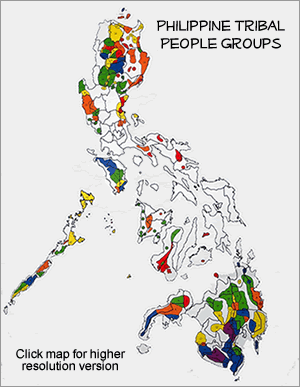
The Ayta Ambala are in the southern tip of the Zambales Mountain Ranges, occupying areas of southwestern Pampanga, southern Zambales, and northern Bataan. More specifically, they live within Aeta communities in the Zambal municipalities of Subic, San Marcelino, and Castillejos, in the city of Olongapo, and in Dinalupihan, Bataan. Their territory sits at the foot of the Zambales Mountains in Central Luzon, a landscape of forested ridges, river valleys, and lowland margins where Ayta communities have maintained their ancestral domain for generations.
The Ambala Ayta are a Negrito people — part of the broader Aeta family of indigenous peoples considered among the earliest inhabitants of the Philippine archipelago, whose ancestors are thought to have arrived long before the Austronesian migrations. Their language, Ambala, is a member of the Central Luzon branch of the Malayo-Polynesian language family, closely related to Botolan Sambal. A Latin-based writing system for Ambala has been developed through collaboration between the Philippine Department of Education, community members, and SIL Philippines — a meaningful step toward literacy and language preservation.
In the mid-1960s, missionaries of the American-based evangelical mission New Tribes Mission, in their effort to reach every Philippine tribal group with the Christian gospel, reached out to the Aetas. The mission agency provided education, including pastoral training for natives to reach members of their own tribe. Wikipedia This investment bore lasting fruit, and evangelical faith has since taken deep root among the Ambala Ayta.
Daily life for the Ambala Ayta is anchored in the land and the forest. Subsistence farming, hunting, fishing, and the gathering of forest products remain important sources of food and livelihood. Produce mainly supplies the demand of the community for food, and any surplus is sold to neighboring communities and at trading posts in urban and municipal centers. Migrants & Refugees Section Honey gathering is a seasonal activity of both practical and cultural significance — the Ayta Ambala observe the practice of Magyamyam, expressing gratitude to the spirit believed to provide the honey. Migrants & Refugees Section
Extended family networks are the backbone of community life, and clan relationships shape decisions about land, marriage, and community obligations. The Ambala Ayta have navigated the pressures of modernization while working to maintain their ancestral domain and cultural identity. Government recognition of land rights through ancestral domain titles has been an important development for Ayta communities in the region.
Traditional dances of the Ayta Ambala include courtship, ceremonial, and occupational dances, accompanied by bamboo flutes and a local stringed instrument. These dances reflect daily activities and embody cultural values of bravery, respect, and gratitude. Church gatherings and Christian celebrations have also become central features of community life, marking the weekly and annual rhythms of the Ambala Ayta's shared identity.
As with many communities whose faith in Christ is newer or whose traditional worldview was deeply animistic, elements of the old spiritual framework — including an awareness of spirits connected to the natural world — may still surface alongside Christian identity in some contexts. The call before Ambala Ayta believers is to continue growing in the fullness of what it means to follow Christ, allowing Scripture to be the definitive guide for faith and life. Their story of transformation is itself a powerful testimony to the power of the gospel.
The Ambala Ayta continue to face challenges common to indigenous minority communities in the Philippines. Access to quality education, healthcare, and economic opportunity remains uneven, and the pressures of encroachment on ancestral lands have created ongoing vulnerability for communities whose livelihood depends on their relationship to the forest and land. The Ambala language, while documented and supported by a writing system, requires continued investment to ensure it is transmitted to future generations and that Scripture and Christian resources are available in the heart language of the people.
Spiritually, the Ambala Ayta evangelical community needs ongoing discipleship, mature church leadership, and deeper engagement with scripture to sustain and strengthen the faith that has already taken root. As a community that has experienced the transforming power of the gospel firsthand, Ambala Ayta believers carry a remarkable calling — to take that same gospel to unreached indigenous peoples across the Philippines and beyond, joining the global movement of those who bring the good news to the ends of the earth.
Pray that Ambala Ayta believers will grow in spiritual maturity, grounded in scripture and filled with the joy and boldness that comes from knowing Jesus Christ personally.
Pray that the Ambala Ayta church will answer the call to send gospel workers to unreached indigenous peoples across Luzon and throughout the Philippines.
Pray for the continued development of Christian resources and scripture in the Ambala language, so that the word of God will be accessible in the heart language of the people for generations to come.
Pray for the protection of Ambala Ayta ancestral lands and for access to quality healthcare, education, and economic opportunity for their families and communities.
Pray for Ambala Ayta young people — that they will embrace both their cultural heritage and their identity in Christ, becoming the next generation of leaders in the church and community.
Scripture Prayers for the Ayta, Ambala in Philippines.
https://en.wikipedia.org/wiki/Ambala_language
https://en.wikipedia.org/wiki/Aeta_people
https://en.wikipedia.org/wiki/Sambal_people
https://ncip.gov.ph/ayta-ambala/
https://www.omniglot.com/writing/ambala.htm
http://www.ethnicgroupsphilippines.com/ethnic-groups-in-the-philippines/ayta-ambala/
https://en.wal.unesco.org/countries/philippines/languages/ambala-ayta
https://pia.gov.ph/news/articles/1043880
https://www.academia.edu/93638339/Dance_Ethnography_An_Analysis_on_Aeta_Ambala_Tribe_of_Barangay_Tubo_tubo_Bataan
https://culturepop.com/hrblog/21wvoxth6qv0trgyspxclvan5f3k8b-gt2ca
| Profile Source: Joshua Project |