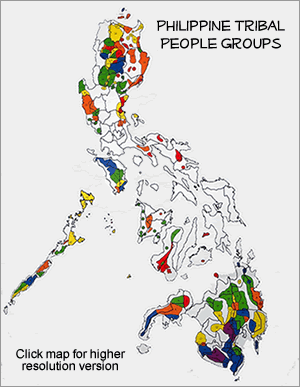
The Caluyanhon people inhabit the Caluya Islands, a small, isolated archipelago located in the northernmost part of Antique province, situated between the larger islands of Mindoro and Panay. Because of their geographic position in the Sibuyan Sea, the Caluyanhon have a unique history shaped by the intersection of several larger cultural groups, particularly the Bisaya and the Mangyan. Historically, their isolation protected them from many of the direct colonial influences felt on the mainland, allowing them to develop a distinct dialect and a resilient maritime culture. Today, they are recognized as a specific linguistic group that maintains a deep connection to their ancestral island home.
Life for the Caluyanhon is defined by the rhythm of the sea and the harvest of the land. They are primarily coastal dwellers, with fishing serving as the cornerstone of their economy. The islands are also known to produce seaweed and the cultivation of coconut and root crops. Because the islands are small, community life is highly interconnected; everyone knows their neighbors, and social safety nets are built on centuries of mutual trust. Caluyanhon society is marked by simplicity and a high degree of self-sufficiency. Traditional celebrations often involve communal meals and music that reflect their Bisayan roots but are infused with local island themes and seafaring stories.
The Caluyanhon are predominantly Christian, with faith playing a central role in their communal identity. The church is often the most significant landmark in their villages and serves as the primary gathering place for both spiritual and civic life. Despite this strong Christian identification, the isolation of the islands has allowed some traditional folk beliefs to persist, particularly those involving the "spirits of the sea" and agricultural rituals meant to ensure a bountiful harvest. Scripture is available in languages they understand, such as Hiligaynon or Kinaray-a, and efforts continue to ensure that the Gospel is fully accessible in their specific heart language.
The primary spiritual need for the Caluyanhon is for deeper discipleship and the strengthening of local church leaders who can minister effectively in a remote island context. Because of their geographic isolation, they face significant general needs, including consistent access to secondary education and specialized medical care, which often requires a difficult boat journey to the mainland. Economically, they are highly vulnerable to the impacts of overfishing and the destructive power of typhoons. There is a need for sustainable development that provides the youth with opportunities to thrive on the islands rather than being forced to migrate to urban centers for survival.
Pray for the Caluyanhon believers to grow in the grace and knowledge of Christ, moving toward a faith that is both deep and resilient.
Pray for the protection of those who make their living on the sea, especially during the volatile typhoon seasons.
Pray for the provision of better educational and medical resources for the families living on the outer islands of the Caluya group.
Pray for local pastors to be encouraged and for the raising up of new leaders who have a vision for the spiritual health of their people and others in the Philippines.
Pray that the Caluyanhon would see themselves as participants in God's global mission, reaching out to other island communities in the Sibuyan Sea.
Scripture Prayers for the Caluyanhon in Philippines.
Tiongco, R. The Antiqueños: A Study of the Ethno-History of Antique Province.
Llamzon, T. A. Handbook of Philippine Language Groups.
Summer Institute of Linguistics (SIL). Caluyanen Language Survey and Sociolinguistic Reports.
National Commission for Culture and the Arts. Cultural Profile of the Western Visayas.
Archive of Philippine Languages. Linguistic Classification of the Caluyanhon/Caluyanen.
| Profile Source: Joshua Project |