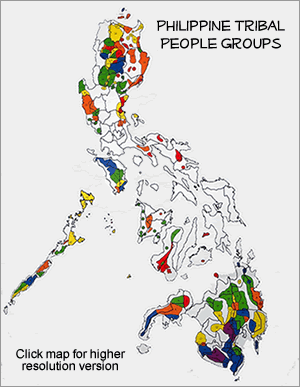

The Central Palawano are an Indigenous people of the Philippines who live on Palawan Island, especially in the interior areas of the central and southern part of the province. Many communities are found along upland rivers and in hilly, forested terrain where access to larger towns can require long travel. This setting shapes a way of life that is closely tied to the land, to family networks, and to local community relationships.
Their language is Central Palawano, one of several Palawano languages spoken on Palawan. Central Palawano families often use their own language in the home and community, while also interacting with wider Philippine languages for school, trade, and government services. Over time, Central Palawano identity has been maintained through kinship ties, customary ways of organizing community life, and shared patterns of livelihood that fit the island's interior environment.
Central Palawano daily life is shaped by family and by the work required to sustain a household in an upland setting. Extended family relationships often matter greatly, especially for sharing labor, caring for children, and supporting relatives during sickness or other hardship. Community life commonly involves cooperation among neighbors, since farming, travel, and major life events can require collective help.
Many Central Palawano rely on agriculture as their main source of food and income. Farming in interior Palawan is often described in terms of swidden or shifting cultivation, with households managing fields and harvest cycles in ways that match local soils, rainfall, and available land. Some families also engage in gathering forest resources, small-scale trade, and occasional wage labor when opportunities are accessible. Diet usually reflects what can be grown and gathered locally, along with foods purchased when families travel to markets, so meals often include staple crops, vegetables, and seasonal produce, with meat or fish depending on availability.
Important gatherings may include community celebrations tied to local calendars, as well as family milestones such as births, weddings, and funerals. In many places on Palawan, municipal and church-linked fiestas are part of public life, and Central Palawano communities may participate where relationships and travel make it feasible. Even when large festivals are not frequent, community cohesion is strengthened through regular visits, shared meals, and practical support that helps families endure the pressures of rural life.
The Central Palawano are often described as having a broad religious identity that is primarily traditional or ethnic in character. In this kind of setting, religious practice can be closely tied to daily concerns such as health, safety, harmony within the community, and the hope of good outcomes for crops and family life.
There is also a Christian presence among the Central Palawano, and some people identify with Christian faith and church life. Where Christianity and older customs exist side by side, some individuals may keep traditional practices while also participating in Christian activities, especially around major life events.
Life in interior Palawan can involve limited access to healthcare, consistent schooling, and stable income. When travel to clinics, schools, or markets is difficult, ordinary problems can become prolonged burdens, especially for households facing sickness, injury, pregnancy-related needs, or urgent financial strain. Economic vulnerability can increase when livelihoods depend heavily on farming, since changing weather patterns, crop loss, and fluctuating prices can affect a family's well-being quickly.
Family and community networks provide essential support, but those networks can be stretched when multiple households face hardship at the same time. Communities benefit from practical development that strengthens clean water access, basic health services, education, and sustainable livelihoods, while honoring local ways of life and strengthening families rather than displacing them.
Spiritually, Central Palawano communities need clear gospel witness and patient discipleship that leads to repentance and faith in Jesus Christ. Where churches exist, believers need steady teaching from scripture, wise local leadership, and Christlike unity that can withstand pressure and misunderstanding. Where Christian presence is limited or uneven, the need includes faithful workers who can live among them with humility, communicate the Word of God clearly, and nurture mature disciples who can then reach their own people.
Pray that Central Palawano families would encounter the mercy of Jesus Christ through clear gospel witness, and that many would respond with repentance and living faith.
Pray for believers to grow in biblical maturity, in love for one another, and in courage to follow Christ openly in daily life, and to send gospel workers to other peoples.
Pray for the Lord to raise up local church leaders and who will disciple both their own people and those from ethnic groups without a gospel witness.
Pray for practical well-being, including health, access to essential services, and stable livelihoods that allow families to flourish without constant crisis.
Scripture Prayers for the Palawano, Central in Philippines.
| Profile Source: Joshua Project |