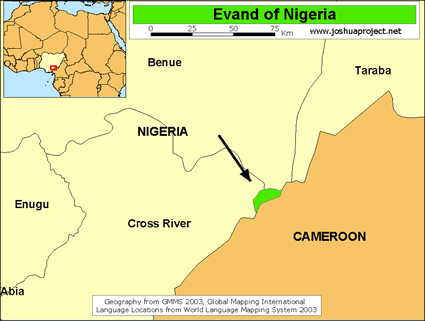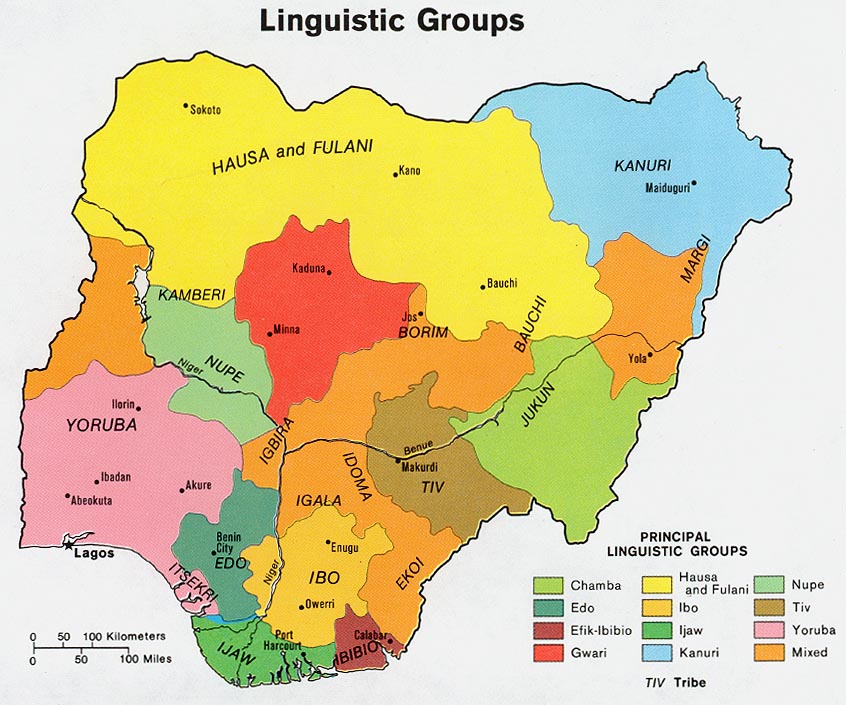
The Evand people live in southeastern Nigeria, within an area of forest, farmland, and interconnected rural communities. Their homeland places them among a mosaic of ethnic groups who have interacted for generations through trade, marriage, and shared use of land. The Evand language is an important marker of identity, preserving distinct expressions, oral tradition, and collective memory, even as many Evand also speak broader regional languages.
Historically, Evand society developed around village life shaped by kinship, agriculture, and local leadership. Authority and continuity were maintained through families and respected elders rather than centralized institutions. Contact with surrounding ethnic groups, missionaries, and wider Nigerian society gradually introduced new ideas and social changes while leaving core community structures intact.
Daily life among the Evand centers on family cooperation and subsistence work. Many households rely on farming, cultivating crops suited to the local environment and tending small livestock where possible. Agricultural work often involves extended family members, especially during planting and harvest seasons, reinforcing a strong sense of shared responsibility.
Families tend to live close to one another, creating tightly connected communities where care for children, the elderly, and vulnerable members is shared. Elders are highly respected for their wisdom and play a key role in resolving disputes, advising families, and preserving social harmony. Meals are often prepared and eaten together, reinforcing bonds of belonging.
Community life is marked by gatherings connected to family milestones, seasonal rhythms, and religious observances. Weddings, funerals, and celebrations bring people together, offering opportunities for instruction, encouragement, and collective reflection. Life generally follows the pace of agricultural seasons and communal needs rather than fixed schedules.
Christianity has an established and visible presence among the Evand. Many identify as Christians and participate in church life, where worship, prayer, and biblical teaching shape moral values, family relationships, and community expectations. Churches often function as important centers for both spiritual formation and social support.
Alongside this Christian foundation, traditional beliefs remain influential for some Evand. These beliefs involve trust in spiritual forces believed to affect health, protection, fertility, and misfortune. Such beliefs are expressions of faith placed in unseen powers rather than merely cultural customs. In some lives, Christian commitment and traditional spiritual trust exist side by side, pointing to the continuing need for clear discipleship that directs trust fully toward Jesus Christ alone.
The Evand face practical challenges related to economic stability, access to education, and healthcare, particularly in rural areas. Environmental uncertainty and limited resources require strong cooperation within families and communities.
Spiritually, Evand believers need ongoing growth in understanding and applying Scripture so their faith is rooted deeply in the gospel. Where fear of spiritual forces persists, the message of Christ's authority and sufficiency must be taught patiently and faithfully. With a Christian presence already in place, the Evand church has opportunity to mature spiritually and to extend the hope of Christ to neighboring peoples who lack a clear gospel witness.
Pray for strength, provision, and unity among Evand families and communities.
Ask God to deepen biblical understanding and spiritual maturity among Evand believers.
Pray for church leaders to be equipped to teach Scripture clearly and shepherd wisely.
Ask the Lord to help believers place full confidence in Christ rather than spiritual fear.
Pray that Evand Christians will share the gospel with nearby groups who have little or no gospel witness.
Scripture Prayers for the Evand in Nigeria.
https://www.ethnologue.com
https://www.britannica.com/place/Nigeria
| Profile Source: Joshua Project |