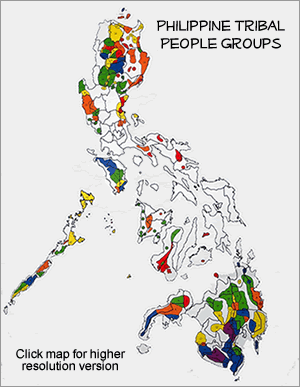

The Giangan Bagobo are one of several subgroups of the Bagobo peoples found on the island of Mindanao in the southern Philippines. They are primarily located in the provinces of Davao and nearby areas. Living in southern Mindanao, they have maintained a distinct identity through language, dress, music, and customary law.
Historically, the Giangan lived in the upland and forested regions, practicing agriculture and maintaining strong clan-based communities. Their society was traditionally led by chieftains and guided by customary laws passed down orally through generations. Spanish and later American colonial rule had limited direct impact on many upland communities, but lowland migration, logging, agribusiness expansion, and modern political structures have gradually reshaped their way of life.
Despite outside pressures, the Giangan Bagobo have preserved many elements of their cultural heritage. However, like many indigenous groups in Mindanao, they have experienced land disputes, economic marginalization, and the challenges of cultural assimilation.
Most Giangan Bagobo families live in rural areas, often in small villages scattered across hills and valleys. Agriculture remains central to daily life. Food is simple and based largely on what is locally grown or gathered. Rice or corn is a staple, often eaten with vegetables, fish, or occasionally meat. Root crops such as cassava and sweet potatoes are common, especially in more remote areas. They grow crops such as rice, corn, root crops, bananas, and vegetables. Some families also raise livestock or work as laborers on plantations. Others engage in small-scale trading or handicraft production, including weaving and beadwork, which reflect their rich artistic traditions.
Family is the foundation of Bagobo, Giangan society. Extended families often live near one another, and kinship ties shape social responsibilities and mutual support. Elders are respected as custodians of tradition and wisdom. Marriage is considered an important social bond not only between individuals but also between families.
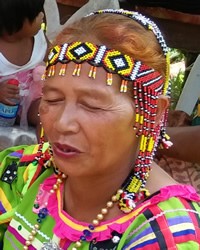
Traditional celebrations and rituals mark important life events such as births, marriages, and harvests. Music, chanting, and dancing are central features of community gatherings. Their colorful clothing and intricate beadwork are often displayed during festivals and ceremonial occasions, expressing both identity and spiritual meaning.
Modern influences are increasingly visible. Some communities have access to schools, churches, and government services, while others remain isolated. Younger generations often navigate between traditional culture and the broader Filipino society.
The Giangan Bagobo are traditionally animistic in worldview, believing in a spirit-filled universe where unseen beings influence daily life. Nature, ancestors, and various spirits are thought to affect health, harvests, and protection from harm. Ritual specialists or spiritual leaders play important roles in conducting ceremonies to seek favor, healing, or guidance.
Over time, many Giangan Bagobo have identified with Christianity due to missionary efforts and integration into the wider Filipino culture. Roman Catholic influence has been strong in parts of Mindanao, and Protestant and Evangelical churches are also present. However, in many communities, traditional beliefs continue alongside Christian practices. Rituals connected to agriculture, healing, and protection may still be observed, reflecting a blending of older and newer beliefs.
For those who profess Christianity, spiritual growth and biblical understanding vary. Where there is a clear gospel witness, there is opportunity for believers to mature in Christ and become a light to neighboring indigenous groups who have less access to the gospel. The Lord can raise up strong local leaders who will disciple their own people and participate in reaching others across Mindanao.
The Giangan Bagobo face ongoing physical needs. Many communities require improved access to healthcare, especially in remote areas where medical facilities are distant and under-resourced. Educational opportunities are uneven, and some children must travel far to attend school. Secure land rights remain a concern, as economic development and migration have increased pressure on ancestral lands.
Economic opportunities are limited in some areas, leading to cycles of poverty. Infrastructure such as roads, clean water systems, and reliable electricity is not consistently available in all villages.
Spiritually, there is a need for clear biblical teaching and discipleship in a culturally meaningful way. Where Christianity is present, believers need strong pastoral training and access to Scripture in their heart language. In communities where traditional beliefs remain dominant, people need to hear the gospel in ways that address fears related to spirits, illness, and misfortune. Prayer is needed for wisdom, unity, and boldness among local Christian leaders.
Pray for improved healthcare, education, and livelihood opportunities in Giangan Bagobo communities.
Pray for secure land rights and peace in areas affected by conflict or economic pressure.
Pray for loving, well-trained Christian leaders who will disciple their own people and others.
Pray that the gospel will take deep root and transform families and communities for generations.
Pray that soon Giangan Bagobo disciples will take the fragrance of Christ to those in Mindanao who lack an adequate gospel witness.
Scripture Prayers for the Bagobo, Giangan in Philippines.
https://www.peoplegroups.org
https://en.wikipedia.org/wiki/Bagobo
https://ncca.gov.ph/about-ncca-3/subcommissions/subcommission-on-cultural-communities-and-traditional-arts-sccta/central-cultural-communities/bagobo/
| Profile Source: Joshua Project |