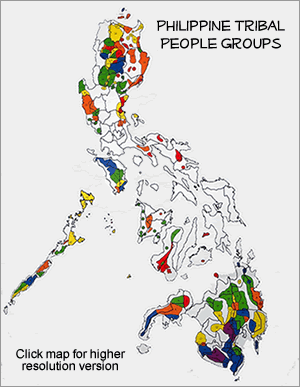

The Central Bontoc are an indigenous highland people who inhabit the municipality of Bontoc and surrounding villages in Mountain Province, Cordillera Administrative Region, on the island of Luzon in the Philippines. Their villages — including Bontoc ili, Caluttit, Dalican, Guina-ang, Ma-init, Maligcong, Samoki, and Tocucan — cling to the steep slopes and river valleys carved by the Chico River, whose tributaries have sustained Bontoc life for centuries. The people are part of the broader Igorot ethnolinguistic family, a collective term for the indigenous mountain peoples of the Cordillera highlands.
Their language, Central Bontok (also called Finontok), belongs to the Northern Luzon branch of the Austronesian language family, with Tinokukan as the primary dialect. The New Testament was completed in Central Bontok in 1992, with Bible portions available as early as 1908. Audio recordings and oral Bible story resources have also been produced in the language, providing additional tools for those who may struggle with literacy.
The Central Bontoc trace their ancestry to Austronesian peoples who settled the Philippine highlands thousands of years ago. Their pre-colonial society was organized around the ato, an autonomous village ward that functioned as both a political institution and a ceremonial space, governed by councils of elders who applied customary law known as adat. Each ato maintained its own leadership, managed community disputes, coordinated agricultural labor, and hosted rituals tied to the rice cycle. In the past, young men sought prestige through headhunting raids, a practice that has long since ceased. The Bontoc successfully resisted Spanish colonization for most of the colonial period, and it was not until American administration in the early 20th century that sustained outside influence began to reshape their society. Today, present-day Central Bontoc are a largely peaceful agricultural people who have deliberately preserved much of their traditional culture while navigating a changing world.
Wet rice cultivation on stone-walled terraces is the foundation of Central Bontoc life. The terraces of Maligcong — now recognized as a National Cultural Treasure — are an engineering achievement built and maintained without heavy machinery, using communal labor, indigenous irrigation knowledge, and stone walls that can reach nine meters high. Central Bontoc communities observe two rice croppings each year, planting different rice varieties suited to the temperature zones of their mountainous terrain. Sweet potatoes, cassava, beans, coffee, bananas, and highland vegetables like cabbage and string beans round out the agricultural diet. Pork, chicken, and occasional freshwater fish from the Chico River provide protein, and communal feasting remains central to social and ceremonial life.
Family and community identity are bound together through the concept of sinpangili — a deeply felt sense of kinship and collective belonging rooted in shared history, territory, and ritual. Extended family networks are the basic unit of social life, and wealth has traditionally been measured not only in rice terraces and livestock but in the generosity of the feasts a family hosts for the community. Three social classes exist — the kakachangyan (wealthy), the middle class, and the lawa (landless poor) — though social mobility is possible through education and strategic community relationships.
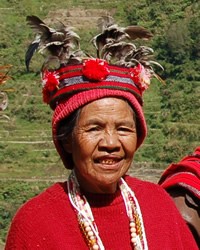
Music, weaving, and oral tradition remain living arts. The gangsa (bronze gong) accompanies communal dances at festivals and ceremonies. The bamboo nose flute (kalaleng), Jew's harp, and bamboo mouth organ are played at social gatherings and life events. Women weave traditional pinilian cloth with intricate patterns that carry cultural and ceremonial meaning. The Am-Among Festival, held annually in September to mark the town's founding, brings the community together for street dancing, traditional music, and celebration. Gold jewelry, agate beads, and shell ornaments distinguish the wealthy on ceremonial occasions, and traditional clothing — the wanes (G-string) for men and tapis (woven skirt) for women — is still worn for festivals and rites.
Traditional ethnic religion remains the primary spiritual framework for the majority of Central Bontoc people. At its center is a belief in anito — the spirits of the dead who inhabit a parallel world in the mountains and are consulted in all significant life matters, communicating their guidance through bird calls and other omens. The supreme creator figure, Lumawig, holds a central place in Bontoc cosmology as both a divine hero and culture-giver who taught the Bontoc their irrigation skills, their governance structures, and the sacred rituals of agricultural life. Ceremonies called begnas mark key moments in the rice cycle and involve offerings, feasting, and communal prayer to spiritual forces that are believed to govern fertility, health, and protection. Shamans and ritual specialists mediate between the human and spirit worlds in matters of illness and community crisis.
A significant portion of the Central Bontoc community identifies as Christian, and an evangelical presence has taken hold, representing those who have come to a personal, Scripture-centered faith in Jesus Christ. The New Testament is available in their language, and gospel resources in Central Bontok are accessible in both text and audio. Nonetheless, traditional religious practice remains deeply embedded in community life, and many who carry a Christian identity continue to participate in ancestral rites and spirit-oriented ceremonies that compromise faith in Jesus.
Access to quality healthcare remains a pressing need in the remote villages of Mountain Province, where rugged terrain makes medical care difficult to reach and emergency response slow. Educational opportunity, particularly at the secondary and post-secondary levels, is limited for many Central Bontoc young people, and expanding access would open doors to economic advancement without requiring full departure from the community. The rice terraces that anchor Bontoc cultural identity and food security face increasing threats from climate change, land abandonment by younger generations drawn toward urban employment, and the loss of traditional knowledge needed to maintain the intricate irrigation systems. Strengthening cultural transmission — especially the passing of terrace-farming knowledge, language, weaving, and oral tradition to the next generation — is both a human development need and a matter of communal survival.
Spiritually, the Central Bontoc need the evangelical community within their people to grow deep roots in the word of God and to move from being a gathered remnant to an active discipling force. The New Testament and audio Scripture resources exist in Central Bontok. Workers who understand both the culture and the Scripture are needed to walk alongside new and existing believers to disciple them.
Pray that Central Bontoc evangelical believers will be strengthened by the Holy Spirit to make disciples within their own communities and carry the gospel to other parts of Southeast Asia.
Pray for effective use of the Central Bontok New Testament and audio resources, that families and villages will encounter the living God through Scripture in their heart language.
Pray for sustainable solutions to protect the rice terraces, food security, and the cultural heritage of the Central Bontoc so that future generations may thrive in their homeland with dignity.
Pray for the arrival of healthcare workers and educators who will serve remote Bontoc villages with compassion, and whose lives will be a witness to the love of Christ.
Scripture Prayers for the Bontoc, Central in Philippines.
https://en.wikipedia.org/wiki/Bontoc_people
https://en.wikipedia.org/wiki/Igorot_people
https://www.ethnologue.com/language/lbk/
https://www.yodisphere.com/2022/07/Bontok-Tribe-Culture-Bontoc-People.html
https://globalrecordings.net/en/language/lbk
https://www.bible.com/languages/lbk
https://www.britannica.com/topic/Igorot
https://mabikas-foundation.org/wp-content/uploads/2021/02/some_notes_on_bontok_social_organization.pdf
| Profile Source: Joshua Project |