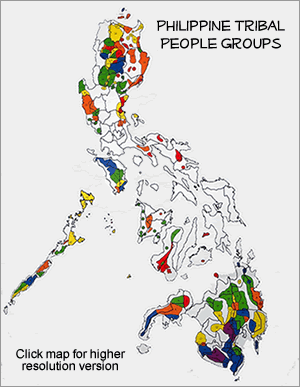
The Isnay—also known as Insinai or Isinay—are an Indigenous people living in the upland municipalities of Bambang, Dupax del Sur, and Aritao in Nueva Vizcaya, on the island of Luzon. Their homeland lies within a mountainous region framed by the Cordillera, Sierra Madre, and Caraballo ranges, giving their communities a blend of valleys, forested slopes, and river systems.
Their current language is Isinay, a Northern Luzon language spoken in these same municipalities. Historically, the Isnay traces its identity through ancestral ties to the early peoples who lived along the Cagayan River basin. Over time, they interacted with neighboring groups such as the Italon, Bugkalot, and Ibaloy.
Although influenced by migration and language shift during the Spanish era and beyond, Isnay communities maintain a distinct cultural identity rooted in their ancestral territory and traditional practices.
Today the Isnay live primarily as farmers and livestock raisers, working terraced fields, small plots, and home gardens shaped by the mountain environment. Rice, corn, vegetables, and fruit crops form the core of their diet, complemented by locally raised animals. Families often engage in cooperative work patterns, especially during planting and harvest seasons.
Households tend to be close-knit, often spanning multiple generations under one roof or within adjacent homes. Daily life includes tending fields, preparing food, and participating in community affairs, while younger members increasingly balance farming with schooling or small trade.
Community celebrations may include agricultural events and family gatherings that express gratitude, reinforce kinship ties, and uphold cultural identity. In some locations, Isnay leaders continue organizing cultural education efforts that revive traditional arts such as weaving and oral storytelling.
Christianity is the predominant religious identity among the Isnay, with many regularly participating in Christian practices. At the same time, some traditional beliefs persist, particularly in matters concerning agricultural blessings, illness, and protection, where certain families may still consult local practitioners.
Physical needs persist because rural communities frequently face limited access to healthcare, insufficient irrigation, and shifting agricultural conditions. Weather instability can threaten their crops, while economic opportunities remain limited due to their geographical isolation. Educational access varies, and language shift continues to threaten the transmission of Isinay to younger generations, prompting local efforts to preserve it.
Spiritually, the Isnay would benefit from continued discipleship, deepening biblical engagement, and a strengthened desire to join God's global mission. As Christ transforms their lives, they can become part of the wider gospel force reaching other less-reached peoples.
Pray for sustainable farming conditions, reliable water sources, and improved access to healthcare in Isnay communities.
Pray for ongoing language and cultural preservation efforts so that future generations may retain their identity while growing in Christ.
Pray for spiritual maturity among Isnay believers and for God's word to shape family and community life.
Pray that Isnay Christians will join the global body of Christ in bringing the gospel to less-reached ethnic groups.
Scripture Prayers for the Insinai, Isnay in Philippines.
https://www.yodisphere.com/2022/09/Isinay-Tribe-Nueva-Vizcaya-Culture.html
https://linguistics.upd.edu.ph/the-katig-collective/language-capsules/isinay/
https://www.wycliffe.org/Main%20Uploads/Projects/PDF/Isinay%20Profile%20AMENDED%20WEB.pdf
| Profile Source: Joshua Project |