
The word Iraya carries its meaning in the landscape itself — "people from upstream" or "uplanders," drawn from the prefix i- (people) and raya, a variation of the word for upland or upriver. The name tells their story: the Iraya were not always mountain people. Historical accounts indicate they once lived along the coastlines of Mindoro, the Philippines' seventh-largest island, until waves of Tagalog and Visayan migrants pushed them steadily inland. Rather than fight, these mild-mannered people withdrew, trading their coastal fishing grounds for the forests and hillsides of northern Mindoro.
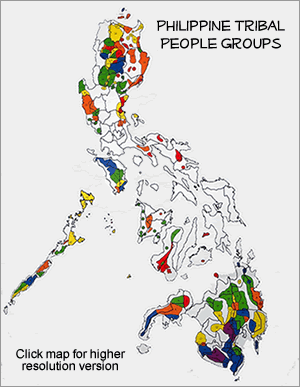
The Alag-bako are one of five dialect groups within the Iraya, and one of eight distinct Mangyan peoples who call Mindoro home. Their communities are concentrated in the municipalities of Paluan, Abra de Ilog, northern Mamburao, and Santa Cruz in Mindoro Occidental, and in the municipalities of Puerto Galera and San Teodoro in Mindoro Oriental. Each dialect community is distinct, yet all share a common Mangyan identity — a heritage of forest living, oral tradition, and stubborn cultural survival in the face of centuries of outside pressure.
Long before Spanish missionaries arrived, the Mangyans of Mindoro had traded with Chinese merchants, evidence of which has been uncovered in the form of ancient pottery near Puerto Galera. When Spain colonized the lowlands, the Iraya largely refused assimilation, withdrawing further into the mountains and preserving a way of life that remains recognizable today. That resilience is part of who the Alag-bako Iraya are.
The Alag-bako Iraya are swidden agriculturalists, clearing small hillside plots to grow upland rice, sweet potato, taro, yams, and corn. When the soil of one field is exhausted, they move on to the next, allowing the land to recover. Bananas and ginger are sometimes sold to lowland traders, providing a small measure of cash income. Those living near the coast supplement their diet with fishing, while inland families hunt small animals and gather wild plants from the forest. In the hardest seasons, families may depend on nami, a poisonous wild tuber that requires days of soaking in running water before it is safe to eat. Rice, sardines, and noodles represent a plentiful day.
The Iraya are skilled craftspeople. Women weave nito forest vines into intricately designed jars, trays, plates, cups, and bracelets — items that reflect both artistry and patience. Notably, these crafts are made only when inspiration strikes; each piece is therefore unique.
Alag-bako Iraya communities, called guraan, typically consist of around ten closely related households. The talnakan, or nuclear family, sits at the heart of social life, with the eldest child serving as a second parent in the mother and father's absence. A deep respect for elders governs community decisions, shapes the transmission of oral tradition, and orders every significant life event. Marriage ceremonies are officiated by a village elder, who joins the hands of the couple and prays to Apo Iraya for the blessing of children, health, and long life. Folk tales called suyot are shared by firelight after dark — tradition holds that telling them in daylight would cause the storyteller's teeth to rot.
The annual Kaaldawan Festival brings Iraya communities together in celebration of their identity, featuring traditional dances that reenact the rhythms of harvest and daily life, songs performed in native costume, and the display of handcrafted goods.
The traditional animistic religion of the Iraya remains the dominant spiritual reality for the Alag-bako community. At the center of this worldview stands Apo Iraya, a supreme creator and protector spirit invoked at the most important moments of life — marriage, illness, planting, and death. Surrounding Apo Iraya are the kamuruan, benevolent spirits, and the tampalasen, malevolent spirits believed to cause sickness and disaster. The Marayao — the community shaman — serves as the spiritual healer and intermediary, performing the balaon healing ritual and singing the Marayaw, a sacred spirit song used to invoke Apo Iraya's protection against evil. Illness is understood primarily as a spiritual consequence, brought on by offending the spirits or straying into territory they inhabit.
A minority of the Alag-bako Iraya have come to faith in Jesus Christ, and an Evangelical presence — though modest — does exist. Where the gospel has taken hold, it has encountered a people with a deep instinctive awareness of spiritual reality and a genuine hunger for healing and protection. Iraya believers who walk faithfully with Christ carry a priceless gift for their own people and, in time, could become part of the gospel force reaching the many other less-reached communities of the Philippines who have yet to hear his name.
A completed Bible in the Iraya language remains an urgent need; though the New Testament was published in 1991, the full Scripture is not yet available to this community. Healthcare access is severely limited in remote Iraya settlements, and illness continues to carry heavy spiritual and social weight in communities where the Marayao remains the primary source of healing. Educational opportunities are scarce, and many families have historically placed little priority on formal schooling — a pattern driven by poverty and geographic isolation rather than apathy. Land rights represent an ongoing vulnerability, as lowland encroachment and logging have steadily reduced the ancestral domains on which Iraya livelihoods depend.
Spiritually, the great majority of the Alag-bako Iraya have not yet heard the gospel in a way that has transformed their lives. Believers in the community need discipleship, biblical grounding, and the courage to share their faith cross-culturally — not only within their own guraan settlements, but with neighboring communities and peoples who remain entirely unreached.
Pray for the completion and wide distribution of the full Bible in the Iraya language, so that every household can encounter God's word in the language of their heart.
Pray for Alag-bako Iraya believers to grow in bold, joyful faith and to carry the gospel to less-reached peoples throughout Mindoro and the Philippines.
Pray for improved healthcare, land rights protections, and educational opportunities for Iraya communities living in remote forest settlements.
Pray that the living God — more powerful than any spirit — will make himself known to the Alag-bako Iraya as their true healer, protector, and Father.
Scripture Prayers for the Iraya, Alag-bako in Philippines.
https://en.wikipedia.org/wiki/Mangyan
https://mangyanheritage.odoo.com/mangyan-groups
https://www.yodisphere.com/2022/02/Mangyan-Mindoro-Philippines.html
https://groupmindorawan.wordpress.com/2015/03/10/culture/
https://sites.google.com/up.edu.ph/iraya-mangyan/changes-in-culture
https://journals.aiias.edu/info/article/download/200/189/363
https://www.omniglot.com/writing/iraya.htm
https://www.ethnologue.com/language/iry
https://live.bible.is/bible/IRYOMF
| Profile Source: Joshua Project |