


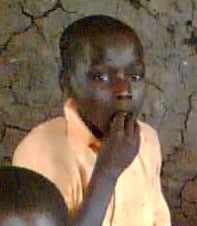

The Kakwa people are a Nilotic ethnic group whose traditional homeland spans the border regions of northwestern Uganda, southwestern South Sudan, and northeastern Democratic Republic of Congo. They speak the Kakwa language, also known locally as Kutuk na Kakwa, which is part of the Eastern Nilotic language family and closely related to the Bari language spoken by neighboring groups. The name "Kakwa" is rooted in their oral traditions and is understood to derive from words meaning "those that bite," reflecting stories of ancestral strength and identity. Despite colonial-era boundaries dividing the Kakwa into three countries, they maintain a strong sense of unity known as Salia Musala, meaning the tripartite relationship of one people across national borders. Their history includes long-standing agricultural life in fertile regions and experiences of displacement and disruption during periods of conflict in South Sudan and Uganda. Oral traditions also recount migrations from the Nile region, and in medieval times some Kakwa at the borderlands absorbed Islamic influences before later significant Christian missionary engagement reached them.
Most Kakwa in Uganda reside in rural parts of the West Nile region, especially in Koboko District, living in villages where family and community bonds are central to daily life. Their environment of flat plateaus and fertile soil supports an agro-pastoral economy in which households engage primarily in subsistence farming of crops such as maize, cassava, millet, sorghum, beans, groundnuts, and crops for local markets, with livestock such as cattle, goats, and sheep also kept. Many families supplement their livelihoods through small-scale trade, hunting, fishing, and traditional crafts. Men often work the fields and care for livestock, while women contribute significantly to planting, harvesting, food preparation, pottery, basketry, and other domestic duties. Daily life revolves around the rhythms of planting and harvest seasons, communal cooperation, and extended family networks that provide social support. Access to formal education, quality healthcare, clean water, and reliable infrastructure remains limited, making physical hardship a constant reality for many Kakwa families.
The religious beliefs of the Kakwa are diverse and shaped by both traditional spiritual systems and Abrahamic religions. Historically, their indigenous belief system did not include organized temples or written scriptures but centered on reverence for ancestors, spiritual forces, and a supreme entity sometimes referred to in traditional terms. Spiritual intermediaries and sacred places such as stones or fig trees were invested with significance as sites of communication with the unseen world and for performing rituals meant to appease spirits. These practices expressed a worldview in which ancestral spirits could influence daily life, provide guidance, and warn of danger.
Today, Christianity has become a prominent faith among the Kakwa, with many communities affiliating with various Christian denominations. Christianity coexists alongside significant cultural memories of Islam and traditional beliefs, with some blending of practices. Because of this mix, many Kakwa have only a partial or syncretistic understanding of biblical truth, often combining Christian identity with older spiritual concepts.
The Kakwa face intertwined physical and spiritual needs that require compassionate attention. Economically, many communities struggle with poverty, limited employment opportunities, and food insecurity, making daily survival a struggle for families with few resources. Access to clean water, adequate healthcare, and quality education remains sporadic, and improvements in these areas would greatly enhance community well-being.
Culturally, strong traditions of community and extended family provide resilience, yet these same structures can impede access to outside opportunities when isolation and lack of infrastructure persist.
Spiritually, although many Kakwa identify as Christians, deep discipleship rooted in Scripture is still limited in many areas, leading to faith that is blended with traditional understandings of spirits and ancestral authority rather than grounded in the sufficiency of Christ alone. There is a need for mature believers who can teach clear biblical truth and help local churches grow into communities that both love Jesus and serve their neighbors practically.
Pray for improved access to clean water, healthcare, education, and sustainable livelihoods so that Kakwa families can experience greater stability and well-being.
Ask God to strengthen agricultural practices and community infrastructure to reduce hunger and economic hardship.
Pray that the mercy and love of Jesus Christ would bring healing to those affected by poverty, displacement, and past conflict.
Pray that Kakwa believers would grow in a deep, biblical understanding of salvation through Jesus Christ alone, free from fear of spiritual powers and syncretism.
Pray that soon, Kakwa Christians will become Christ's ambassadors to communities that deny the sufficiency of the blood of Christ.
Ask God to strengthen local churches with godly leadership, sound teaching, and a vision for discipleship and mission.
Scripture Prayers for the Kakwa, Bari Kakwa in Uganda.
References
| Profile Source: Joshua Project |



