


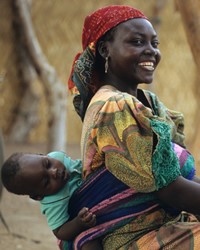

Kera is an East Chadic people living in southern Chad and northern Cameroon, historically shaped by migration, intercultural contact, and the resilience of their linguistic identity. Oral traditions describe their movement from the Chari region through areas such as Mouzouk Country and Lake Guisey before settling in their present homeland. These migrations are woven into founding myths, including accounts of conflict within ancestral families that prompted relocation and the search for new lands.
Throughout their history, the Kera have lived near and interacted with groups such as the Toupouri, Massa, Moussey, and Mundang. While this proximity has influenced their culture, it has also contributed to challenges of assimilation and pressure on their linguistic heritage, especially as dominant regional languages grow in use. Despite these pressures, the Kera continue to assert and preserve their cultural identity.
Kera communities engage primarily in agriculture, small?scale herding, and local trade—livelihoods typical of the semi?arid regions of Chad and Cameroon. Families often work together in their fields, practicing traditional farming methods adapted to the environment. Fishing, seasonal labor, and crafts may supplement household income, depending on location.
Family life is rooted in cultural customs shared across generations. Social organization often overlaps with neighboring groups yet retains distinct ritual practices and ceremonies unique to the Kera. Year?end festivals, harvest celebrations, and collective dances—often described as warlike or rhythmically expressive—play an important role in community identity. These practices, supported by strong oral traditions and storytelling, reinforce a shared sense of heritage. Their foodways reflect regional staples such as millet, sorghum, and locally available vegetables, prepared in dishes customary to the southern Sahel region.
Most Kera communities primarily follow their traditional ethnic religion, expressing their spirituality through ritual practices, ancestral customs, and ceremonies tied to agricultural cycles and communal life. Their rituals often include dance, music, and symbolic expressions that connect them to their past. Christianity is present among some Kera communities, though traditional belief systems remain highly influential.
Strengthening Kera cultural resilience requires supporting their efforts to preserve their language, cultural traditions, and intergenerational transmission of identity in the face of linguistic assimilation and external pressures. Access to education, sustainable agricultural development, and community health resources would enhance stability for families across both Chad and Cameroon.
Spiritually, the Kera would benefit from clear access to Scripture in their language, Christ?centered teaching, and long?term discipleship efforts. Encouragement for new believers and opportunities for pastoral development would help nurture a rooted and vibrant expression of faith.
Pray that the light of Christ will shine through the relationships, service, and testimony of those who follow him.
Pray for strong Christian discipleship to emerge among the Kera, empowering believers to share Christ with neighboring groups.
Pray that God will raise up faithful workers who can serve sensitively within Kera communities.
Pray for the protection and flourishing of the Kera language and cultural identity, that it may open doors for meaningful gospel engagement.
Scripture Prayers for the Kera in Cameroon.
https://rightforeeducation.org/2025/09/26/the-kera-people-a-rich-and-unique-cultural-identity/
https://en.wikipedia.org/wiki/Kera_language
https://www.revue-akofena.com/wp-content/uploads/2023/08/20-T09v02-15-Farikou-AMADOU-Fulbert-TAIWE_237-248
| Profile Source: Joshua Project |



