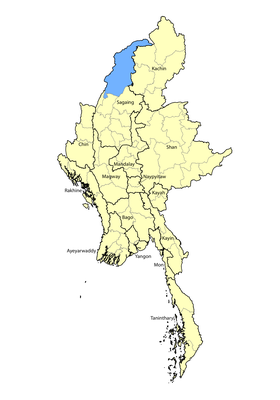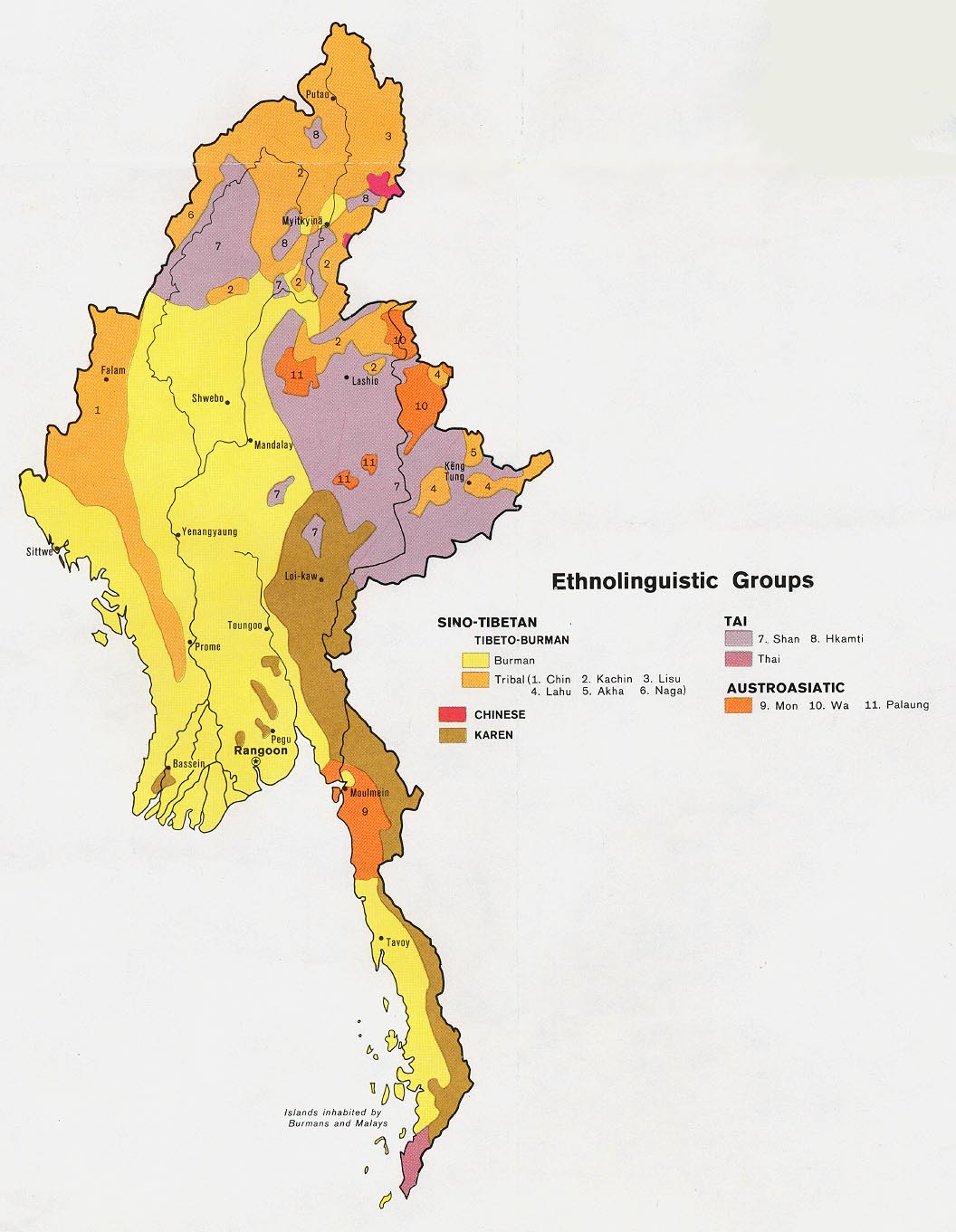

The Para Naga tribe inhabits seven villages in mountainous Leshi Township, within the Naga Self-Administered Zone in western Myanmar's Sagaing Region. Leshi, which sits at an elevation of 5,000 feet (1,524 meters), is home to many small tribes, with the Kokak Nagas just to the west the Para Naga's nearest neighbors. Although their identity and language are now different, the Para acknowledge relations with the Pochury Naga people, who inhabit 27 villages across the border in the Indian state of Nagaland.
The name Para is derived from the word Parasar, which means "new settlers" and stems from a belief that their ancestors fled after the Tangkhul Nagas in India attacked them. Four brothers scattered in different directions, with the youngest finding his way across the border to Myanmar, where he founded the Para tribe—who are also known as Jejara, meaning "peaceful people." The Para are not acknowledged by the government but have been conveniently lumped together for administrative purposes with more than a dozen other tribes and languages under a broad Naga banner.
The Para Naga vernacular enjoys vigorous use in the community and is spoken by all tribe members. It is not closely related to any other language in Myanmar.
Most Para Naga families live in rural villages where agriculture remains the foundation of daily life. Rice is the primary staple food and is commonly eaten with vegetables, beans, and meat when available. Farming occupies much of the year, while livestock raising, local trade, and occasional wage labor provide additional sources of income. Respect for elders continues to shape social relationships and decision-making within villages. Traditional songs, dances, storytelling, and handicrafts are often featured during festivals and community celebrations. Younger generations increasingly pursue educational opportunities while seeking to preserve their cultural heritage and maintain strong ties to their families and villages.
For countless generations, the Para Nagas zealously sacrificed to spirits, believing it was essential to preserve societal harmony by maintaining a balance between the spiritual and physical worlds. They observed many superstitions, including searching for omens and direction through divination, especially the study of chicken bones. These practices faded away after Christianity was introduced to the Para Nagas in 1950.
Although most Para Naga people are professing Christians today, the influence of the gospel among them appears to be weaker than among most other Naga tribes. All Para Naga churches are Baptist. Using the Roman orthography, Scripture portions were first translated and published into Para Naga in 2022, and work is currently underway to translate more books of the Bible into their mother tongue. Previously, Burmese Bibles were used in church services, even though most elderly believers could not understand them.
Remote villages often face challenges related to transportation, healthcare, education, and economic opportunity. Improved access to medical care and quality education would strengthen families and contribute to community well-being. Sustainable employment opportunities would help reduce economic hardship while allowing people to remain connected to their communities. Churches would benefit from leadership development, theological training, and discipleship resources that equip believers for ministry and service. Younger Christians would be strengthened through mentoring relationships that encourage faithful Christian living. Because the gospel has gained a meaningful foothold among the Para Naga, there is an opportunity for believers to participate more actively in sharing the good news of Christ with neighboring ethnic groups that have less access to Christian witness.
Pray that God will provide improved healthcare, education, and economic opportunities for Para Naga communities.
Pray that pastors and church leaders will be equipped to teach God's word faithfully and disciple future generations.
Pray that Para Naga believers will grow in spiritual maturity and demonstrate Christ's love in their homes and villages.
Pray that the church among the Para Naga will become an effective force for making disciples among peoples with limited access to the gospel.
Scripture Prayers for the Naga, Para in Myanmar (Burma).
Asia Harvest
1 Summer Institute of Linguistics, Ethnologue: Languages of the World (27th edition, 2024), online version.
2 J. D. Saul, The Naga of Burma: Their Festivals, Customs, and Way of Life (Bangkok: Orchid Press, 2005), p. 24.
3 Saul, The Naga of Burma, pp. 192-93.
4 Saul, The Naga of Burma, p. 40.
5 Saul, The Naga of Burma, p. 122.
6 Olk Bon, Culture Change among the Naga Tribes of Myanmar: The Former Headhunters Seek to Modernize (Coppell, TX: Self-published, 2019), p. 15.
https://www.ethnologue.com/
https://www.peoplegroups.org/
https://www.britannica.com/topic/Naga
https://en.wikipedia.org/wiki/Naga_people
https://nagalandpost.com/
https://www.myanmar.gov.mm/
| Profile Source: Joshua Project |
| Other PDF Profile |