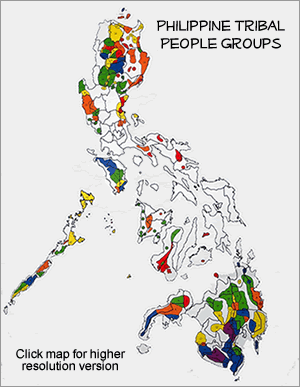

The Kiangan Ifugao are an Austronesian ethnic group inhabiting the mountainous Ifugao Province in the Cordillera Administrative Region of northern Luzon, Philippines. Their name derives from "i-pugaw," meaning "people of the cosmic earth" or "from the hill." According to Ifugao oral tradition, the Kiangan settlement holds profound historical significance as the place where the Ifugao people first originated. Ifugao mythology recounts that their ancestors Wigan and Bugan, descendants of Skyworld deities, settled in what is now known as Kiangan after a great flood. From this ancestral homeland, the Ifugao dispersed to other areas of the province, yet Kiangan remains spiritually and historically central to Ifugao identity.
Archaeological evidence from the Ifugao Archaeological Project confirms the oral traditions, revealing that Kiangan was indeed an early settlement where the Ifugao developed their distinctive wet-rice terrace agriculture. For centuries, the Kiangan Ifugao successfully resisted Spanish colonial domination through hundreds of years of isolation in their rugged highlands. When the Spanish attempted conquest in the late 1700s, the Ifugao maintained their independence far longer than neighboring lowland groups. Later, during the American occupation, Kiangan served as a military headquarters and education center. The municipality's strategic importance culminated in World War II when Japanese General Yamashita formally surrendered to U.S. forces at Kiangan in 1945. This rich history reflects a people of remarkable resilience and cultural pride.
The Kiangan Ifugao are primarily engaged in wet-rice agriculture, a livelihood that has shaped their entire culture and worldview for centuries. Their famous rice terraces, hand-carved into the mountainous terrain and maintained through elaborate systems of irrigation channels, represent one of the world's most impressive examples of human engineering and environmental stewardship. These terraces, recognized by UNESCO as a World Heritage Site, require intensive community labor and reflect the deep organizational skills of Kiangan families working together across generations.
Rice cultivation is far more than a subsistence activity among the Kiangan Ifugao; it is inseparable from their social, economic, and spiritual life. The agricultural calendar drives community ceremonies and family celebrations. The harvest season, called "tungo" or "tungul," calls for grandiose thanksgiving feasts where communities gather to celebrate their labor and give thanks for provision. These harvest celebrations involve the preparation of traditional rice wine (bayah), rice cakes, and the sharing of meals that strengthen family bonds and community solidarity.
Family organization among the Kiangan Ifugao traditionally follows a kinship-based structure, with extended family networks forming the foundation of daily life. Households occupy traditional architectural structures unique to the region—boltless houses that can be dismantled and reassembled, reflecting the adaptability of Ifugao life. Inheritance and property rights are matrilineal in character, giving women important roles in family economic decisions and cultural transmission. The wealthier elite class, known as the "kadangyan," sponsor prestigious feasts and maintain extensive rice fields, while community members of lower status work land in various arrangements.
Social status and prestige are demonstrated through elaborate ceremonial feasts called "hagabi" and "uyauy," where families display their wealth, generosity, and social standing. These celebrations involve the raising and sacrifice of pigs, preparation of feasts lasting multiple days, and the crafting of prestige items such as intricately woven textiles and beautifully carved wooden artifacts. Woodcarving, particularly the creation of "bulul" (granary guardian figures) and the "hagabi" (prestige bench), remains an important traditional craft. Women are renowned for their weaving skills, producing colorful blankets and ceremonial cloths that feature distinctive patterns passed down through families.
The Kiangan Ifugao maintain their own language (Tuwali dialect) while increasingly adopting Ilocano and Tagalog for broader communication. Oral traditions remain vital, particularly the "Hudhud" epic chants—narrative poems traditionally sung by women during rice harvesting. These UNESCO-recognized chants preserve ancestral histories, customary law, and spiritual beliefs, serving as both entertainment and cultural instruction during communal work.
The Kiangan Ifugao traditionally held a complex animistic belief system centered on the worship of numerous spiritual beings and deities. Their indigenous religion recognized a hierarchical cosmos consisting of six realms: the Skyworld (Kabunyan), the Earthworld (Pugao), the Underworld (Dalom), the Eastern World (Lagud), the Western World (Daya), and the Spiritual World (Kadungayan). Within these realms dwelled thousands of spiritual entities called "anitos," understood as protective ancestral spirits and supernatural forces governing specific aspects of life, agriculture, health, and warfare.
The chief deity in Ifugao tradition was known by several names—Kabunian, Mah-nongan, or Afunijon—understood as supreme and creator-like among the deities. The Ifugao believed that ancestral spirits, represented through carved wooden figures called "bulul," held protective power over rice granaries and harvests. Rituals called "baki" were conducted by priests known as "mumbaki," who performed animal sacrifices and ceremonies to maintain harmony with the spiritual realm and ensure abundant harvests.
In recent decades, a majority of the Kiangan Ifugao have converted to Christianity, primarily Roman Catholicism introduced through missionary activities beginning in the early 20th century. Schools established by both Catholic (CICM) and Protestant missionaries created lasting changes in the spiritual landscape. Today, the religious composition reflects this transition, though many Kiangan Ifugao hold syncretic beliefs that blend Christianity with aspects of traditional Ifugao spirituality. Some communities have embraced Protestant Christianity with genuine fervor, while others maintain Catholic affiliation combined with traditional ritual practices.
Despite nominal Christian conversion, traditional religious concepts remain deeply embedded in daily thought and practice. Some Ifugao Christians continue to sponsor traditional healing rituals and participate in ancestral veneration practices alongside Christian observance. This religious blending reflects the pragmatic nature of Ifugao spirituality—many see no fundamental contradiction between honoring ancestors and worshiping the Christian God. However, for those who have encountered Christ-centered evangelical preaching, genuine conversions resulting in transformed lives and discipleship are occurring. There exists among the Kiangan Ifugao a growing number of believers who desire to follow Jesus authentically and to share the gospel with their own communities.
The Kiangan Ifugao face multiple interconnected challenges in the contemporary world. Agricultural pressures from climate change, soil degradation, and the mechanization of rice farming threaten the sustainability of traditional terracing systems. Younger generations increasingly migrate to urban centers for economic opportunity, resulting in the erosion of cultural knowledge and traditional agricultural expertise. The transmission of the Hudhud epics, complex weaving techniques, and other cultural arts is jeopardized as youth pursue formal education and modern employment.
Educational infrastructure, while improved through missionary efforts, still requires development. Access to quality healthcare remains limited in remote mountain areas, with residents often traveling long distances for medical treatment. Economic opportunities beyond agriculture are limited, creating pressure for out-migration and resulting in weakened family structures and cultural continuity.
Ask the Lord to raise up from within the Kiangan Ifugao community faithful believers who will become witnesses and shepherds to their own people and others who don't have a gospel witness.
Intercede for families experiencing out-migration and cultural fragmentation, that the gospel would provide hope and transformation.
Pray that Kiangan Ifugao believers will become part of the gospel force among the less-reached ethnic groups of the Philippines.
Pray for revival—that the Holy Spirit would work powerfully among Kiangan Ifugao families and churches, transforming hearts, establishing churches, and creating a movement of God's kingdom that draws them to the saving knowledge of Jesus Christ.
Scripture Prayers for the Kiangan Ifugao, Gilipanes in Philippines.
Center for Southeast Asian Studies. (2019). "Early Ifugao History, the People, and Old Kiyyangan Village." https://www.cseashawaii.org/projects/tagalog-animations/resources/teachers-archaeology-manual/early-ifugao-history-the-people-and-old-kiyyangan-village/
Encyclopedia.com. "Ifugao." https://www.encyclopedia.com/humanities/encyclopedias-almanacs-transcripts-and-maps/ifugao
National Museum of the Philippines. "National Museum Cordillera." https://www.nationalmuseum.gov.ph/our-museums/regional-area-and-site-museums/cordillera/
National Museum of the Philippines. "Ifugao Ethnographic." https://www.nationalmuseum.gov.ph/exhibitions/nm-cordillera-rice-terraces-regional-museum/ifugao-ethnographic/
Philippine Statistics Authority. (2020). "Religious Affiliation in Ifugao." https://rssocar.psa.gov.ph/content/2020-religious-affiliation-ifugao
The Aswang Project. "Ifugao Divinities: Philippine Mythology & Beliefs." https://www.aswangproject.com/ifugao-divinities/
UCLA Ifugao Heritage Galleries. "Project: Ethnographic Encyclopedia." https://ifugaoheritagegalleries.ss.ucla.edu/project-ethnographic-encyclopedia/
Wikipedia. "Ifugao people." https://en.wikipedia.org/wiki/Ifugao_people
Yodisphere. "The Ifugao People of the Philippines: History, Culture, Customs and Tradition." https://www.yodisphere.com/2022/08/Ifugao-People-Cordillera.html
| Profile Source: Joshua Project |