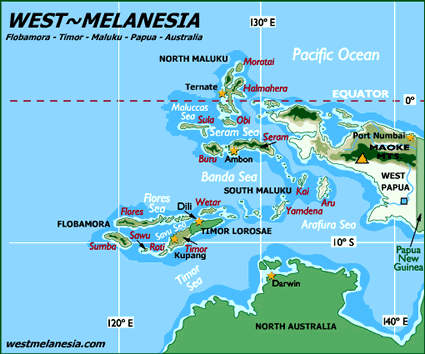
The Nila people, part of the broader Teon Nila Serua (TNS) ethnic cluster, originate from the small volcanic island of Nila in the Banda Sea of Maluku Province, Indonesia, where their ancestors developed a distinct Austronesian language and seafaring culture closely tied to the ocean and volcanic landscape. Oral traditions and linguistic evidence connect them to ancient migrations in southwest Maluku, with the Nila maintaining strong clan-based identities and customary laws shaped by isolation on their remote island homeland.
A pivotal event occurred in 1968 when the volcano on Nila erupted, prompting government concerns, and in 1978 the entire population—along with neighbors from Teun and Serua islands—was forcibly relocated to the Waipia area on the northeastern coast of Seram Island in Central Maluku Regency for safety reasons, despite protests from residents who viewed the move as unnecessary a decade after the eruption. This resettlement led to the establishment of new villages that retain the names and administrative ties to their original islands, forming the modern Teon Nila Serua District, while the people continue to identify strongly with their ancestral volcanic homelands and occasionally visit them.
The Nila people now live in coastal villages on Seram Island, where daily work revolves around fishing in the rich Banda Sea waters using traditional boats and nets, supplemented by small-scale gardening of cassava, bananas, sago, and coconuts on the hilly terrain. Family dynamics remain rooted in extended clan structures, with households often cooperating in communal tasks such as boat building, harvesting marine resources, and preparing food, while elders hold authority in resolving disputes through adat (customary) councils that emphasize harmony and mutual support. Celebrations frequently center on family gatherings, church events, and cultural festivals that include traditional dances, singing, and the sharing of special meals to strengthen community bonds and honor life milestones like weddings or harvests. Food staples feature fresh or fermented fish—most notably ina sua, a salted fermented fish dish unique to the TNS communities—as well as rice, sago porridge, root vegetables, and coconut-based preparations, with communal feasts showcasing hospitality and the preservation of pre-relocation island traditions adapted to their new environment.
The Nila people adhere predominantly to Christianity, with churches serving as vital centers for worship, fellowship, and community life, where biblical teachings guide moral decisions and provide hope amid historical disruptions like relocation. Evangelical faith has taken root through missionary outreach in Maluku, leading many to embrace Jesus Christ as personal Savior and integrate Scripture into daily practices, songs, and ceremonies. While ancestral customs and respect for natural forces once shaped a worldview influenced by the volcanic islands, the gospel proclamation has transformed perspectives of most, drawing families into active church participation and a desire to live according to God's word.
Access to consistent healthcare and clean water sources would address vulnerabilities in the resettled villages on Seram, where isolation limits medical response to illnesses or injuries. Educational facilities and vocational training open opportunities for youth to build sustainable livelihoods beyond subsistence fishing and farming. Reliable transportation links to markets and larger towns ease economic pressures and connect communities more effectively. Spiritually, believers benefit from Bible teaching materials in understandable languages and leadership training to nurture strong, reproducing churches. Ongoing discipleship helps newer generations apply faith authentically while honoring cultural heritage in ways that glorify Christ.
Pray that the Lord grants abundant provision through the sea and land, protecting the Nila people from storms or hardship while revealing himself as the faithful Provider who meets every need.
Ask God to send skilled health workers and resources to remote villages, healing sickness and showing his compassion as the ultimate Healer of body and soul.
Intercede for the gospel to flourish deeply in every household through local churches, drawing families into full devotion to Jesus and equipping them to overcome any residual cultural fears with biblical truth.
Beseech the Holy Spirit to raise up godly Nila leaders and evangelists who disciple believers maturely, plant vibrant congregations, and extend Christ's love to surrounding Maluku communities as part of His global mission force.
Scripture Prayers for the Nila in Indonesia.
Edwards, O. (2025). "Teun, Nila, Serua (Indonesia) – A Collection of Language Snapshots." Language Documentation and Description 25(1).
Persulessy et al. (2020). "Ina sua: The traditional Food Fermentation from Teon Nila Serua, Central of Maluku, Ind
| Profile Source: Joshua Project |