


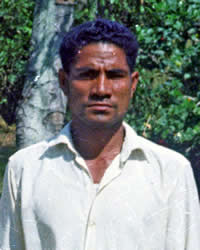

Rising abruptly from the South Pacific between Fiji and Samoa, Niuafo'ou — whose name means "many new coconuts" — is the northernmost island in the Kingdom of Tonga. It stands apart from the rest of the Tongan archipelago, sitting more than 570 kilometers north of the main island of Tongatapu. Geologically, Niuafo'ou is something altogether different from the coral islands that characterize much of the Pacific: it is a live shield volcano, ringed by a steep rocky coastline with black sand, lacking a harbor, and harboring a dramatic central crater lake within its collapsed caldera. The Niuafoou people, a small Polynesian group closely related to the broader Tongan people, are the indigenous inhabitants of this volcanic island and take both their name and their distinct language from it.
The island was settled around the first millennium by Polynesian voyagers, and by the 13th or 14th century, Niuafo'ou had come under Tongan chiefly authority. Its isolation, however, allowed a degree of cultural and linguistic independence rare for a territory within the Tongan kingdom. European contact arrived in stages, and by the 19th century, Protestant and then Catholic missionaries had introduced Christianity to the island's population. Niuafo'ou earned an unusual distinction in the late 19th century: because its rocky shores offered no anchorage for ships, mail was delivered by swimming — dispatched in sealed tin canisters carried ashore through the surf — earning the island the nickname "Tin Can Mail Island." This curious practice lasted until 1983, when an airstrip was finally constructed.
The island's volcanic nature has periodically upended life entirely. A catastrophic eruption in 1946 destroyed villages, severed radio contact with the outside world, and forced the complete evacuation of the island's population to Nuku?alofa. Resettlement brought some families to the island of ?Eua as well, which is why Niuafoou speakers are also found there today. Those who eventually returned rebuilt their community on the still-active volcano.
Farming and fishing anchor daily life on Niuafo'ou. The island's volcanic soils, enriched by centuries of eruption, support the cultivation of root crops such as taro and yams, alongside coconuts, bananas, and other tropical produce. The sea provides fish and shellfish, though the steep, harborless coastline makes ocean access challenging. Pigs and chickens are raised and play an important role in feasts and celebrations. Copra — dried coconut — has historically served as the island's modest link to the wider cash economy.
Family bonds in Niuafoou society reflect the broader patterns of Tongan culture, where kinship, respect for elders, and generosity within the community are foundational values. The Tongan concept of angafakatonga — the Tongan way — permeates social life, emphasizing one's duties to family, community, and church as inseparable from personal identity. Status distinctions between nobles and commoners, characteristic of Tongan society at large, also shape relationships and community decision-making on the island.
Celebrations center on church occasions, national holidays, and family milestones — births, weddings, and funerals that draw extended family networks together. Feasting is central to Tongan celebration; the preparation and sharing of food is itself an act of honor. Dance, song, and kava ceremonies mark significant occasions, with traditional performing arts expressing both joy and communal memory.
Every member of the Niuafoou community identifies as a Christian. Christianity arrived through missionary activity in the 19th century, and over the course of generations it has woven itself deeply into the fabric of daily and communal life. The church — whether Methodist, Catholic, or another denomination — is not merely a place of worship but a primary organizing institution for the community, shaping the week, marking the seasons, and defining social obligation. Sunday observance is taken seriously across Tongan society, and this holds true for the Niuafoou as well.
While Christian affiliation is universal within the community, the depth of personal, evangelical faith varies. For many, Christian identity is profoundly communal and traditional — received as part of being Tongan — rather than always rooted in a personal encounter with Christ and his gospel. The call of Scripture is for every believer to know Jesus not only as a community inheritance but as a living Lord, and to be transformed by his grace from the inside out. Salvation and eternal life come through faith in Christ alone, and where faith is nominal, the need for genuine renewal is just as real.
Notably, a complete New Testament was translated into the Niuafo'ou language and released in 2023 — a milestone that gives this small community direct access to the Word of God in their heart language for the first time.
The Niuafoou face ongoing physical vulnerability. Life on an active volcano means that the threat of eruption is never fully absent, and the island's remoteness complicates access to healthcare, economic opportunity, and secondary education. Cyclones add a second layer of climatic risk to an already exposed island community. Out-migration to Nuku?alofa, ?Eua, and overseas draws younger generations away, gradually eroding the community's linguistic and cultural continuity.
The completion of the New Testament in Niuafo'ou is a gift of tremendous significance, and the greatest need now is for this Scripture to be read, taught, and applied. Where faith is inherited rather than personally embraced, the living Word has the power to awaken genuine conviction and commitment. Evangelical believers in the Niuafoou community have a responsibility to make the most of this resource — reading it together, teaching it faithfully, and allowing it to shape how they live and speak about Christ to their neighbors and families.
Give thanks for the recent completion of the Niuafo'ou New Testament and pray that it will be widely read and that God's word will take deep root in this community.
Pray that Niuafoou believers with genuine evangelical faith will be bold in sharing the gospel with those in their community whose Christian identity is largely traditional or nominal.
Pray for the physical safety of the Niuafoou people living on an active volcano, and for wise preparation and resilience in the face of natural disaster.
Pray for young Niuafoou people who have relocated to ?Eua, Nuku?alofa, or abroad — that they would hold fast to Christ and carry his light back to their families and island home.
Scripture Prayers for the Niuafoou in Tonga.
| Profile Source: Joshua Project |



