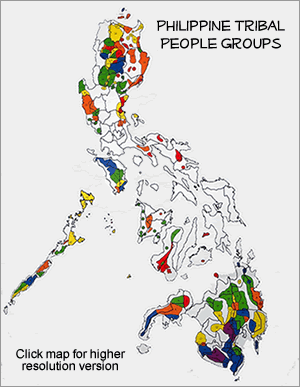

The Masadiit Itneg are an indigenous ethnolinguistic community in the northern Philippines, living mainly in the upland areas of Abra Province, including communities in and around municipalities such as Sallapadan, Bucloc, and Boliney. Their homeland is mountainous, with settlements shaped by river valleys, steep terrain, and the practical needs of farming and travel in rugged country.
Their language is Masadiit Itneg, one of the Itneg languages of northern Luzon, and it is distinct enough to be identified with its own language code and name. Masadiit Itneg is closely related to neighboring Cordilleran languages, which reflects long-standing relationships and contact among highland peoples in this region. Across generations, Masadiit identity has been sustained through kinship ties, local leadership structures, and community practices that reinforce belonging, mutual responsibility, and respect for elders and customary ways of settling disputes and marking important life events.
Masadiit Itneg communities are commonly organized around family networks where daily work, childcare, and care for the sick or elderly are shared responsibilities. Households often depend on close cooperation among relatives, and community life tends to be shaped by gatherings where decisions are discussed, help is coordinated, and relationships are maintained through visits and shared meals. Elders carry social weight as keepers of memory and advisers in times of tension, illness, or loss.
Livelihoods are rooted in the land. Many families rely on farming and other forms of local work that fit a mountain environment, with rhythms set by planting and harvest seasons, weather patterns, and the availability of roads and markets. People may also pursue wage labor, small trade, or craftwork as opportunities allow, especially when travel to larger towns makes buying and selling possible. Diet commonly reflects what can be grown locally and what can be brought in from outside, so meals often combine staples and vegetables with occasional meat or fish, depending on access and season.
Community life is also expressed in the way people respond to major life events. When someone is seriously ill, friends and relatives may gather to offer comfort, share memories, and provide practical support, strengthening relationships at a time when families are vulnerable. When death occurs, customary ways of informing nearby communities and gathering support help ensure that grief is not carried alone and that the community participates in honoring the person's life.
Masadiit Itneg religious identity is often described in terms of ethnic or traditional religion, with spiritual ideas connected to community life and customary practices. At the same time, there is also a real Christian presence among them, and some people identify with Christian faith communities.
As in many places where the gospel meets long-established traditions, people may hold to Christian words and outward practices while still feeling pressure to honor older spiritual expectations tied to family, health, or major life events. Without assuming that every household practices the same things, it is reasonable to recognize that some individuals can experience a mixed spiritual environment where traditional concepts remain influential even when churches are present.
Geographic isolation and difficult terrain can limit access to consistent schooling, healthcare, and reliable income, especially for households that must travel far for services, supplies, or emergency care. When livelihoods depend heavily on farming and local opportunity, families can be vulnerable to crop loss, sickness, and sudden financial shocks, and these pressures can intensify during seasons when travel is harder or work is scarce.
Strong family networks can provide support, yet they can also carry heavy burdens when a household faces prolonged illness, disability, or loss. In these moments, communities benefit from practical help, wise leadership, and strengthening relationships that keep families from becoming overwhelmed or divided.
Spiritually, the Masadiit Itneg need sustained gospel witness that is both compassionate and truthful, leading to repentance and faith in Jesus Christ rather than mere religious identity. Believers also need steady pastoral care and discipleship that forms mature Christians who can teach others, model Christlike family life, and serve as trustworthy leaders in their own communities. Because Bible translation work for the Masadiit Itneg is described in terms of oral translation efforts and work in progress, an ongoing need is for Scripture to be communicated clearly in forms that people readily understand and can pass on accurately to others. The deepest spiritual need in such a setting is for clear teaching from Scripture, wholehearted trust in Jesus Christ, and patient discipleship that helps new believers turn from fear and uncertainty to a lived confidence in the mercy and lordship of Christ.
Pray for the Lord to draw Masadiit Itneg families to repentance and living faith in Jesus Christ, with confidence in his mercy rather than fear or uncertainty.
Pray for scripture to be communicated faithfully in Masadiit Itneg in forms that are easy to understand, remember, and share across generations.
Pray for emerging local church leaders to be grounded in the Bible, equipped to shepherd others, and protected from discouragement and division.
Pray for believers to grow in maturity and to become part of the mission force, carrying the gospel to the least reached ethnic groups in the Philippines.
Pray for practical provision, including health, stable livelihoods, and care for families facing sickness, isolation, and economic strain.
Scripture Prayers for the Itneg, Masadiit in Philippines.
| Profile Source: Joshua Project |