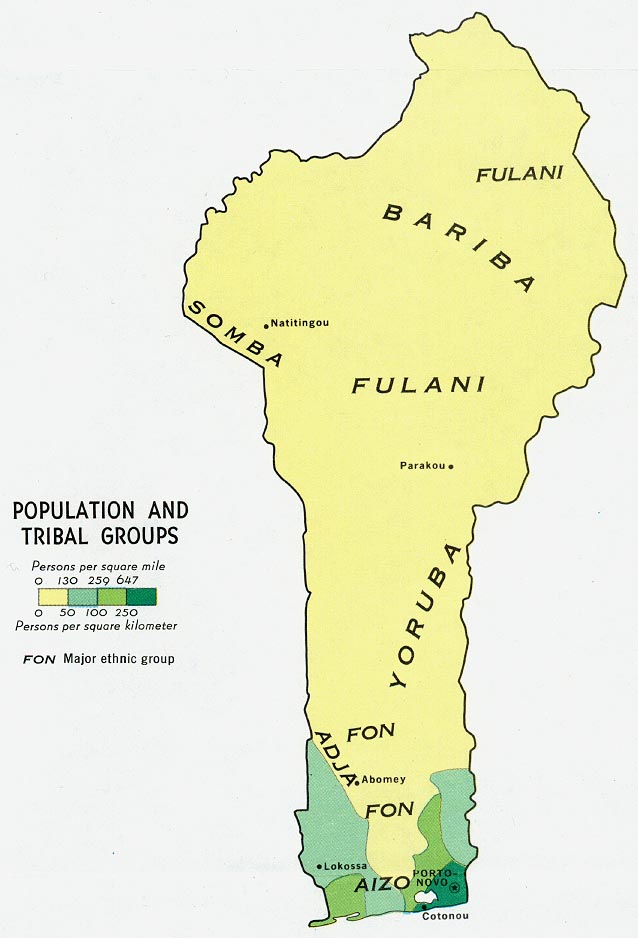
Tucked into the savanna of northern Benin, the Mokole occupy a narrow corridor of land running between the towns of Kandi and Malanville in the Alibori Department. Their roots reach southward to the great Oyo Empire of Yorubaland, from which their ancestors migrated northward around the sixteenth century. Over time, they established villages that would become the foundations of towns still bearing Mokole origins today, including Kandi itself. Though historically part of the broader Yoruba ethnic cluster, the Mokole have developed into a distinct people, geographically isolated and culturally shaped by centuries of life among the Bariba, by whom they are almost entirely surrounded. That position makes them, remarkably, the northernmost Yoruba-speaking community in all of West Africa.
The language they speak — also called Mokole (or Mokollé) — belongs to the Yoruboid branch of the Niger-Congo language family and carries its own tonal patterns, vocabulary, and phonological features that set it apart from southern Yoruba varieties. Despite the geographic distance from other Yoruba-speaking communities, the language remains vital, transmitted naturally from parents to children across generations. French, Benin's official language, is used in formal and educational settings.
Daily life among the Mokole centers on the land. Millet, maize, yams, peanuts, and cotton are the backbone of their agricultural economy, with cotton functioning as a major cash crop that connects them to regional markets. Men tend the fields and may also engage in trade or transport, while women manage the household and take primary responsibility for food preparation. Pounded yam — called tchokourou in northern Benin — is a dietary staple, typically served with sauces made from vegetables, groundnuts, or whatever protein is available. Beef is more common in the north than fish, and goats, sheep, and poultry supplement the diet throughout the year.
Mokole society is organized around patrilineal extended family networks. Marriages, which often involve bridewealth negotiations, are central community events, and polygamous households are not uncommon. Children grow up within a web of relatives where elders command deep respect and family loyalty is a defining value. Seasonal harvests bring communal celebrations, with music, drumming, and dance marking the rhythms of agricultural and social life. The yam harvest in particular carries both cultural and spiritual weight across northern Benin's ethnic groups, including the Mokole, who participate in broader regional traditions of giving thanks for good harvests. Wrestling, storytelling, and communal gatherings around fires are familiar forms of recreation in village life.
Islam is the dominant faith among the Mokole, claimed by a strong majority of the population. However, the Islam they practice is deeply syncretistic — what is often described as folk Islam — woven together with longstanding traditional religious beliefs and practices. Reciting Quranic verses to seek miraculous healings, wearing protective amulets to ward off malevolent spirits, and consulting diviners are all part of the spiritual landscape for many Mokole. These are not merely cultural habits layered over religious identity; they reflect where genuine trust is placed. The spirit world — ancestors, nature spirits, and unseen forces — is understood to have direct power over daily life, health, harvests, and misfortune.
A significant portion of the Mokole practice ethnic religions more openly, maintaining shrines, venerating ancestors, and seeking the favor of spiritual intermediaries. For many, the boundary between Islam and traditional religion is permeable; both are drawn upon as needed. In this framework, the living consult the dead, and spiritual appeasement takes precedence over doctrinal fidelity.
A minority of the Mokole identify as Christian, and a smaller number still hold to an evangelical faith. The complete Bible has been translated into the Mokole language, and the Bible is available— a significant resource.
Northern Benin faces persistent gaps in rural development, and the Mokole are no exception. Access to quality healthcare remains limited, with few medical facilities serving the dispersed villages around Kandi. Preventable illnesses, complications during childbirth, and limited access to trained health workers continue to affect community wellbeing. Clean water infrastructure is inadequate in many rural areas, leaving families vulnerable to waterborne disease. Educational opportunities beyond the primary level are scarce, constraining economic mobility for young people who must often travel great distances for secondary or higher education. Improved roads would make a meaningful difference, as poor transportation links keep agricultural goods from reaching markets and slow the delivery of essential services to outlying villages.
Pray that Mokole Christian believers who know Jesus Christ will be grounded in Scripture and grow into a spiritually mature community capable of bearing witness to their neighbors and beyond. Ask the Lord to raise up Mokole evangelists and church planters who will carry the gospel to surrounding unreached peoples in northern Benin and the wider Sahel region. Pray that the syncretistic hold of folk Islam and spirit appeasement will be broken as the Mokole encounter the living God who alone holds authority over every spiritual power. Ask God to bring medical workers, educators, and development workers whose service opens doors for the gospel among the Mokole.
Scripture Prayers for the Mokole in Benin.
https://en.wikipedia.org/wiki/Mokole_language_(Benin)
https://en.wikipedia.org/wiki/Kandi,_Benin
https://www.peoplegroups.org/explore/GroupDetails.aspx?peid=12342
https://festival.si.edu/blog/food-culture-benin-yam-festival
https://www.everyculture.com/A-Bo/Benin.html
https://www.ethnologue.com/language/mkl
| Profile Source: Joshua Project |