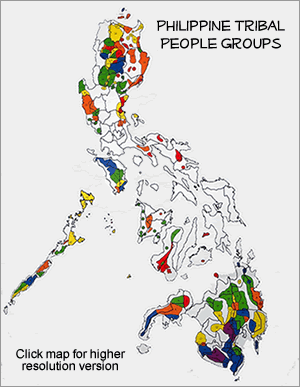
The Aggay are a Negrito people living in the rugged, forested hills of northwest Cagayan Province in Luzon, the Philippines' largest island. Also known as the Northern Cagayan Negrito or the Pamplona Atta, they are distributed across remote communities in and around the municipalities of Pamplona, Santa Ana, Gonzaga, and Peñablanca, including communities near the famous Callao Cave along the Pinacanauan River. Their primary language is Atta, Pamplona, an Austronesian language belonging to the Philippine branch; many Aggay also speak Ibanag and Ilocano as second languages, reflecting long contact with lowland neighbors.
The Negrito peoples, including the Aggay, are among the earliest inhabitants of the Philippine archipelago, with archaeological evidence of their ancestors dating back 40,000 to 67,000 years. Their forebears arrived long before the Austronesian migrations that brought the majority Filipino population, making the Negritos the truest indigenous people of the islands. The Aggay and their Atta relatives have historically inhabited the forested highlands and riverine areas of northern Cagayan, sustaining themselves as hunter-gatherers and swidden farmers. Contact with lowland Christian Filipinos, Spanish colonizers, and later the American colonial administration brought gradual changes to their way of life. More recently, commercial logging and agricultural encroachment have reduced the forest that has sustained Aggay communities for generations.
The Aggay live primarily in small, dispersed communities in forested upland areas of Cagayan Province, though some families have settled closer to lowland towns and agricultural areas. Hunting, fishing, and foraging continue to contribute meaningfully to their diet and livelihood alongside swidden (slash-and-burn) farming of root crops, rice, and vegetables. Wild forest foods — including yams, ferns, mushrooms, forest honey, wild banana, and palm heart — remain part of their diet, though the shrinking of ancestral forest lands has reduced access to these traditional foods. Hunting is conducted with bows and arrows, and fish are taken from rivers using a variety of methods.
Some Aggay families have found economic opportunities in lowland agricultural labor, small-scale trading, and in communities near Callao Cave, where a handful of young people work as guides in the cave tourism industry. Formal schooling remains largely inaccessible for many Aggay children, and adult literacy rates are low. Families live in close-knit extended kinship groups, with elders serving as respected authorities on tradition, healing, and community decision-making. Community celebrations mark significant life transitions such as births and marriages, and communal singing, oral storytelling, and poetry in the Atta language are cherished expressions of identity. The New Testament has been translated into Atta, Pamplona, providing Aggay who are literate or have access to audio resources a witness to the gospel in their heart language.
The predominant spiritual framework among the Aggay is animism — the belief that the natural world, including forests, rivers, rocks, and animals, is inhabited by spirit beings who influence human health, success, and wellbeing. These spirit beings are understood in two broad categories: hayup, creatures of supernatural character, and anito, the ghosts of deceased humans. Disease is typically attributed to the displeasure or mischief of spiritual beings, and shamans, known as mombaki in some Negrito communities, serve as healers and intermediaries who seek to restore harmony between the human world and the spirit world through ritual and prayer. Healers are widely consulted when illness strikes, and daily life involves an awareness of the spirit presences believed to inhabit the surrounding forest environment.
A meaningful minority identify with Christianity, including evangelical expressions of the faith that have entered the community through missionary outreach and church planting efforts. For those who have heard the gospel, Jesus Christ has offered an answer to the fear and spiritual uncertainty that characterizes the animist worldview.
Ancestral domain rights remain unresolved or insecure for many Aggay communities, leaving them vulnerable to further loss of the forest lands on which their culture and livelihood depend. Without secure access to their traditional territories, the Aggay's ability to practice sustainable forest-based livelihoods is endangered. Access to education is limited by geographic isolation, economic poverty, and the historically low priority given to Negrito children in the formal schooling system; adult literacy is rare, and many young people have no viable path to secondary education. Healthcare is difficult to access in remote communities, and Negrito peoples across the Philippines face significant health disparities, including higher rates of malnutrition and preventable illness.
Spiritually, thae large majority of the Aggay have not yet turned from a fear-based framework of animism to embrace the liberating truth of that Jesus can take care of all their needs. They need discipleship, pastoral support, and resources to grow closer to the Lord.
Pray that the Aggay will hear and receive the good news of Jesus Christ, and that his perfect love will cast out the fear of spirits that shapes so much of daily life, bringing freedom and lasting peace to every family and village.
Pray for the growing number of Aggay believers — that they will be discipled well, that their faith will deepen, and that God will raise up Aggay church leaders equipped to reach their own people and others.
Pray for the protection and recognition of Aggay ancestral lands, so that this people can sustain the forest-based way of life they have maintained for generations, free from the encroachment that threatens both their culture and their livelihood.
Pray for educational and healthcare access for Aggay children and families, and for compassionate workers who will serve the Aggay community with both the love of Christ and the practical skills that address real human need.
Scripture Prayers for the Aggay in Philippines.
https://www.peoplegroups.org/Explore/groupdetails.aspx-peid=7745
https://www.encyclopedia.com/environment/encyclopedias-almanacs-transcripts-and-maps/negrito-religions-negritos-philippine-islands
https://en.wikipedia.org/wiki/Aeta_people
https://factsanddetails.com/southeast-asia/Philippines/sub5_6d/entry-3884.html
https://www.yodisphere.com/2022/03/Aeta-Culture-Customs-Tradition-Indigenous-People-Philippines.html
https://kjhss.khazar.org/cgi/viewcontent.cgi-article=1172&context=journal
https://www.peopleandplants.org/traditional-foodways/the-philippines
https://www.aswangproject.com/understand-philippine-mythology-animism/
https://www.bible.com/languages/att
| Profile Source: Joshua Project |