
The Mamainde — a Northern Nambikwara people — live in the indigenous territory of Terra Indígena Vale do Guaporé in the state of Mato Grosso, Brazil, in the region between the Cabixi and Pardo rivers. Their homeland spans a stretch of western Brazil where Amazonian forest and savanna meet, a region of rivers, diverse wildlife, and deep indigenous heritage.
The Mamainde speak the Mamainde language, a member of the Nambikwaran language family — an isolated linguistic family with no known relationship to any other language family in South America. This linguistic distinctiveness reflects the deep historical roots of the Nambikwara peoples in central Brazil. The Mamainde dialect sits within the Northern Nambikwara branch, spoken alongside related but distinct varieties in the broader region.
The history of the Mamainde carries both tragedy and tenacity. Contact with the outside world through Brazilian colonial expansion and later government telegraph projects brought devastating epidemics and violence that reduced the Nambikwara peoples to a fraction of their earlier numbers. The Mamainde community suffered catastrophic losses from intertribal warfare and disease. Despite these losses, the Mamainde have survived and their community has grown over recent decades — a testament to their perseverance.
Traditional Mamainde life follows the rhythms of the land and the seasons. The Nambikwara peoples historically shifted between subsistence strategies according to the time of year — cultivating crops like manioc along riverbanks during the rainy season and turning to hunting and gathering during the dry season. This seasonal flexibility shaped a deep knowledge of the forest, rivers, and wildlife of their territory.
Village life centers on family and community. Chiefs and respected leaders play an important role in organizing communal life and resolving disputes, while extended family networks sustain daily cooperation in gardening, foraging, and child-rearing. The Mamainde maintain strong ties to their ancestral land, understanding their territory not merely as a source of food but as the foundation of their identity.
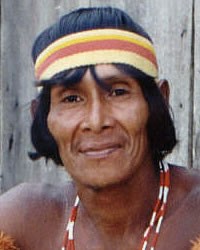
Body ornamentation carries cultural significance among the Nambikwara, with adornment serving as a marker of belonging and personhood. Community gatherings, ceremonies, and shared meals reinforce bonds within the village. Survivors from neighboring groups — including Sabanê speakers — now live alongside the Mamainde, creating a community shaped by both shared suffering and mutual solidarity.
Ethnic religion remains the primary belief system for the majority of the Mamainde, reflecting a worldview deeply rooted in the natural world, ancestral connections, and spiritual forces associated with the land, animals, and community life. At the same time, a significant and growing portion of the community identifies as Christian, including those who hold evangelical faith — a development that reflects decades of gospel witness among the Nambikwara peoples.
This means the Mamainde community lives at a genuine spiritual crossroads. Traditional religious practice and Christian faith coexist, sometimes in tension and sometimes in dialogue. The believers among them carry great responsibility — and great opportunity — to demonstrate the transforming power of the gospel to those around them who still follow traditional ways.
God has provided meaningful resources for the Mamainde. Translators have completed Bible portions in the Mamainde language, and the Jesus Film is available in Mamainde. Global Recordings Network has also produced audio Bible teaching in this language. These resources give both believers and seekers access to the gospel in their heart language.
The Mamainde need a complete Scripture translation. Bible portions open a door, but the community still waits for a full New Testament and complete Bible in their language. Mamainde believers need the whole counsel of God's Word to grow in faith, lead their communities well, and evangelize their own people who still follow traditional religion.
The Mamainde also need strong local church leadership. As a community where traditional religion remains dominant, believers require grounding in Scripture and the courage to live out their faith distinctively. Mature, gifted Mamainde Christians who can teach, disciple, and model lives shaped by the gospel are essential for the church to take deep root.
Healthcare access and the long-term security of their land continue to shape the physical wellbeing of the Mamainde. Their community has recovered from near collapse, and continued flourishing — spiritually and physically — depends on sustained attention to these foundational needs.
Pray that God speeds and completes the translation of his word into the Mamainde language — that believers receive a full Bible in their heart language, and the church grows in the depth of its foundation.
Pray for Mamainde believers to grow in boldness and maturity — that they carry the gospel to family and community members still practicing traditional religion, with gentleness and conviction.
Pray that the Mamainde church becomes a sending community as a movement to Christ — that Mamainde Christians see their role not just as recipients of the gospel but as bearers of it to others in the Amazon region.
Pray for the physical flourishing of the Mamainde people — for reliable healthcare, secure land, and the continued growth of a community that nearly lost everything.
Scripture Prayers for the Nambikwara, Mamainde in Brazil.
https://en.wikipedia.org/wiki/Mamaind%C3%AA_language
https://en.wikipedia.org/wiki/Nambikwara
https://en.wikipedia.org/wiki/Nambikwaran_languages
•
https://pib.socioambiental.org/en/Povo:Nambikwara
https://www.britannica.com/topic/Nambicuara
https://www.encyclopedia.com/humanities/encyclopedias-almanacs-transcripts-and-maps/nambikwara
https://globalrecordings.net/en/language/wmd
https://www.jesusfilm.org/watch/jesus.html/mamainde.html
| Profile Source: Joshua Project |