


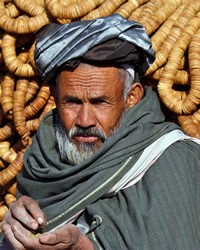

The Pashtun of Afghanistan and Pakistan have been called the largest Muslim tribal society in the world. They were the rulers of Afghanistan for over 250 years and still have much power through the Taliban. There are at least 30 major tribes, and countless sub-tribes and clans. Each clan can be friendly or hostile towards members of another particular clan, adding more divisions.
Pashtuns share a unique sense of common identity. Pashtun identity is based on four elements: Heritage (descent from a common ancestor); Islam, the Pashtunwali Code of Honor ("The Way of the Pashtun"); and to some extent, Language (Pakhtu or Pashto). Their common culture is what binds the Pashtun people together. More significant than dialectical differences, a Pashtun's primary loyalty is to his particular social group (tribe or sub-tribe).
However, different languages pose communication differences. Southern Pashto speakers live primarily in Afghanistan and Pakistan, though there is a significant Pashtun diaspora in the Arab Gulf and many Western countries. Those who speak the Southern Pashtun language live in a total of 13 countries including Belgium.
Many Pashtuns arrive via asylum or humanitarian corridors; a significant milestone was the arrival of 46 Afghan families via safe routes, who were welcomed in cities such as Antwerp, Brussels, Mechelen, and Nivelles.
Family reunification is a major priority but is complicated by strict income requirements and delays—new rules in 2025 now demand net monthly earnings of 2,323 euros and longer qualifying periods.
Courts have sometimes ruled that authorities must provide shelter to Afghan families, recognizing their vulnerability even when other EU countries have issued earlier protection.
Active Afghan cultural hubs, such as the Ostend Afghan Cultural Center, offer language classes, youth mentoring, cultural events, and serve as community focal points. Community associations (e.g., Afghan Refugee Committee, Ariana Belgium, Afghan National Union) host social and cultural gatherings, information sessions, and occasional advocacy or protest events.
Southern Pashtuns are solidly Sunni Muslim. However, their devotion to Islam sometimes gets overshadowed by their belief in Pashtunwali, their tribal moral code.
Employment often begins slowly; many Southern Pashtun refugees take temporary roles, part-time jobs, or self-employment. Key barriers include unfamiliarity with Dutch/French, unrecognized foreign credentials, limited social networks, and legal uncertainties, which delay full economic integration. Asylum seekers gain conditional work access after about four months if their case remains undecided—but precarious status and language gaps still limit opportunities.
Pray for the production and distribution of all forms of media in the Pashto language, including literature, videos, music, movies, radio, websites, and social media.
Pray for accuracy in the Bible translations in progress.
Pray for more workers to serve the Southern Pashtun people—in education, business, healthcare, development and other professional areas.
Pray for God's Spirit to strengthen and protect new believers and to empower their lives and witness.
Pray for Pashtun religious and family leaders to have dreams of the only Savior, drawing them to truth and righteousness.
Scripture Prayers for the Pashtun, Southern in Belgium.
References
| Profile Source: Joshua Project |
| Other PDF Profile |


