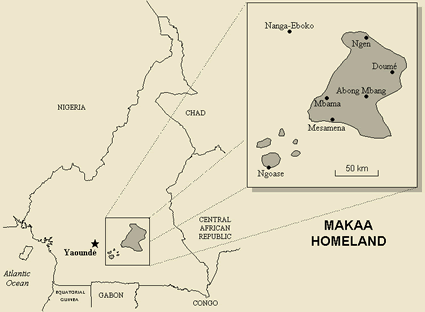
The South Makaa people live primarily in the forested areas of eastern Cameroon, particularly in parts of the East Region near towns such as Abong-Mbang and surrounding rural communities. Their language, South Makaa, belongs to the Bantu branch of the Niger-Congo language family and is closely related to other Makaa-speaking groups in the region. Oral traditions tell of long-standing settlement in the rainforest, where the Makaa adapted their way of life to dense vegetation, abundant wildlife, and seasonal rhythms. Over time, contact with neighboring peoples, traders, and later colonial administrators brought changes in governance, education, and religion.
Life among the South Makaa is largely rural and closely connected to the land. Farming provides the foundation of most households, with crops such as cassava, plantains, maize, groundnuts, and vegetables grown for both consumption and sale. Hunting, fishing, and the gathering of forest products still contribute to food security and income. Villages are organized around extended families, and cooperation is essential for farming, house building, and community ceremonies. Travel can be difficult due to poor roads, especially during the rainy season, which affects access to markets, schools, and medical care. Despite economic challenges, social bonds remain strong, and hospitality and mutual assistance are valued aspects of South Makaa culture.
Christianity became established during the colonial period and has since become a significant influence, even as older cultural practices continue to shape identity and daily life. Most South Makaa people identify as Christian, and churches are present in many villages, offering regular worship, prayer, and teaching. The Bible is known, and Christian celebrations mark important moments in community life. Alongside Christian belief, traditional views concerning ancestors, spiritual forces, and protection from harm still influence how some people interpret illness, misfortune, and success. In times of crisis, these older beliefs can compete with trust in Christ alone. The gospel has made a clear impact among the South Makaa, yet ongoing discipleship is essential so that faith is deeply rooted in Scripture and expressed in daily obedience. With the presence of local churches and believers, the South Makaa community has the opportunity to grow into a mature body of Christ that looks beyond itself to serve less reached peoples.
Economic hardship remains common, as subsistence farming and limited market access leave families vulnerable to poor harvests and price fluctuations. Healthcare services are often distant and under-resourced, increasing the risks associated with preventable diseases and childbirth. Educational access is improving but remains inconsistent, particularly in remote villages where schools lack materials and trained teachers. Spiritually, there is a continuing need for clear biblical teaching that addresses fear, syncretism, and suffering with the hope and assurance found in Jesus Christ. Strong, godly leadership within churches would help believers respond faithfully to both personal and community challenges.
Pray that God will provide for the physical needs of the South Makaa people through fruitful harvests, reliable income, and improved access to education and healthcare.
Ask the Lord to protect families from disease and to bring peace and stability to their communities.
Pray that South Makaa believers will grow in a deep and confident faith in Jesus Christ, trusting fully in his mercy and power.
Pray that the South Makaa church will embrace its role in God's global mission, becoming a source of prayer, encouragement, and workers for ethnic groups who still lack access to the gospel.
May the love of Christ be made visible through transformed lives and compassionate service.
Scripture Prayers for the Makaa, South in Cameroon.
https://www.ethnologue.com
https://www.sil.org
https://www.britannica.com/place/Cameroon
| Profile Source: Joshua Project |